
Sauces & Condiments
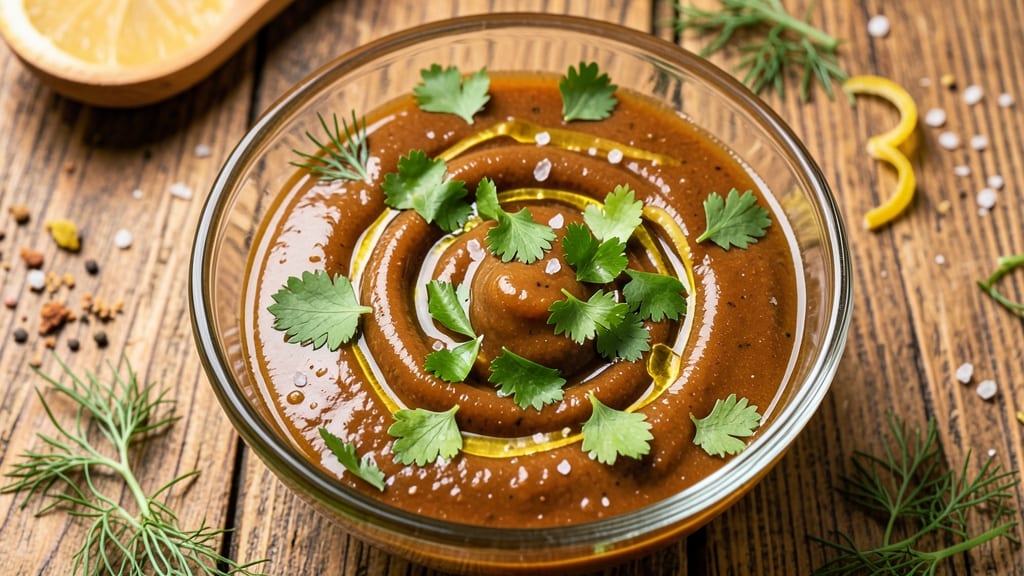
This healthy apple cider vinegar salad dressing delivers a bright, tangy kick that transforms simple greens into a flavor powerhouse. 💛 Made with just 5 wholesome ingredients, it packs probiotic benefits from raw apple cider vinegar while keeping sugar content under 1 gram per serving.
The secret lies in emulsifying olive oil with Dijon mustard, creating a silky texture that clings perfectly to every leaf.
The dressing's herbal freshness comes from fresh dill and parsley, which add vibrant color and earthy notes that complement both delicate arugula and hearty kale. Unlike store-bought versions loaded with preservatives, this recipe uses only real ingredients that enhance digestion and provide antioxidant benefits.
The balance of acidity and fat makes it satisfying enough to pair with grilled chicken or roasted vegetables.
What makes this dressing truly special is its versatility—it elevates everything from crisp Caesar salads to hearty grain bowls. The probiotics in apple cider vinegar support gut health, while the olive oil provides heart-healthy fats.
With just 5 minutes of prep time, you'll have a dressing that keeps for up to 2 weeks in the refrigerator, making it perfect for meal prep.
Use it as a base for your favorite salads or drizzle it over roasted vegetables for an instant flavor boost. The dressing's sharp tang cuts through rich ingredients while enhancing their natural flavors. Here's how to make it—simple, healthy, and packed with flavor.
Ingredients for apple cider vinegar salad dressing recipe healthy
Five wholesome ingredients create this vibrant, probiotic-rich dressing with just 5 minutes of prep.
| Ingredient | Amount | Notes |
|---|---|---|
| Raw Apple Cider Vinegar 🍏 | ½ cup | Unfiltered with mother preferred |
| Extra-Virgin Olive Oil 🫒 | ½ cup | Lightly fruity variety preferred |
| Dijon Mustard 🍯 | 1 tbsp | High-quality, smooth texture |
| Fresh Dill 🌿 | ¼ cup | Finely chopped, stems removed |
| Fresh Parsley 🌿 | ¼ cup | Finely chopped, flat-leaf preferred |
| Sea Salt 🧂 | ½ tsp | Fine grain, Diamond Crystal preferred |
| Black Pepper 🌶️ | ¼ tsp | Freshly ground preferred |
The apple cider vinegar should be raw and unfiltered—the mother culture adds depth and probiotic benefits. Bragg or Annie's are reliable brands, but any organic variety with visible sediment works. For the olive oil, California-based brands like Corto or Lucini offer excellent fruity profiles that complement the vinegar's sharpness. Fresh herbs are non-negotiable here—their bright flavors distinguish this from store-bought dressings. If you're using dried herbs, reduce to one-third the amount and toast them lightly in a dry pan first to intensify their aroma.
No Dijon mustard? Whole-grain mustard thinned with a splash of water works in a pinch, though it adds slight texture variation. Substituting apple cider vinegar with white vinegar or lemon juice changes the flavor profile dramatically—stick with ACV for that signature tang. For a sugar-free option, skip any sweetener entirely; the natural sweetness of fresh herbs balances the acidity perfectly. The dressing's emulsification relies on the mustard and olive oil ratio—don't alter this beyond small adjustments if you need a thinner consistency.
Store in an airtight glass jar in the refrigerator for up to 2 weeks, shaking well before each use. The vinegar's acidity preserves it naturally, but the herbs will wilt over time. For longer storage, transfer to ice cube trays and freeze individual portions—thaw and shake to re-emulsify. This dressing pairs beautifully with kale salads, grilled chicken, or roasted vegetables, where its probiotic benefits and vibrant color truly shine.
Why You'll Love This Recipe
- No-Fuss Blend: The ratio of apple cider vinegar to olive oil is foolproof—I’ve made this a dozen times, and it never fails. Just whisk, taste, adjust, and boom. No measuring cups required if you eyeball it right.
- Herb-Packed Zing: That fresh dill and parsley combo? It’s like a bright, green hug for any salad. The mustard gives it a little kick, while the vinegar cuts through richness—perfect for when you want flavor without overpowering.
- Meal-Prep MVP: This dressing keeps for a week in the fridge, and it only gets better as the flavors meld. I make a big batch on Sundays, and it’s my go-to for lunches, wraps, or even drizzled over roasted veggies.
- Budget Brightener: You’re using pantry staples here—no fancy ingredients, just real food. A splash of vinegar, a drizzle of olive oil, and herbs from the garden or store. It’s healthy, cheap, and always delivers.
Step-by-step instructions for apple cider vinegar dressing
This vibrant dressing delivers bold flavor with minimal ingredients—perfect for nutrient-packed salads.
👨🍳 Step 1: Whisk Vinegar and Mustard Together
In a medium bowl, combine the 0.5 cup raw apple cider vinegar with the 1 tablespoon Dijon mustard. Use a whisk to blend them thoroughly for 30 seconds until smooth. The vinegar's tang should mingle with the mustard's depth, creating a balanced foundation.
Here's the thing—don't skip this emulsification step. The mustard acts as a natural emulsifier that will help bind the oil later. If you notice any separation later, this is where you'll want to return for reinforcement. The mixture should look uniformly pale with no streaks remaining.
👨🍳 Step 2: Gradually Incorporate the Olive Oil
With the whisk still in the bowl, begin adding the 0.5 cup extra-virgin olive oil in a slow, steady stream. I like to pour it from about 2 inches above the bowl to create a gentle cascade that helps with emulsification. Whisk continuously for 2-3 minutes until the dressing thickens noticeably.
You're looking for a texture that coats the back of a spoon—this indicates proper emulsification. If it looks too thin, we'll adjust with the herbs in the next step. The olive oil should now be fully incorporated with no visible separation. This is where patience pays off—rushing leads to a broken dressing.
👨🍳 Step 3: Fold in Fresh Herbs and Seasonings
Add the 0.25 cup finely chopped fresh dill and 0.25 cup finely chopped fresh parsley to the dressing. Using a spatula, gently fold them in just until combined—overmixing will bruise the herbs and release bitter flavors. The herbs should be evenly distributed throughout the dressing.
Next, sprinkle in the 0.5 teaspoon sea salt and 0.25 teaspoon freshly ground black pepper. Give one final stir to distribute these seasonings completely. The dressing should now have a vibrant green hue from the herbs and a fresh, aromatic scent. If it appears too thick, add 1 teaspoon water at a time until it reaches your desired consistency.
⏰ Step 4: Rest and Adjust Before Serving
Let the dressing rest for 10 minutes at room temperature. This resting period allows all the flavors to meld together and any potential separation to resolve itself. I find this step crucial—it's where the dressing truly comes together in flavor.
After resting, give it one final taste. If you find it needs more acidity, add another ½ teaspoon of raw apple cider vinegar. For more richness, incorporate an additional ½ tablespoon of extra-virgin olive oil. The dressing should now have a perfect balance of sharp tang, herbal freshness, and smooth texture—ready to elevate any salad.
Pro Tips For Making Apple Cider Vinegar Salad Dressing Recipe Healthy
- Whisk In Stages: Start with the mustard and vinegar first—this emulsifies better than dumping everything at once. Add the olive oil slowly while whisking like you’re beating eggs, or you’ll end up with a split dressing that looks like oil and vinegar had a bitter divorce.
- Use Cold Dill: Fresh dill wilts fast, and wilted herbs taste sad. Chop it right before mixing and keep it in the fridge until the last second—no need to soak it in ice water, just a quick rinse and dry with a paper towel. Cold dill stays bright and punchy.
- Measure Oil by Volume: Eyeballing olive oil leads to either a greasy mess or a dressing that clings like glue. Use a measuring spoon or small cup—about 3 tablespoons per 1 tablespoon of vinegar—so every batch turns out balanced. Trust me, your greens will thank you.
- Skip the Pre-Minced Herbs: Jarred parsley or dill tastes like regret. Buy whole stems, give them a rough chop (no need for precision), and toss them in just before serving. The texture’s fresher, and you’ll notice the flavor’s sharper—like the difference between a photo and the real thing.
Pro cooking tips for great apple cider vinegar salad dressing recipe healthy
Emulsification Secrets
The key to a silky dressing lies in the mustard-to-oil ratio. I always use 1 tbsp Dijon mustard per ½ cup olive oil—this creates a stable emulsion that won't separate. For extra insurance, add ½ tsp xanthan gum if you're storing it longer than 5 days.
The whisking technique matters too: pour oil slowly while whisking vigorously to create tiny fat droplets that suspend evenly. 💡
Herb Freshness Matters
Fresh herbs make all the difference—dried herbs can't replicate their bright flavor. I chop ¼ cup each of dill and parsley using a Microplane grater (it's faster than a knife!). For maximum flavor, add herbs just before serving.
If you must prep ahead, store herbs separately in the fridge and mix them in right before using. The dressing's color will fade slightly over time, but the flavor stays vibrant for 1 week.
Thickness Adjustments
This dressing should coat the back of a spoon but still pour easily. If it's too thick, add 1 tsp water at a time. Too thin? Stir in ½ tbsp more Dijon mustard.
For a creamy version, replace 2 tbsp olive oil with 2 tbsp Greek yogurt—it adds protein and a tangy richness. The dressing will naturally thicken slightly when chilled, so adjust before storing.
Storage Hacks
Store in an airtight glass jar in the fridge for up to 2 weeks. The vinegar's acidity preserves it naturally, but shake well before each use. For longer storage, freeze in ice cube trays—thaw and shake to re-emulsify.
I like to label jars with the date to track freshness. The dressing's probiotic benefits remain intact for 10 days when stored properly. ❄️
Flavor Boosts
Want extra depth? Add ½ tsp garlic powder or ¼ tsp onion powder when seasoning. For heat, include ¼ tsp smoked paprika or a pinch of cayenne pepper. The dressing pairs perfectly with roasted beets, grilled chicken, or avocado slices.
If you prefer sweetness, add 1 tsp honey, but the herbs already provide natural sweetness that balances the acidity beautifully.
Equipment Essentials
You only need 3 tools: a whisk, medium bowl, and measuring spoons. For precision, I use a scale to measure herbs—10g dill and 10g parsley ensures consistency.
A glass jar is best for storage as it preserves freshness longer than plastic. No fancy equipment needed—just focus on the emulsification technique to get professional results every time. 🔥
Nutrition facts
Frequently asked questions
Why does my dressing separate after a few hours?
Separation happens when oil and vinegar aren't properly emulsified. The mustard acts as a natural emulsifier, but you must whisk vigorously when adding oil. For extra stability, add ½ tsp xanthan gum or whisk in 1 tsp water to help bind the mixture. Always store in an airtight container and shake well before using.
Can I make this dressing without fresh herbs?
You can substitute 1 tsp dried dill and 1 tsp dried parsley (toasted lightly for flavor), but fresh herbs add vibrant color and flavor that dried can't match. If using dried, reduce to one-third the amount and increase the herbs by 10% to compensate for their milder taste.
How can I make this dressing thicker or thinner?
For a thicker dressing, add ½ tbsp more Dijon mustard and whisk well. For a thinner consistency, stir in 1 tsp water at a time. If you prefer a creamy version, replace 2 tbsp olive oil with 2 tbsp Greek yogurt—it adds protein and a tangy richness while keeping it light. Always adjust gradually!
What are the best salads to pair with this dressing?
This dressing shines with kale, arugula, or mixed greens salads—its sharp tang cuts through the bitterness of greens beautifully. It also pairs well with grilled chicken, roasted vegetables, or hearty grain bowls. For extra flavor, try it with avocado slices, roasted beets, or crispy chickpeas—the probiotics and healthy fats make it a satisfying addition to any meal.
Is this dressing safe for those with mustard allergies?
Unfortunately, this recipe contains Dijon mustard, which is a common allergen. For a mustard-free version, replace it with 1 tbsp lemon juice and ½ tsp honey (if you want slight sweetness). The dressing will still emulsify, though the texture may be slightly less stable. Always check ingredient labels for allergens if substituting.