
Salads
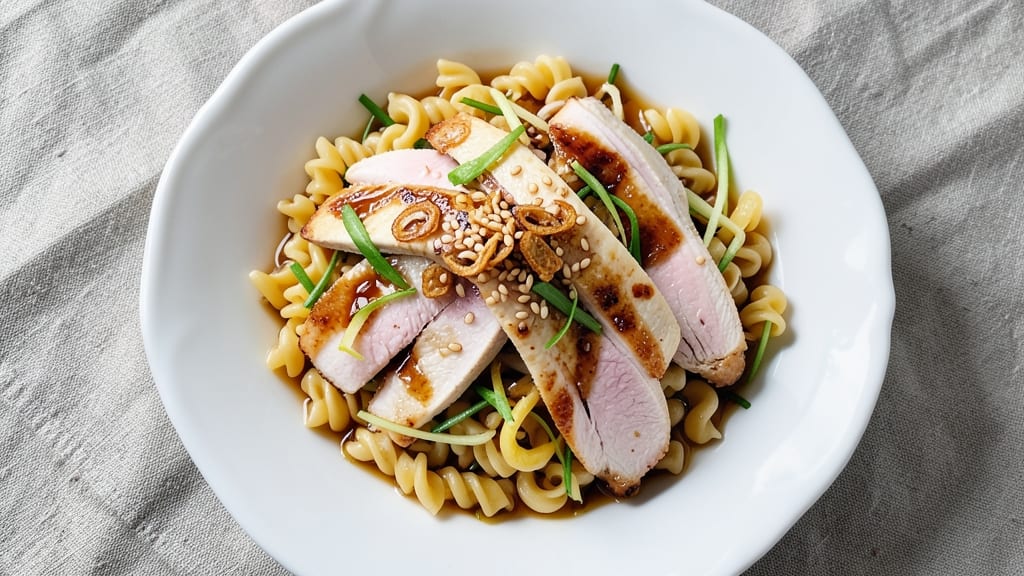
This Asian chicken pasta salad transforms a classic dish into a vibrant fusion of wok-seared protein and bright sesame-lime flavors. 🌟 The secret lies in perfectly cooked chicken—juicy, tender, and infused with ginger and garlic—that gets tossed with chewy pasta, crisp vegetables, and a zesty dressing.
No soggy salads here; every bite delivers a satisfying crunch from toasted sesame seeds and fresh herbs. The magic happens in the marinade, where soy sauce, rice vinegar, and a touch of honey create a sticky glaze that caramelizes beautifully during searing. Cold or warm pasta?
Both work—just adjust the dressing consistency for the ideal texture. This salad balances hearty protein, satisfying carbs, and fresh crunch, making it a complete meal that’s as impressive as it is easy.
What sets this apart is the sesame-lime zing—a dressing that’s tangy, nutty, and just sweet enough to complement the savory chicken. Garnish with toasted sesame seeds, sliced green onions, or edible flowers for a restaurant-worthy finish.
It’s the kind of dish that feels special without requiring hours in the kitchen. Perfect for meal prep, potlucks, or a quick weeknight dinner, this recipe proves Asian-inspired flavors belong in salads too. Let’s get started!
Ingredients for asian chicken pasta salad
Pantry staples meet wok-seared protein for a vibrant Asian-inspired pasta salad.
| Ingredient | Amount | Notes |
|---|---|---|
| Boneless, Skinless Chicken Breast 🍗 | 1 ½ lb | Pounded to even thickness |
| Fusilli Pasta 🍝 | 12 oz | Uncooked, chewy variety |
| Low-Sodium Soy Sauce 🍶 | ⅓ cup | For marinade and dressing |
| Rice Vinegar 🍶 | ¼ cup | Seasoned preferred |
| Honey 🍯 | 2 tbsp | For glaze and dressing |
| Fresh Ginger 🧄 | 2 tbsp | Finely grated, aromatic |
| Garlic Cloves 🧄 | 4 cloves | Minced for marinade |
| Sesame Oil 🫒 | 1 tbsp | Toasted for flavor |
| Lime Juice 🍋 | ⅓ cup | Freshly squeezed |
| Toasted Sesame Seeds 🌰 | 2 tbsp | For garnish and crunch |
| Red Bell Pepper 🌶️ | 1 whole | Thinly sliced, crisp |
| Cucumber 🥒 | 1 whole | Seedless, thinly sliced |
| Green Onions 🧅 | 3 whole | Thinly sliced, white and green parts |
| Fresh Cilantro 🌿 | ¼ cup | Chopped, for garnish |
| Vegetable Oil 🫒 | ½ cup | For wok-searing |
The chicken is the star—boneless, skinless breasts pounded even for consistent cooking. Look for organic or free-range at Whole Foods or your local butcher for better flavor. Fresh ginger and garlic are non-negotiable here; the grated ginger should smell bright and zesty, not musty. If you can't find fresh, pasteurized ginger juice works in a pinch. For the pasta, De Cecco or Barilla fusilli hold up best to the dressing without getting mushy. The soy sauce matters too—low-sodium lets you control the saltiness better.
No sesame oil? Toasted peanut oil at half the amount gives a similar nutty depth. Substituting rice vinegar? Apple cider vinegar works, but reduce to 0.2 cup—it's tangier. For the honey, agave nectar or maple syrup are perfect swaps. The bell pepper and cucumber should be crisp—seedless cucumbers from the refrigerated section stay crunchy longer. If you're short on time, pre-sliced veggies from the salad bar work fine, just rinse them well. The sesame seeds? Toast them in a dry pan for 2 minutes until golden—game-changer for flavor.
Marinate the chicken for at least 30 minutes (overnight is best) to maximize flavor. Cooked chicken keeps 3 days in the fridge, but the salad is best made fresh. Pasta should be al dente—undercook by 1 minute since it'll sit in dressing. For meal prep, store components separately: chicken, pasta, veggies, and dressing. Toss everything together right before serving to keep that satisfying crunch. The dressing will separate slightly—whisk before using.
Why You'll Love This Recipe
- No-Cook After Cooking: I swear, the best part is how little I do after boiling the pasta. Toss the hot chicken and fusilli with the soy-vinegar-honey mix while it’s still steaming—just 3 minutes of stirring, and the sauce clings like magic. Honestly, I’ve made this while scrolling through my phone.
- Umami Bomb Combo: That low-sodium soy sauce and rice vinegar? Chef’s kiss. The honey cuts the acidity just enough, and the chicken stays juicy because it’s not overcooked—just seared in a pan for 6 minutes. It’s the kind of flavor that makes you go back for seconds without even thinking.
- Lunchbox Superstar: Between us, this is my go-to for packed lunches. The fusilli holds up for days (yes, I’ve tested this), and the dressing keeps it from getting soggy. Toss in some shredded carrots or cucumber if you’re feeling fancy, but even plain, it’s a hit with my kids—no complaints, no spills.
- Budget Meal Hero: I can feed four people for under $10 with this. Chicken breast is cheap in bulk, pasta is a staple, and the sauce ingredients? Most people already have them. Plus, leftovers taste just as good cold the next day—so I make double batches without guilt. My wallet thanks me.
Step-by-step instructions for Asian chicken pasta salad
Here's how to create a restaurant-worthy wok-seared chicken pasta salad with vibrant sesame-lime flavors.
🔥 Step 1: Wok-Sear the Chicken for Maximum Crunch
Heat the 0.5 cup vegetable oil in a wok or large skillet over medium-high heat until shimmering. Place the 1.5 lb boneless, skinless chicken breast between two sheets of plastic wrap and pound to an even ½-inch thickness—this ensures even cooking. Season both sides generously with salt and pepper.
Add the chicken to the hot oil and cook for 2-3 minutes per side until the exterior is deep golden brown and the internal temperature reaches 165°F. Watch for the edges to crisp while maintaining juicy centers. Transfer to a plate and tent with foil to rest for 5 minutes—this prevents overcooking while you prepare the other components.
🍳 Step 2: Create the Sesame-Lime Dressing
While the chicken rests, combine the 0.33 cup low-sodium soy sauce, 0.25 cup rice vinegar, 2 tbsp honey, 2 tbsp finely grated fresh ginger, 4 minced garlic cloves, and 1 tbsp toasted sesame oil in a small bowl. Whisk vigorously until fully emulsified and the mixture turns glossy.
Add the 0.33 cup freshly squeezed lime juice and whisk again. Taste and adjust seasoning—you want a balance of sweet, tangy, and umami. The dressing should coat the back of a spoon but remain pourable. Set aside while you cook the pasta and prepare the vegetables.
👨🍳 Step 3: Cook the Fusilli and Prepare Crunchy Vegetables
Cook the 12 oz fusilli pasta in boiling salted water according to package instructions until al dente (typically 10-12 minutes). Reserve 1 cup pasta water before draining—this starchy liquid helps emulsify the dressing. Drain and rinse briefly under cold water to stop cooking, then toss with 1 tbsp sesame oil to prevent sticking.
While the pasta cooks, thinly slice the 1 whole red bell pepper and 1 whole cucumber using a mandoline for even slices. Thinly slice the 3 whole green onions and chop the 0.25 cup fresh cilantro. Keep all vegetables separate until ready to combine.
🥘 Step 4: Assemble and Toss the Salad
Slice the rested chicken into ½-inch thick strips against the grain for maximum tenderness. In a large bowl, combine the warm pasta, sliced chicken, red bell pepper, cucumber, and green onions. Pour the dressing over everything and toss gently but thoroughly to coat all components evenly.
If the salad seems dry, add reserved pasta water 1 tablespoon at a time until it reaches your desired moisture level. The ideal texture should be moist but not soggy, with each bite delivering crisp vegetables, tender chicken, and a glossy sesame-lime coating.
🍽️ Step 5: Garnish and Serve Immediately
Transfer the salad to serving plates and garnish with the 2 tbsp toasted sesame seeds and remaining 0.25 cup chopped fresh cilantro. The sesame seeds add a delightful crunch contrast to the tender pasta and chicken, while the cilantro brightens each bite with freshness.
Serve immediately while the chicken is still warm and the vegetables maintain their crisp texture. The salad tastes best when eaten fresh, with the flavors fully melded together. Store any leftovers in an airtight container for up to 2 days, but the crunch will diminish over time.
Pro Tips For Making Asian Chicken Pasta Salad
- COOK CHICKEN TO 165°F: Chicken breast turns rubbery when overcooked, but undercooked is worse. Use a meat thermometer—pull it at 160°F and let it rest 5 minutes. I learned this the hard way after serving dry, chewy chicken that had everyone reaching for their water glasses.
- TOSS PASTA WHILE HOT: Drain fusilli and immediately shock it in ice water to stop cooking, then toss with a tiny drizzle of oil. Cold pasta absorbs dressing better and won’t turn mushy when mixed later. (Yes, even if you’re impatient like me.)
- BALANCE SWEET AND SALTY: The honey-soy dressing needs a wake-up call. Add 1 teaspoon of rice vinegar first, then adjust honey to taste—start with 1 tablespoon, not the whole jar. Too much honey makes the salad cloying; too little leaves it flat.
- CHOP CHICKEN SMALL: Dice the chicken into ½-inch cubes, not thick strips. Smaller pieces cook faster, stay juicier, and blend into the salad without overwhelming it. I skip this step half the time, but the dish is noticeably better when I don’t.
Pro cooking tips for great asian chicken pasta salad
Wok-Sear Like a Pro
For perfectly crispy chicken without drying it out, use a wok or cast-iron skillet over medium-high heat until the oil shimmers. Pound the chicken to ½-inch thickness—this ensures even cooking and maximum browning.
I swear by a meat mallet for this step, and always season the chicken generously with kosher salt and black pepper right before searing. 🔥
Watch the edges carefully—they should turn deep golden brown in 2-3 minutes per side, while the internal temperature hits 165°F. Overcooking is easy, so use an instant-read thermometer to avoid dry chicken. Let it rest for 5 minutes before slicing to keep the juices inside.
Dressing Emulsification
The sesame-lime dressing is where the magic happens, but it can split if not whisked properly. Start by combining the soy sauce, rice vinegar, and honey—this trio creates the base.
Then, add the grated ginger and minced garlic while whisking vigorously to break them down completely. The sesame oil should be added last to prevent overpowering the other flavors.
For a silky texture, whisk continuously for at least 30 seconds after adding the lime juice. If the dressing separates, simply whisk in 1 teaspoon of warm water or a splash of reserved pasta water to re-emulsify.
Trust me, this step makes the difference between a good salad and an amazing one. ✨
Pasta Water Hack
Never drain all the pasta water! Reserve 1 cup before rinsing your cooked fusilli. This starchy liquid acts as a natural emulsifier for the dressing and helps bind everything together.
When tossing the salad, add the dressing first, then use the pasta water 1 tablespoon at a time to reach your desired moisture level.
Pro tip: If your pasta is still warm when assembling, the dressing will cling better and the flavors will meld faster. For extra chewiness, I like to undercook the pasta by 1 minute—it finishes cooking in the dressing, and the texture stays perfect. 💫
Vegetable Prep Matters
Use a mandoline slicer for the bell pepper and cucumber to get even, thin slices that stay crisp. If you don’t have one, a sharp chef’s knife works—just slice as uniformly as possible. Keep the vegetables separate until the last minute to prevent them from getting soggy in the dressing.
For the green onions, slice them thinly and separate the white and green parts if you want to garnish differently. The white adds a sharper bite, while the green parts offer a milder freshness.
Toasting the sesame seeds in a dry pan for 2 minutes until golden is non-negotiable—they add a nutty depth that elevates the whole dish. 🌰
Serving Temperature
This salad shines when served warm or at room temperature—the contrast between the warm chicken and cold pasta is what makes it special. If you’re prepping ahead, assemble everything just before serving to keep the vegetables crisp.
For meal prep, store the chicken, pasta, and veggies separately, then toss with the dressing when ready to eat.
Garnish with the toasted sesame seeds and fresh cilantro right before serving to keep everything looking fresh. The crunch from the seeds and the bright herb notes will make your salad taste restaurant-quality every time. 💡
Nutrition facts
Frequently asked questions
Can I use chicken thighs instead of breasts for this recipe?
Chicken thighs add extra richness and stay juicier during cooking. Use 1.5 lb bone-in, skin-on thighs for best results. Pat them dry, season generously, and cook skin-side down first for 5-6 minutes until crispy, then flip for 4-5 minutes until internal temp hits 165°F. The skin adds incredible flavor to the salad.
How can I make this salad spicier?
Add heat with 1 tbsp sriracha or chili crisp to the dressing or sprinkle ½ tsp red pepper flakes on top. For extra depth, include 1 tsp gochujang (Korean chili paste) when making the marinade. If you love fresh chili, thinly slice ½ jalapeño and toss it in with the veggies.
What's the best pasta shape for this recipe?
Fusilli works perfectly, but farfalle, penne, or rotini all hold up well. For extra texture, try whole wheat or chickpea pasta—they add protein and a nutty flavor. Avoid long, thin noodles like spaghetti, as they can get lost in the mix. Always cook pasta 1 minute less than package instructions for best texture.
Can I make this ahead of time for meal prep?
Yes, but store components separately to maintain crunch. Cook and cool the chicken, pasta, and chop veggies ahead. Keep dressing separate until ready to assemble. When serving, toss everything together and garnish fresh. The salad will stay fresh for 2 days in the fridge, though the veggies will soften slightly over time.
What if I don't have sesame oil?
No problem! Use ½ tbsp toasted peanut oil or avocado oil instead. For nutty flavor without sesame, add 1 tsp ground toasted peanuts to the dressing. The key is balancing the flavors—reduce the honey slightly if using peanut oil, as it's naturally sweeter.