
Sauces & Condiments
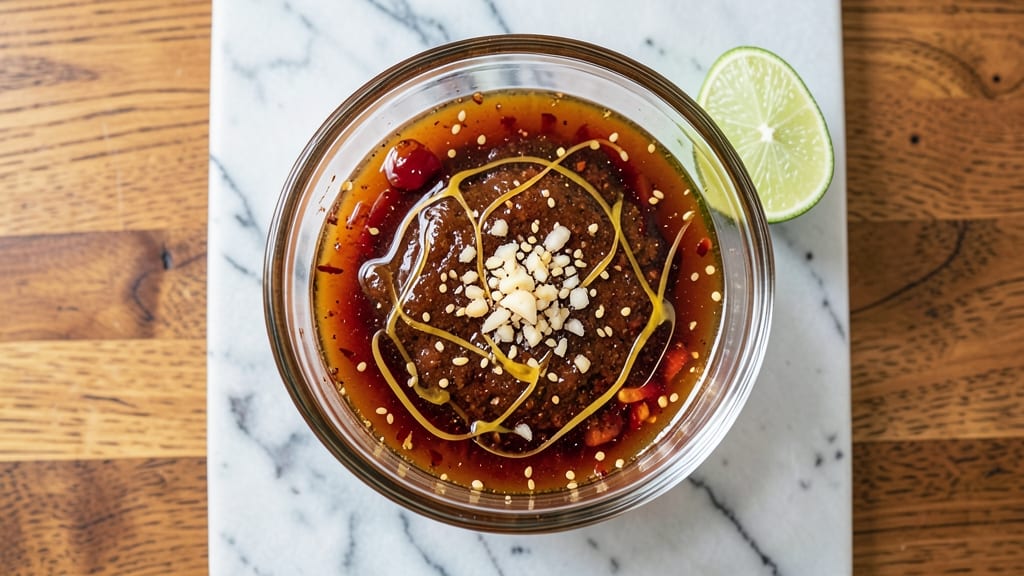
This Asian chopped salad dressing recipe delivers the perfect balance of tangy, umami-rich flavors that elevate any fresh salad bowl. The secret lies in combining soy sauce, sesame oil, and lime juice, creating a sauce that's both bold and versatile.
With just five simple ingredients, you'll achieve a dressing that's restaurant-quality yet effortless to make at home.
The foundation of this dressing is a mix of soy sauce for deep umami flavor, rice vinegar for brightness, and a touch of honey or sugar to balance the acidity. Sesame oil adds that signature nutty aroma, while fresh lime juice brings a zesty kick that ties everything together.
What makes this recipe truly special is its adaptability—it works equally well with vegan ingredients and pairs beautifully with Asian-inspired salads, grilled meats, or even noodle dishes.
What you'll end up with is a vibrant, aromatic dressing that's creamy yet light, with a perfect balance of sweet, tangy, and savory notes. The texture is silky smooth, clinging beautifully to salad greens, proteins, and vegetables.
This dressing keeps well in the refrigerator for up to a week, making it ideal for meal prep and batch cooking.
Whether you're serving up a fresh Asian-inspired salad or looking to add a flavorful twist to your favorite dishes, this dressing is a game-changer. Let's get started on creating this versatile, umami-packed sauce that will transform your meals.
Ingredients for asian chopped salad dressing
Five simple ingredients transform into a restaurant-worthy dressing with umami-packed sesame lime zing.
| Ingredient | Amount | Notes |
|---|---|---|
| Soy Sauce 🥢 | ½ cup | Low-sodium preferred for balance |
| Rice Vinegar 🍶 | ¼ cup | White or seasoned variety |
| Sesame Oil 🫒 | 2 tbsp | Toasted sesame oil for aroma |
| Lime Juice 🍋 | ¼ cup | Freshly squeezed preferred |
| Honey 🍯 | 2 tbsp | Or agave for vegan option |
| Garlic Cloves 🧄 | 2 cloves | Minced for subtle flavor |
| Toasted Sesame Seeds 🌾 | 1 tbsp | Optional for garnish |
| Ginger Root 🌿 | 1 tsp | Freshly grated for zing |
The soy sauce is your umami anchor—Kikkoman or Lee Kum Kee are my go-tos, but any quality brand works. Rice vinegar should smell bright and clean, not funky. Trader Joe's has a great seasoned variety if you want extra depth. For sesame oil, look for toasted in the international aisle—it's worth the few extra bucks for that nutty aroma. Fresh lime juice is non-negotiable here; bottled just won't cut it. If you're prepping ahead, zest the lime first and save the juice for last-minute mixing.
No soy sauce? Coconut aminos works in a pinch, though the flavor will be milder. Skip the honey? Maple syrup or agave keeps it vegan-friendly. The garlic and ginger can be swapped for 1 tsp garlic powder + 1/2 tsp ground ginger if you're short on time. For extra heat, add 1/4 tsp red pepper flakes—trust me, it disappears into the sauce. And if you're making this for a crowd, double the batch—it keeps perfectly for a week in the fridge.
This dressing stays fresh for up to 1 week in an airtight jar in the fridge. The flavors actually deepen overnight, so make it the day before if you can. For meal prep, portion into small jars—4 oz each is perfect for individual salads. If you add sesame seeds, store them separately and sprinkle fresh before serving to keep them toasty. The sauce thickens slightly when chilled, so give it a quick stir before using.
Why You'll Love This Recipe
- Five-Ingredient Magic: I swear by this—just stir soy sauce, rice vinegar, sesame oil, lime juice, and honey. That’s it. No fancy gadgets, no waiting for anything to bloom. Honestly, it’s the kind of dressing I’ll make even when I’m too tired to think.
- Umami-Zing Balance: The soy sauce and sesame oil give it that deep, savory punch, while the honey and lime keep it bright. It’s not too sweet, not too salty—just perfectly layered. Here’s what sold me: the first time I drizzled it over cold noodles, my roommate stole the bowl.
- Works Everywhere: Drizzle it on greens, toss it with grilled chicken, or pour it over ramen. I’ve even used it as a marinade for tofu. Between us, it’s the one dressing that never feels out of place—whether it’s a quick lunch or a fancy dinner guest.
- Lasts All Week: Make a big batch and store it in the fridge. The flavors actually meld better over time, and it keeps for at least five days. Budget-friendly? Absolutely. Time-saving? Even more so—no last-minute shopping or stressing over fresh ingredients.
Step-by-step instructions for Asian chopped salad dressing
This umami-packed dressing comes together in minutes with simple ingredients and perfect balance.
Prepare the Aromatics and Base
In a small bowl, finely mince the 2 cloves garlic cloves and grate the 1 tsp ginger root using a microplane or fine grater. The texture should be smooth but not pasty—you want tiny, even particles that dissolve into the dressing. Set these aside for now.
In a measuring cup, combine the 0.5 cup soy sauce and 0.25 cup rice vinegar. Stir gently to mix, but don't worry about making it perfectly smooth yet. This combination forms the salty-sour foundation that balances the sweet and citrusy notes we'll add next.
Whisk in Sweet and Citrus Layers
Add the 0.25 cup lime juice and 2 tbsp honey to the soy sauce and vinegar mixture. The lime juice should be freshly squeezed if possible—bottled juice lacks the bright zing that fresh lime delivers. Stir well to combine, then taste the mixture. You should notice a perfect harmony of tangy, sweet, and slightly salty flavors.
Here's the thing—if your lime juice is particularly tart, you might want to add just a tiny splash more honey to balance it. The dressing should taste vibrant, not overly sour. This is where the magic happens, so don't rush this tasting step. The flavors should sing together, not compete.
Build Depth with Sesame Oil
Slowly drizzle in the 2 tbsp sesame oil while whisking continuously. The oil should emulsify into the mixture, creating a silky texture rather than separating. If you whisk too quickly, you might end up with a broken dressing. Work steadily, letting the oil incorporate gradually.
Add the minced garlic and grated ginger to the mixture and whisk until fully combined. The aroma should be intoxicating—nutty from the sesame, fresh from the citrus, and warm from the garlic and ginger. This is your flavor profile in a bowl, so take a moment to appreciate it before moving forward.
Final Adjustments and Garnish
Taste the dressing again and make any final adjustments. Need more balance? A pinch of salt might help. Want more sweetness? Add a tiny bit more honey. The goal is a dressing that's complex but harmonious—bright from the lime, rich from the soy sauce, nutty from the sesame, and with a subtle kick from the garlic and ginger.
Sprinkle the 1 tbsp toasted sesame seeds on top and give the dressing one final stir. The seeds should be evenly distributed but still visible, adding both visual appeal and a delightful crunch when tossed with your salad. This dressing keeps well in the refrigerator for up to 5 days, so make extra if you plan to use it often.
Pro Tips For Making Asian Chopped Salad Dressing
- Whisk in Stages: Start with the wet ingredients—soy sauce, rice vinegar, and honey—then gradually add lime juice and sesame oil while tasting. The lime can overpower if dumped in all at once, and sesame oil’s nutty punch needs a gentle introduction.
- Use Fresh Lime: I learned this the hard way—store-bought lime juice tastes like sad, watered-down vinegar. Roll the lime on the counter first to soften the flesh, then juice it immediately. The extra effort makes the dressing bright and tangy, not flat.
- Skip the Heat: Resist the urge to warm the dressing, even slightly. Sesame oil loses its delicate aroma when heated, and the honey can turn gritty. Stir everything together at room temperature for a smooth, balanced finish.
- Balance the Soy: If your dressing tastes too salty, don’t just add more honey—dilute it with a splash of warm water first. Soy sauce’s saltiness needs to mellow, and this trick lets you adjust without throwing off the ratio. (Yes, even if you’re impatient like me.)
Make-ahead tips for this asian chopped salad dressing
Batch Prep Strategy
Make a double batch of this dressing when you're prepping for the week—I always multiply the ingredients by 2 to have enough for multiple salads. Store it in two 8-ounce mason jars in your fridge.
The flavors actually improve as they meld together over 24-48 hours, so timing your prep right means better taste later. 💡
Portion Control Tips
Divide the dressing into 4-ounce portions before storing for easy grab-and-go lunches. I use small glass jars with tight-sealing lids—I love the Weck brand for their airtight fit.
Label each jar with the date so you can track freshness. For salads, 2 tablespoons per serving is perfect—just enough to coat without overwhelming the greens.
Freezer Adaptations
This dressing isn't ideal for freezing because the sesame oil can separate when thawed, but you can freeze the base mixture (soy sauce, vinegar, honey, lime juice) without the oil.
Store in 1-cup portions in freezer-safe containers, then add the oil fresh when ready to use. Thaw overnight in the fridge before completing the recipe. ❄️
Garnish Prep Ahead
Toast your sesame seeds in advance and store them in a small airtight container at room temperature. They'll stay fresh for up to 2 weeks this way. I also pre-mince the garlic and ginger and store them in the fridge for 3-4 days in a sealed container.
This saves time when you're ready to make the dressing—just grab and go!
Salad Prep Pairing
Make your dressing 1-2 days before assembling your chopped salad. The flavors develop beautifully when stored separately, and you can toss them together right before eating. I like to prep all my salad components—greens, proteins, and veggies—and store them in separate containers.
When ready to eat, just combine everything with the dressing. 🥗
Travel-Friendly Packing
For on-the-go lunches, pack the dressing in a small leak-proof container (I use Ziploc travel containers) and keep it in the fridge until you're ready to leave. Pair it with pre-washed salad greens and your favorite proteins in a bento-style container for a complete, no-mess meal.
The dressing will stay fresh for up to 3 days in the fridge this way.
Nutrition facts
Frequently asked questions
Can I make this dressing without sesame oil?
Yes, but you'll lose that signature nutty aroma. For a substitute, try 1 tbsp peanut oil or avocado oil—they're neutral enough to not overpower the flavors. If you want to keep it authentic, use 1/2 tsp toasted sesame seeds (ground finely) instead, but the texture will be slightly different. The dressing will still taste delicious!
How do I adjust this for spicier Asian salads?
Add 1/4 to 1/2 tsp chili flakes or 1/2 tsp sriracha to the base mixture before adding the sesame oil. For heat without spice, try 1/2 tsp fresh red chili paste (like sambal oelek). Start with less—you can always add more, but you can't take it out! The lime juice helps balance the heat beautifully.
What's the best way to store leftovers?
Transfer to an airtight glass jar and refrigerate for up to 1 week. The flavors actually improve overnight! For longer storage, remove the sesame seeds before refrigerating and add them fresh when ready to use. If the dressing separates, simply whisk vigorously before using—it should re-emulsify perfectly.
Can I use this dressing on non-salad dishes?
This versatile sauce works beautifully as a marinade for grilled chicken or tofu, a dipping sauce for spring rolls, or even a glaze for roasted vegetables. For marinades, add 1 tbsp cornstarch to thicken slightly. The umami-sweet balance makes it perfect for any dish that needs an Asian-inspired flavor boost.
Why did my dressing turn cloudy after refrigerating?
This is completely normal—it's called "breaking" and happens when the oil separates slightly. Simply whisk vigorously for 30 seconds to re-emulsify. If it's still grainy, strain through a fine-mesh sieve before using. To prevent this, make sure all ingredients are at room temperature before mixing, and whisk slowly when adding the sesame oil.