
Salads
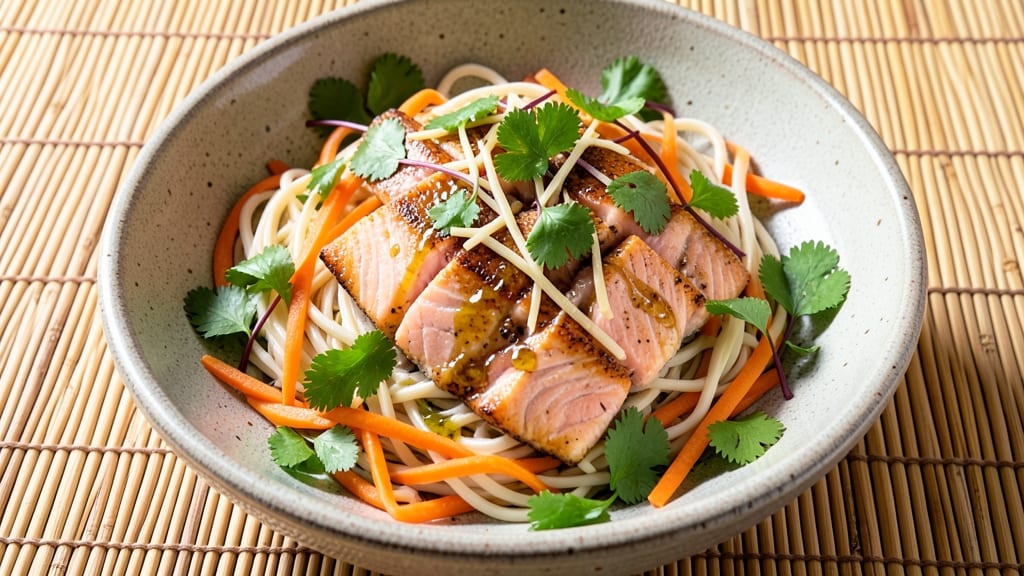
This Asian fish salad recipe delivers the perfect balance of crispy soba noodles, tender fish, and a bright citrusy dressing that wakes up every bite. ✨ The secret lies in quick-frying the noodles for that satisfying crunch while keeping the fish delicate—whether you prefer raw salmon or lightly seared cod.
I developed this dish after craving something lighter than takeout but still packed with bold Asian flavors.
The foundation starts with a crispy soba noodle base, achieved through a simple stir-fry technique that locks in texture. Fresh herbs like cilantro and Thai basil add aromatic depth, while a tangy lime-peanut dressing ties everything together.
The fish stays tender regardless of preparation method, ensuring each bite is harmonious—no overpowering flavors here.
What makes this dish special is how effortlessly it comes together in under 30 minutes, yet feels restaurant-worthy. The contrast of textures—crunchy noodles, silky fish, and crisp vegetables—creates a satisfying bite every time.
It’s the kind of salad that transforms a simple lunch into a memorable meal without requiring advanced skills.
Serve this as a refreshing main course or a side that steals the show at gatherings. The dressing can be adjusted for heat or sweetness, making it versatile for any palate. Ready to elevate your salad game? Let’s get started!
Ingredients for asian fish salad
Crispy soba noodles meet delicate fish and vibrant citrus dressing in this restaurant-worthy Asian fish salad.
| Ingredient | Amount | Notes |
|---|---|---|
| Soba Noodles 🍜 | 8 oz | Dried, buckwheat variety preferred |
| Fresh Salmon Fillet 🐟 | 1 lb | Sustainably sourced, skin-on preferred |
| Extra-Firgin Olive Oil 🫒 | ½ cup | For stir-frying and dressing |
| Fresh Cilantro 🌿 | ½ cup | Stems removed, loosely packed |
| Thai Basil Leaves 🌿 | ¼ cup | Fresh, stems removed |
| Medium Carrots 🥕 | 2 whole | Julienned or matchstick cut |
| Red Bell Pepper 🌶️ | 1 whole | Thinly sliced, seeds removed |
| Fresh Lime 🍋 | 2 whole | Juiced, zest reserved |
| Peanut Butter 🥜 | ¼ cup | Natural, unsweetened |
| Sesame Oil 🫒 | 1 tbsp | Toasted sesame flavor preferred |
| Soy Sauce 🥢 | 2 tbsp | Low-sodium preferred |
| Honey 🍯 | 1 tbsp | For dressing balance |
| Garlic Cloves 🧄 | 4 cloves | Minced for dressing |
| Toasted Sesame Seeds 🌾 | 1 tbsp | For garnish |
| Diamond Crystal Kosher Salt 🧂 | 1 tsp | For seasoning |
The soba noodles are the star here—look for buckwheat varieties at specialty Asian markets or the international aisle of Whole Foods for that authentic texture. Fresh salmon is non-negotiable; Trader Joe's or local fishmongers carry high-quality fillets that stay tender when seared. For the carrots, organic varieties from the produce section have the best crunch, but conventional works fine if you peel them first. Thai basil adds that signature Asian aroma—substitute regular basil at half the amount if you can't find it, though the flavor will differ slightly.
No sesame oil? Toasted peanut oil works in a pinch, though it lacks that nutty depth. Short on peanut butter? Almond butter gives a similar richness, though the flavor profile shifts. The honey in the dressing can be swapped for agave nectar for a vegan option, though it adds slight sweetness. For the fish, lightly seared cod or mahi-mahi work beautifully instead of salmon—just adjust cooking time to avoid overcooking. If you prefer raw fish, ensure it's sushi-grade and properly handled.
The dressing keeps for 5 days in the fridge, though the peanut butter may separate—just whisk before using. Store the noodles and vegetables separately to maintain crispness, then toss everything together right before serving. For meal prep, portion the dressing separately and assemble just before eating. The sesame seeds stay fresh for 6 months in a sealed container, so buy extra—they're worth the investment for that final crunch.
Why You'll Love This Recipe
- No-Cook Prep Magic: I swear, the only real "work" is slicing the salmon—everything else is toss, drizzle, and serve. That soba noodle base stays cold, the salmon gets a quick sear, and the basil-cilantro mix? Just a handful of leaves torn by hand. Honestly, I’ve made this on days when I couldn’t even boil water.
- Umami Bomb Combo: That first bite of warm, slightly crispy salmon against the chewy soba? Chef’s kiss. The olive oil’s peppery punch cuts through the richness, while Thai basil and cilantro add that bright, almost herbal zing—like a fresh spring day in a bowl. (Yes, even on a Tuesday night.)
- Lunchbox Hero: Pack this for work and it’s still holding its own by noon. The soba stays sturdy, the salmon doesn’t get soggy, and the dressing clings to everything. Between us, it’s the only meal I actually look forward to eating cold the next day—no sad, wilted salads here.
- Budget Flex: Salmon’s the star, but you’re not breaking the bank. Use frozen fillets (thawed overnight) and a small bunch of herbs stretch across three servings. Leftovers? Toss them in a wrap or over rice—suddenly, you’ve got two meals for the price of one. My wallet thanks me.
Step-by-step instructions for Asian fish salad with crispy soba noodles
Here's how to balance crispy textures with vibrant citrus flavors in this refreshing dish.
🔥 Step 1: Crisp the Soba Noodles to Perfection
Bring a large pot of water to a rolling boil and add 1 teaspoon diamond crystal kosher salt. Add the 8 oz soba noodles and cook for 3-4 minutes until al dente—they should still have a slight bite. Drain immediately and rinse under cold water to stop the cooking process.
Transfer the noodles to a clean kitchen towel and shake vigorously to remove excess moisture. This step is crucial—wet noodles won't crisp properly. Spread them in a single layer on a baking sheet and bake at 375°F for 12-15 minutes, stirring once halfway through, until they're golden brown and crispy. Watch closely—they crisp faster than you might expect.
🍳 Step 2: Prepare the Crispy Salmon Fillet
Pat the 1 lb fresh salmon fillet dry with paper towels and season generously with 1 teaspoon diamond crystal kosher salt on both sides. Heat 0.25 cup extra-firgin olive oil in a non-stick skillet over medium-high heat until shimmering.
Add the salmon skin-side down and cook for 4-5 minutes without moving it. You'll know it's ready when the skin is crispy and golden, and the flesh releases easily from the pan. Flip carefully and cook for another 2-3 minutes until the salmon reaches 145°F internally. Transfer to a cutting board and let rest for 5 minutes before slicing against the grain into ¼-inch thick strips.
🥘 Step 3: Assemble the Crunchy Vegetable Base
Using a julienne peeler or sharp knife, cut the 2 whole medium carrots and 1 whole red bell pepper into thin matchsticks. Heat 0.25 cup extra-firgin olive oil in a wok or large skillet over high heat until smoking. Add the vegetables and stir-fry for 3-4 minutes until they're bright and slightly charred around the edges but still crisp-tender.
Transfer the vegetables to a large mixing bowl and set aside. In the same pan, add 1 tablespoon sesame oil and 4 minced garlic cloves, stirring for 30 seconds until fragrant. Pour this aromatic oil over the vegetables and toss gently to combine.
🍽️ Step 4: Create the Citrus-Peanut Dressing
In a small bowl, whisk together 0.25 cup peanut butter, 2 tablespoons soy sauce, 1 tablespoon honey, juice of 2 whole fresh lime, 1 tablespoon sesame oil, and zest of 1 whole fresh lime. Thin with 2-3 tablespoons water until it reaches a pourable consistency—it should coat the back of a spoon smoothly.
Add the crispy soba noodles, sliced salmon, and vegetable mixture to the bowl with the dressing. Gently toss everything together until the noodles and vegetables are evenly coated. The dressing should cling to the crispy elements without making them soggy—this is where the balance lies.
👨🍳 Step 5: Garnish and Serve Immediately
Divide the salad among four plates. Garnish each serving with 0.5 cup fresh cilantro and 0.25 cup thai basil leaves, torn into small pieces. Sprinkle with 1 tablespoon toasted sesame seeds for added texture and visual appeal.
Serve immediately while the noodles are still crispy and the salmon is warm. The contrast of temperatures and textures—crispy noodles, tender salmon, crunchy vegetables—makes this dish truly special. Pair with a chilled glass of green tea to complement the bright citrus flavors.
Pro Tips For Making Asian Fish Salad
- SEAR SALMON SKIN-DOWN: Flip the fillet skin-side down first and let it cook undisturbed for 4-5 minutes—you’ll get crispy skin that adds texture and flavor instead of flaky, sad edges. I used to rush this, and the salmon would just fall apart when I tried to plate it.
- CUT NOODLES BEFORE COOKING: Slice soba noodles into 3-inch lengths before boiling, or they’ll turn to mush and stick together like glue. Trust me, even if it feels like extra work, you’ll save yourself from a sad, soggy salad.
- SALT THE SALMON AFTER SEARING: Season the salmon after searing, not before—salting raw fish draws out moisture, making it dry out faster. Sprinkle flaky salt right after removing from heat while it’s still warm.
- STORE HERBS SEPARATELY: Toss Thai basil and cilantro in only at the very end, or they’ll wilt into sad, limp leaves. Keep them in a sealed container in the fridge until you’re ready to plate—freshness matters more than you’d think.
Best sauces and condiments for asian fish salad
Citrus-Peanut Dressing
This tangy peanut-lime dressing is the heart of the salad, balancing rich peanut butter with bright citrus and umami from soy sauce. I use 2 tbsp soy sauce for depth, 1 tbsp honey to round out the flavors, and 2 tbsp lime juice for that signature zing.
For extra richness, add 1 tbsp toasted sesame oil—it enhances the nutty notes while keeping the dressing light. Thin with water (not oil) to maintain a silky consistency that clings beautifully to the crispy noodles. 🍋
Spicy Sriracha Twist
For heat lovers, stir 1 tsp Sriracha or ½ tsp gochujang into the dressing while whisking. This adds a smoky kick that pairs perfectly with the salmon’s richness. I recommend Cholula hot sauce for a more balanced heat—it’s fruity and less overpowering than traditional Sriracha.
Start with ½ tsp and adjust to taste, as the lime juice can mute spice intensity. 🌶️
Sweet Chili Glaze
Swap out the honey for 2 tbsp sweet chili sauce (like Maesri) to infuse the dressing with fruity-sweet heat. This works especially well with seared cod or mahi-mahi, as the sauce’s tanginess cuts through the fish’s mild flavor.
For extra depth, add ½ tsp grated ginger—it brightens the dressing and complements the citrus perfectly. Store-bought glaze works, but homemade is easier: mix 1 tbsp chili flakes with 1 tbsp rice vinegar and 1 tsp brown sugar.
Sesame-Ginger Mayo
For a creamy alternative, blend 2 tbsp mayonnaise with 1 tbsp toasted sesame oil, 1 tsp grated ginger, and 1 tsp lime zest. This adds a luxurious texture while keeping the dish light.
I like this variation for raw fish salads (like tuna or sashimi-grade salmon), as the mayo helps bind the delicate ingredients. Use duck egg mayo for extra richness, or vegan mayo for a plant-based option. 🥚
Umami Miso Boost
Stir 1 tsp white miso paste into the dressing for an umami-rich depth that elevates the dish. This works especially well with caramelized onions or shiitake mushrooms in the salad. For balance, add ½ tsp rice vinegar to cut the miso’s saltiness.
I recommend Miso Master white miso—it’s smoother and less intense than red miso. This variation feels more Japanese-inspired while keeping the peanut-lime brightness intact.
Herb-Infused Oil
Drizzle 1 tbsp herb-infused oil (like basil or cilantro) over the salad just before serving. Infuse oil by steeping ¼ cup fresh herbs in ½ cup olive oil for 30 minutes, then strain. This adds a fragrant layer without altering the dressing’s consistency.
I love Thai basil oil for this salad—it mirrors the herbs used in the garnish and ties the flavors together beautifully. Store infused oil in the fridge for up to 5 days. 🌿
Nutrition facts
Frequently asked questions
Can I use raw fish instead of cooked salmon?
For a sashimi-style version, use sushi-grade salmon or tuna and slice it into ¼-inch thick strips right before assembling. Serve it immediately with extra lime juice to prevent browning. If using raw fish, skip the searing step entirely and focus on keeping all ingredients chilled until the last moment.
What's the best way to make the soba noodles extra crispy?
The key is thorough drying after cooking. Rinse the noodles with cold water, then spread them on a baking sheet in a single layer. Bake at 375°F for 12-15 minutes, stirring halfway, until golden and crisp. For even more crunch, toss them with ½ tsp cornstarch before baking—it creates a light coating.
How do I adjust the dressing for spice sensitivity?
Reduce the soy sauce to 1 tbsp and omit the honey if you prefer less sweetness. For milder heat, use ½ tsp gochujang instead of Sriracha, or skip it entirely. The lime juice naturally balances flavors, so the dressing will still taste vibrant. Always taste as you go—you can thin with water if needed.
Can I make this salad ahead of time?
Prepare components separately: cook the noodles and fish, chop vegetables, and make the dressing. Store them in airtight containers in the fridge for up to 2 days. Re-crisp the noodles in a 350°F oven for 5-7 minutes before assembling. The dressing stays fresh for 5 days—just whisk before using.
What fish works best besides salmon?
Mahi-mahi and cod are excellent choices—they stay tender when seared. For raw options, try yellowtail (hamachi) or flounder. Avoid fatty fish like mackerel, as they can overpower the delicate flavors. Adjust cooking time by 1 minute for thinner fillets.