
Side Dishes
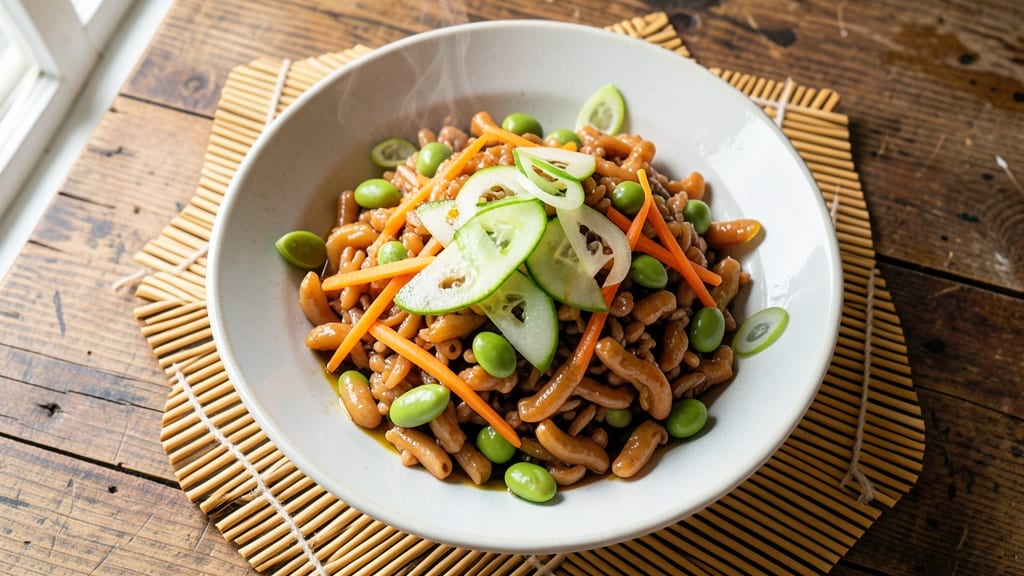
This Asian macaroni salad recipe transforms a classic side into a vibrant, creamy fusion dish that balances bold flavors with satisfying crunch. 🌟 The secret lies in a tangy sesame-ginger dressing that coats al dente pasta, fresh vegetables, and crispy toppings for a harmonious bite every time.
Perfect for potlucks, BBQs, or weeknight meals, this recipe delivers restaurant-quality results with minimal effort.
What sets this version apart is the creamy soy-based dressing infused with fresh ginger, sesame oil, and a touch of honey for balance. The pasta absorbs the flavor while staying tender, and the addition of shredded carrots, cucumbers, and edamame adds freshness.
For extra texture, we top it with toasted sesame seeds and crushed peanuts—each bite delivers a satisfying crunch that contrasts beautifully with the creamy base.
The preparation is straightforward, requiring just 20 minutes of active time. Cook the pasta al dente, then rinse under cold water to stop the cooking process and prevent mushiness. While the pasta drains, whisk together the dressing ingredients and toss everything with the vegetables and protein (if using).
The final assembly is where the magic happens—layering the creamy dressing with the crispy toppings ensures every forkful is packed with flavor and texture.
This dish is incredibly versatile—serve it as a side for grilled meats, pair it with sushi for a fusion twist, or enjoy it cold as a light lunch. The creamy dressing stays fresh for up to 3 days in the refrigerator, making it an ideal make-ahead option for busy hosts.
Let’s get started on creating this crowd-pleasing favorite!
Ingredients for asian macaroni salad
This Asian macaroni salad blends creamy soy dressing with fresh vegetables and crunchy toppings for a vibrant fusion dish.
| Ingredient | Amount | Notes |
|---|---|---|
| Short-Grain Brown Rice Pasta 🍚 | 10 oz | Al dente texture preferred |
| Carrots 🥕 | 2 medium | Shredded, about 1 cup |
| Cucumber 🥒 | 1 whole | Seedless, diced |
| Edamame 🌱 | 1 cup | Shelled, frozen works |
| Sesame Oil 🫒 | 2 tbsp | Toasted for aroma |
| Fresh Ginger 🌿 | 2 tbsp | Grated, finely minced |
| Low-Sodium Soy Sauce 🍶 | 3 tbsp | Or tamari for gluten-free |
| Honey 🍯 | 1 tbsp | For subtle sweetness |
| Rice Vinegar 🍶 | 2 tbsp | White or seasoned |
| Mayonnaise 🥚 | ½ cup | Full-fat for creaminess |
| Toasted Sesame Seeds 🌾 | 2 tbsp | For garnish |
| Crushed Peanuts 🥜 | ¼ cup | For crunch |
| Salt 🧂 | ½ tsp | Kosher or sea salt |
| Black Pepper 🌶️ | ¼ tsp | Freshly ground |
The short-grain brown rice pasta is key—it holds up better than white pasta and absorbs the dressing beautifully. Whole Foods and Trader Joe's carry excellent options, or check the international aisle at your local supermarket. For the vegetables, freshness matters most. Carrots should be bright orange, cucumbers crisp, and edamame vibrant green. If using frozen edamame, thaw and drain well before adding. The dressing ingredients are all pantry staples, but toasted sesame oil makes a noticeable difference in flavor—look for it in the Asian foods section.
No sesame oil? Peanut oil or avocado oil works in a pinch, though the flavor won't be identical. Substitute honey with maple syrup or agave nectar if needed, but reduce by half a teaspoon to avoid over-sweetness. For extra protein, add chopped hard-boiled eggs or cubed tofu. The peanuts can be swapped for crushed cashews or sunflower seeds if nut allergies are a concern. If you prefer a lighter dressing, reduce the mayonnaise to 1/4 cup and add 2 tablespoons of Greek yogurt for creaminess without heaviness.
This salad keeps beautifully in the fridge for 3-4 days, though the texture stays best within the first 24 hours. Store the dressing separately if making ahead—toss with pasta and veggies just before serving. For extra crunch, toast the sesame seeds and peanuts fresh before serving. Portion into individual containers for easy grab-and-go lunches, or double the recipe for potlucks—it's always a crowd-pleaser.
Why You'll Love This Recipe
- Here’s what sold me: edamame, carrots, and cucumbers stretch this salad for next to nothing. I’ll often bulk up the pasta portion to make it last, and the sesame oil (a tiny amount!) makes it feel like a fancy dish without the price tag. Not the prettiest, but the taste makes up for it.
- No-Cook Add-Ins: Honestly, the best part? Those crunchy edamame and cucumber slices go in raw—no chopping, no boiling, just toss. I’ll often grab pre-shelled edamame from the store to save even more time, and the sesame oil ties everything together with just a drizzle.
- Umami Bomb: That sesame oil isn’t just for flavor—it’s the secret weapon. A single teaspoon (yes, really) transforms the dish from "okay" to "I’d eat this every day." The short-grain brown rice pasta holds up perfectly, soaking up the oil’s nutty depth without getting mushy.
- Lunchbox Legend: Between us, this is my go-to for meal prep. Pack it in bento boxes or mason jars, and it stays fresh for days. My kids actually ask for it—no sad leftovers here, just happy, crunchy bites that hold up through school lunches.
Step-by-step instructions for Asian macaroni salad
Here's how to create a perfectly balanced salad with nutty brown rice pasta and vibrant Asian-inspired flavors.
🍳 Step 1: Cook the Pasta Al Dente
Bring a large pot of water to a rolling boil and add 1 teaspoon salt. Add the 10 oz short-grain brown rice pasta and cook for 1 minute less than package instructions (usually 8-9 minutes). Brown rice pasta has a denser texture, so it needs that extra minute to reach al dente perfection.
Drain the pasta immediately and rinse under cold water for 30 seconds to stop the cooking process. This prevents the pasta from becoming mushy when mixed with the dressing. I like to shake the colander vigorously to remove excess water—this ensures the dressing will cling properly later.
👨🍳 Step 2: Prepare the Vegetable Medley
While the pasta cooks, peel and shred the 2 medium carrots using a box grater or mandoline. You should end up with about 1 cup of fine shreds. Transfer to a large mixing bowl and set aside.
Cut the 1 whole cucumber in half lengthwise, then scoop out the seeds with a spoon. Dice the cucumber flesh into ¼-inch pieces and add to the carrots. For the edamame, if using frozen, thaw and drain thoroughly before adding 1 cup shelled edamame to the bowl. The vegetables should be at room temperature when combined with the pasta.
🥘 Step 3: Make the Creamy Sesame-Ginger Dressing
In a small bowl, whisk together the 0.5 cup mayonnaise, 3 tbsp low-sodium soy sauce, 1 tbsp honey, and 2 tbsp rice vinegar until completely smooth. The dressing should be thick but pourable—if it's too thick, add 1 teaspoon water to loosen it.
In a separate small bowl, finely grate the 2 tbsp fresh ginger using a microplane or grater. Add the grated ginger to the dressing along with 2 tbsp sesame oil and whisk vigorously for 30 seconds. Taste and adjust seasoning with 0.5 tsp salt and 0.25 tsp black pepper—this base will carry all the flavors.
🍳 Step 4: Combine All Ingredients
Add the drained pasta to the vegetable bowl and gently toss to combine. In a steady stream, pour the dressing over the pasta mixture while tossing continuously with tongs. This ensures even distribution of the creamy coating. Add the 0.25 cup crushed peanuts and 2 tbsp toasted sesame seeds and toss again to incorporate.
Let the salad sit for 5 minutes before serving—this allows the flavors to meld together. The texture should be perfectly balanced: tender pasta, crisp vegetables, creamy dressing, and satisfying crunch from the peanuts and sesame seeds. If the salad seems too dry, add 1-2 teaspoons water to loosen it slightly.
⏰ Step 5: Chill and Serve
Cover the salad bowl and refrigerate for at least 1 hour before serving. Chilling allows all the flavors to develop fully and creates that perfect cold salad texture. The longer it chills, the better the flavors will blend—up to 24 hours works beautifully.
When ready to serve, give the salad one final toss with tongs to redistribute any settled dressing. The finished salad should have a glossy sheen from the dressing, vibrant colors from the vegetables, and visible crunch from the peanuts and sesame seeds. Serve immediately for the best texture and flavor experience.
Pro Tips For Making Asian Macaroni Salad
- DON’T OVERCOOK THE PASTA: I learned this the hard way—short-grain brown rice pasta turns mushy fast. Pull it out when it’s just al dente (about 2 minutes less than package instructions), then shock it in ice water. The starch keeps the salad from turning into glue, and the texture stays chewy, not sad.
- JULIENNE CARROTS FAST: Skip the peeler—use a mandoline set to 3mm for clean, even sticks in seconds. If you’re lazy (like me), a sharp knife and a steady hand work too, but don’t fight it: cut against the grain first, then slice with the grain for uniformity. Uneven pieces look messy and cook unevenly.
- DRESS THE EDAMAME FIRST: Toss the shelled edamame with a teaspoon of sesame oil and a pinch of salt before mixing it into the salad. This toasts the beans slightly and makes the flavor pop—no waiting for the final toss. (Yes, even if you’re impatient like me.)
- DRAIN, THEN TOWEL-DRY: After rinsing the pasta, spread it on a clean kitchen towel and let it air-dry for 3-5 minutes. This removes excess moisture so the dressing clings instead of pooling. Wet pasta = soggy salad. Dry pasta = texture that holds up for hours. (Your future self will thank you.)
Flavor customization for this asian macaroni salad
Spicy Kick
Add 1 teaspoon of sriracha or ½ teaspoon of gochujang to the dressing for a subtle heat that pairs beautifully with the creamy base. For extra spice, sprinkle ½ teaspoon of crushed red pepper flakes over the top just before serving.
I love adding a drizzle of chili crisp for a smoky, spicy finish that guests will rave about. 🌶️
Umami Boost
Enhance the savory depth by adding 1 tablespoon of miso paste (white or red) to the dressing. It blends seamlessly with the soy sauce and adds a rich, fermented complexity.
For an extra umami punch, stir in 1 teaspoon of fish sauce—it’s a game-changer for authentic Asian-inspired flavors. Just be mindful of the saltiness and adjust other seasonings accordingly.
Citrus Zing
Brighten the salad with 1 tablespoon of fresh lime juice or orange zest—it cuts through the richness of the dressing and adds a refreshing twist. I like to toss in ¼ cup of mandarin orange segments for a pop of color and sweetness.
If you prefer a tangier profile, add 1 teaspoon of rice vinegar and a pinch of sugar to balance the acidity.
Herbaceous Freshness
Incorporate 2 tablespoons of chopped cilantro or thai basil for a fragrant, herbaceous note that elevates the dish. For a more delicate flavor, use 1 tablespoon of finely chopped mint or green onions.
Fresh herbs add a bright contrast to the creamy dressing and toasted toppings, making each bite feel fresh and vibrant.
Sweet & Smoky
For a caramelized touch, stir in 1 tablespoon of hoisin sauce into the dressing—it adds a sweet, smoky dimension that pairs perfectly with the sesame and ginger. Alternatively, drizzle 1 teaspoon of maple syrup over the top and sprinkle with toasted coconut flakes for a tropical-inspired variation.
The sweetness balances the savory and nutty flavors beautifully. 🍯
Protein Upgrade
Boost the protein by adding ½ cup of cooked shrimp, chicken breast, or tofu to the salad. For extra texture, toss in ¼ cup of crumbled bacon or crispy fried shallots. If you’re feeling adventurous, try seared scallops or grilled chicken skewers for a restaurant-worthy twist. Just
Nutrition facts
Frequently asked questions
Can I use regular white pasta instead of brown rice pasta?
Yes, you can substitute 10 oz of regular white pasta like elbow macaroni or fusilli, but cook it 1 minute less than package instructions for al dente texture. Brown rice pasta holds up better to the creamy dressing and adds a nutty depth, but white pasta works perfectly for a lighter version. Just rinse it thoroughly under cold water after draining to prevent mushiness.
How do I make this salad spicier?
Add ½ teaspoon of gochujang or 1 teaspoon of sriracha directly to the dressing for subtle heat. For extra kick, sprinkle ½ teaspoon crushed red pepper flakes over the top before serving. If you love bold flavors, try a drizzle of chili crisp—it adds a smoky, spicy finish that pairs beautifully with the creamy base.
Can I prepare this salad ahead of time?
This salad tastes even better when made 1-2 days ahead. Store the dressing separately in the fridge and toss it with the pasta and veggies just before serving to maintain the best texture. The flavors meld beautifully overnight, making it perfect for meal prep or potlucks. Keep it refrigerated in an airtight container for up to 3 days.
What are good protein additions? Try adding ½ cup cooked shrimp, chicken breast, or tofu for extra protein. For a smoky twist, toss in ¼ cup crumbled bacon or crispy fried shallots. If you want a restaurant-style upgrade, seared scallops or grilled chicken skewers work beautifully. Just
Why does my dressing look too thick?
If the dressing seems too thick, stir in 1 teaspoon of water or rice vinegar to loosen it. The mayonnaise should create a creamy, pourable consistency that coats the pasta evenly. For a lighter version, reduce the mayo to ¼ cup and add 2 tablespoons of Greek yogurt instead. Always whisk vigorously to achieve a smooth texture before combining with the salad.