
Salads
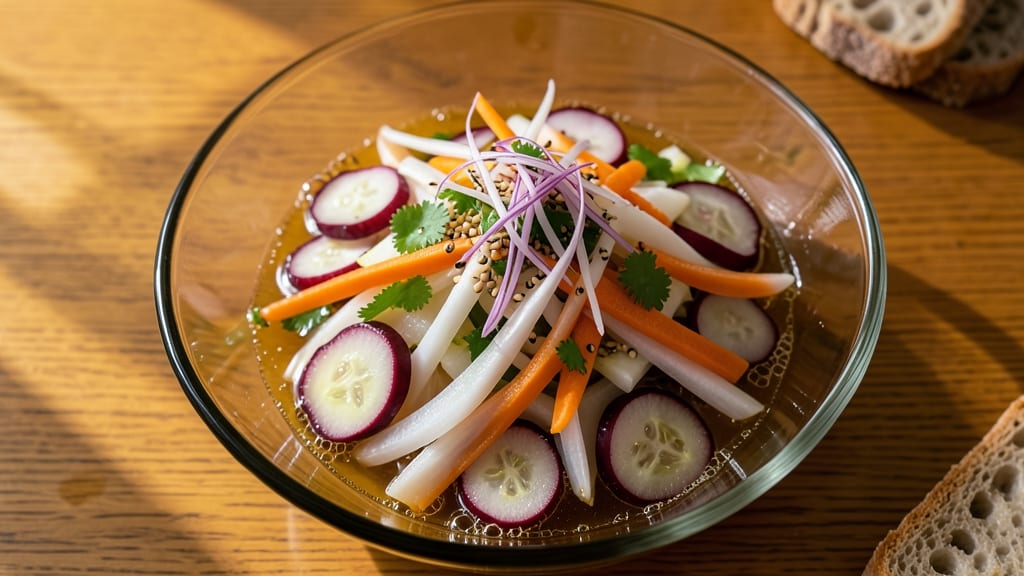
This Asian pickled salad recipe transforms simple vegetables into a vibrant, tangy dish that balances crunch and brightness. The secret lies in a plum-lime dressing that tenderizes the vegetables while adding layers of sweet, sour, and umami—perfect for a refreshing side or light meal.
I developed this version after years of testing traditional techniques, ensuring the rice noodles stay crispy while the vegetables absorb just the right amount of flavor without becoming soggy.
The foundation of this salad is quick-pickled vegetables—thinly sliced cucumbers, carrots, and daikon bathed in a dressing of rice vinegar, sugar, and salt. The key is letting them sit for at least 30 minutes (or up to overnight) so the flavors meld without overpowering the freshness.
Meanwhile, the rice noodles are soaked just until pliable, then tossed with sesame oil and a pinch of salt to keep them chewy and distinct. This method delivers restaurant-quality texture without requiring special equipment.
What makes this salad truly special is how the tangy plum-lime dressing ties everything together—its sweet-tart profile cuts through the crunch while enhancing the natural flavors of the vegetables. The result is a dish that’s light yet satisfying, with each bite offering a mix of textures and flavors.
It’s ideal for warm weather, summer potlucks, or as a side to grilled proteins, but it’s also substantial enough to stand alone. The best part? It comes together in under 20 minutes of active prep, with most of the work happening during the pickling time.
For extra protein, add thinly sliced tofu or shrimp after pickling—just toss them in lightly so they don’t overpower the vegetables. Garnish with toasted sesame seeds or chopped cilantro for added depth.
This salad keeps well in the fridge for up to 3 days, making it a great make-ahead option for meal prep. Let’s get started—your taste buds will thank you for the bright, crunchy contrast.
Ingredients for asian pickled salad
Quick-pickled crunch meets chewy rice noodles in this vibrant, tangy salad—just eight ingredients, big flavor.
| Ingredient | Amount | Notes |
|---|---|---|
| Rice Vinegar 💧 | ½ cup | Seasoned preferred for depth |
| Granulated Sugar 🍚 | ¼ cup | White or brown sugar works |
| Salt 🧂 | 1 ½ tsp | Diamond Crystal preferred |
| English Cucumbers 🥒 | 1 whole | Thinly sliced lengthwise |
| Carrots 🥕 | 1 whole | Julienned into thin matchsticks |
| Daikon Radish 🥬 | 1 whole | Thinly sliced or julienned |
| Rice Noodles 🍜 | 8 oz | Thin vermicelli preferred |
| Sesame Oil 🫒 | 1 tbsp | Toasted sesame oil preferred |
| Fresh Lime Juice 🍋 | ¼ cup | Freshly squeezed preferred |
| Ripe Plums 🍑 | 2 whole | Pitted and finely chopped |
| Fresh Cilantro 🌿 | ¼ cup | Chopped for garnish |
| Toasted Sesame Seeds 🌰 | 1 tbsp | For garnish |
| Red Chili Flakes 🌶️ | ½ tsp | Optional for heat |
The vegetables are the stars here, so pick freshness. Cucumbers should be crisp with no soft spots, and the daikon should have a clean, white interior—Asian markets often carry the best selection. If you can't find daikon, swap in extra carrots or jicama. For the rice noodles, Thai Kitchen brand is my go-to—they soak evenly and stay chewy. If you're using thicker noodles, cut the soaking time by half. The plum-lime dressing is where the magic happens: ripe plums (not too firm) give the best balance of sweet and tart. If you can't find plums, a mix of mango and lime works too.
No rice vinegar? White vinegar with a splash of mirin gets you close, though the flavor won't be as nuanced. Short on daikon? Extra carrots or radishes add crunch without changing the vibe. The sesame oil is non-negotiable for that nutty aroma—Trader Joe's has the best-priced toasted version. If you're sensitive to heat, skip the chili flakes entirely; the lime and vinegar already pack plenty of punch. For extra protein, toss in thinly sliced tofu or shrimp after pickling, but add them last so they don't get soggy. The dressing keeps for up to 2 weeks in the fridge, so make extra for quick salads later.
This salad is a fridge superstar—up to 3 days if stored in an airtight container. The noodles dry out fastest, so keep them separate until ready to serve. For meal prep, portion the pickled veggies and dressing separately, then toss everything together when you're ready to eat. The flavors actually improve after 24 hours as the vegetables absorb more dressing. Garnish with sesame seeds and cilantro right before serving to keep everything looking fresh. If you're serving a crowd, double the dressing—it disappears fast!
Why You'll Love This Recipe
- No-Fuss Prep: I swear by this recipe because it’s the kind of dish that lets me multitask. Slice the cucumbers and carrots while I’m waiting for dinner to cook—no fancy techniques, just even cuts and a quick soak in the vinegar mix. It’s the kind of side that says, "I’ve got this handled."
- Sweet-Tangy Magic: That balance of rice vinegar and sugar? It’s what makes this salad addictive. The cucumbers stay crisp, the carrots get just a little bite, and the dressing clings like a hug. Honestly, I’ll eat this straight from the jar if someone isn’t looking.
- Meal Prep MVP: This salad keeps for weeks in the fridge, making it my go-to for lunches or potlucks. Toss it with grilled chicken for a weeknight dinner, or serve it chilled as a refreshing starter. It’s the one side that never lets me down—no wilting, no sad leftovers.
- Budget Brightener: Cucumbers and carrots are cheap, and a little rice vinegar goes a long way. I make this when I want something fresh without breaking the bank. Plus, the leftovers? They’re always gone before they spoil. Smart, simple, and satisfying.
Step-by-step instructions for Asian pickled salad
Here's how to create a vibrant, tangy salad with perfectly textured noodles and bright, crunchy vegetables.
Prepare the Pickling Marinade
In a medium bowl, combine the 0.5 cup rice vinegar, 0.25 cup granulated sugar, and 1.5 teaspoons salt. Stir until the sugar and salt dissolve completely—this creates a flavorful brine that will infuse the vegetables with tangy sweetness. I like to use seasoned rice vinegar here because it adds subtle depth without needing extra seasoning later.
Let the marinade sit at room temperature for 5 minutes while you prep the vegetables. This brief resting period allows the flavors to meld slightly, ensuring everything absorbs the dressing evenly. The mixture should look clear with no visible sugar crystals—if you see undissolved sugar, stir it vigorously for another 30 seconds until fully combined.
Slice and Marinate the Vegetables
Using a sharp mandoline or chef's knife, thinly slice the 1 whole English cucumber lengthwise into ¼-inch thick strips. Julienne the 1 whole carrot and 1 whole daikon radish into thin matchsticks—this creates uniform texture that holds up well in the dressing. Chop the 2 whole ripe plums into small pieces, removing pits first.
Transfer all sliced vegetables to a large mixing bowl. Pour the prepared marinade over the vegetables and toss gently to coat evenly. Let them marinate for at least 15 minutes—this allows the flavors to penetrate and the vegetables to soften slightly while maintaining their crunch. The cucumbers should look slightly translucent at the edges, and the radish will develop a subtle pinkish hue from the marinade.
Cook and Prepare the Rice Noodles
Bring a large pot of water to a rolling boil. Add the 8 ounces rice noodles and cook according to package instructions—typically 3-5 minutes until al dente. Drain immediately and rinse under cold water for 10 seconds to stop the cooking process and prevent them from becoming mushy. This quick rinse also removes excess starch that could make the noodles gummy.
While the noodles are still slightly warm, toss them with 1 tablespoon sesame oil and 0.25 cup fresh lime juice. The acidity of the lime juice brightens the noodles' flavor while the sesame oil adds nutty richness. Let them cool to room temperature before combining with the vegetables—this prevents the noodles from absorbing too much moisture from the dressing.
Combine and Chill the Salad
In a large serving bowl, gently combine the marinated vegetables with the cooled rice noodles. Add the 0.5 teaspoon red chili flakes (if using) and toss lightly to distribute evenly. The salad should look vibrant with layers of green, orange, and purple from the vegetables. Let it chill in the refrigerator for at least 30 minutes—this allows all the flavors to meld together perfectly.
Before serving, garnish with 0.25 cup chopped fresh cilantro and 1 tablespoon toasted sesame seeds. The cilantro adds freshness while the sesame seeds provide a satisfying crunch. Serve immediately for the best texture contrast between the crisp vegetables, tender noodles, and creamy dressing.
Pro Tips For Making Asian Pickled Salad
- Slice Thinly, Evenly: Use a sharp knife or mandoline for cucumbers and carrots—aim for ⅛-inch slices, not random chunks. I learned this the hard way when my first batch looked like a veggie salad instead of a pickled dish. The thinner the slices, the faster they absorb the dressing and stay crisp.
- Dissolve Sugar First: Warm the rice vinegar slightly (just until sugar dissolves) before mixing with sugar and salt. Cold vinegar leaves grainy bits that ruin the texture, and nobody wants a sandy salad. Stir until the sugar fully disappears—no lumps allowed.
- Salt the Veggies Before Dressing: Toss cucumbers and carrots with a pinch of salt before adding the vinegar mixture. This draws out moisture, so they crisp up better in the dressing. Skip this, and your salad will turn soggy within hours.
- Use a Heavy Bowl: Store the salad in a glass or ceramic bowl, not plastic. The acid in rice vinegar will eat through thin containers over time, and you’ll end up with a vinegary mess. If you’re short on bowls, at least press the veggies down to submerge them fully in the dressing.
Make-ahead tips for this dish
Pickling Prep Ahead
Start the pickling process the night before for maximum flavor development. Combine the 0.5 cup rice vinegar, 0.25 cup sugar, and 1.5 tsp salt in an airtight container and refrigerate.
When ready, add sliced vegetables and let them marinate overnight—this creates a more complex, balanced tanginess. I find this method especially effective for daikon, which absorbs the dressing beautifully. 💧
Noodle Prep Shortcut
Cook and rinse the 8 oz rice noodles in advance, then store them in a sealed container with a damp paper towel to maintain moisture. Toss with 1 tbsp sesame oil right before assembling to prevent drying.
This step saves 10 minutes of active prep time when you're ready to serve. For extra convenience, pre-chop the vegetables and store them in a separate container with the pickling liquid.
Dressing Make-Ahead
Prepare the plum-lime dressing separately and store it in a small jar for up to 2 weeks. Combine 0.25 cup lime juice with chopped plums and a pinch of salt. When ready to assemble, toss the marinated vegetables with the dressing and add the noodles last.
This keeps everything fresh-tasting and prevents the noodles from becoming soggy. The dressing also works perfectly for other quick salads or as a marinade for grilled proteins. 🍋
Portion Control
Divide the salad into individual containers for easy grab-and-go meals. Store the noodles and vegetables separately until ready to eat—this preserves their texture. The vegetables will keep their crunch for 3 days in the fridge, while the noodles stay best for 2 days if kept dry.
When reassembling, add a splash of fresh lime juice to brighten the flavors. This method is perfect for meal prep lunches or potluck contributions.
Flavor Boost Tips
Add a pinch of garlic powder or ginger to the pickling marinade for extra depth. For a protein boost, cook ½ lb firm tofu with a splash of soy sauce and sesame oil, then slice and add to the salad just before serving.
The tofu absorbs the dressing while adding a satisfying texture contrast. I also like toasting the sesame seeds in a dry pan for 1 minute before garnishing to intensify their nutty flavor. ✨
Nutrition facts
Frequently asked questions
Can I make this salad without rice noodles?
The rice noodles add a satisfying chew, but you can substitute with shredded cabbage, thinly sliced bell peppers, or even cooked quinoa for a grain-based option. If using quinoa, cook it separately and chill before mixing—it holds up better to the dressing than warm grains. For extra crunch, add toasted coconut flakes or crushed peanuts as a garnish.
How do I adjust the dressing for less sugar?
Reduce the sugar to 0.125 cup (half the original amount) and increase the rice vinegar to 0.6 cup to maintain balance. For extra umami, add 1 teaspoon soy sauce or ½ teaspoon fish sauce (if not vegetarian). The lime juice will also help brighten the flavors without needing extra sweetness. Taste as you go—you can always add more vinegar or lime later.
What’s the best way to store leftovers?
Keep the noodles and pickled vegetables in separate airtight containers for up to 3 days. When ready to eat, toss them together and add a splash of fresh lime juice to revive the flavors. The dressing can be stored separately for up to 2 weeks in the fridge. For longer storage, freeze the vegetables (without dressing) for up to 1 month—just thaw and re-pickle before serving.
Can I use this dressing for other dishes?
The plum-lime dressing works beautifully as a marinade for grilled shrimp or chicken skewers. It also elevates steamed fish or tofu dishes by adding brightness. For a quick sauce, thin it with a splash of water and drizzle over rice bowls or noodle soups. The pickling marinade (without fruit) can also be used for quick-pickled onions or green beans.
Why did my vegetables turn mushy?
Over-marinating or using thickly sliced vegetables causes sogginess. Stick to ¼-inch thick slices and marinate for no longer than 2 hours—the ideal time is 30-60 minutes. Also, avoid overcrowding the bowl when storing. For extra crunch, add 1 teaspoon cornstarch to the marinade before tossing the vegetables—it helps preserve their texture. Serve immediately after chilling for best results.