
Side Dishes
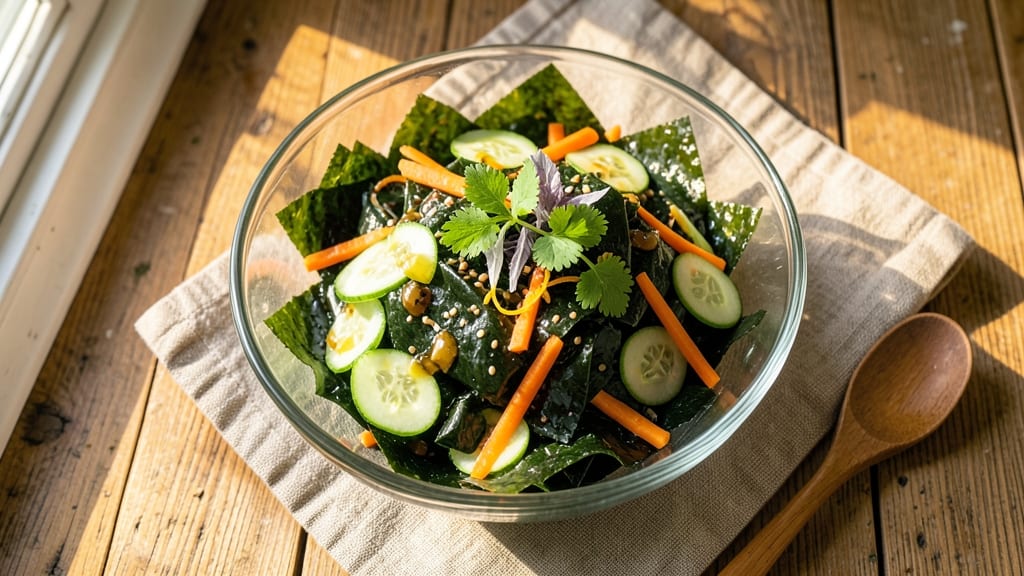
This Asian seaweed salad recipe delivers crispy wok-tossed texture with a citrusy sesame zing that transforms simple ingredients into something extraordinary.
The secret lies in properly hydrating the seaweed—soaking it just long enough to soften without losing its natural crunch—then wok-tossing with a bright dressing of lime, sesame oil, and toasted sesame seeds.
I developed this recipe after realizing how often seaweed salads turn mushy, and this method guarantees that perfect balance of texture every time.
The foundation starts with thinly sliced cucumber, julienned carrots, and fresh herbs like cilantro and mint, all tossed with the seaweed to create a vibrant, colorful base.
What sets this apart is the dressing: a perfect marriage of tangy lime juice, toasted sesame oil, a touch of maple syrup for balance, and a sprinkle of sesame seeds that adds both crunch and depth.
The wok-tossing technique isn't just about cooking—it's about building layers of flavor through quick, high-heat action that keeps everything crisp.
By the time you're done, you'll have a salad that's crispy at the edges, bright with citrus, and packed with umami from the seaweed. The contrast of textures—crunchy seaweed, crisp vegetables, and creamy sesame seeds—makes each bite exciting.
This isn't just a side dish; it's a complete, satisfying meal that pairs beautifully with grilled proteins or stands alone as a light, refreshing dish.
The best part? This recipe scales effortlessly—double the batch for gatherings or meal prep for the week. The flavors actually improve as the dressing marinates into the seaweed, making it perfect for making ahead.
Let's create this vibrant, flavor-packed salad that brings a taste of Asia to your table with minimal effort and maximum impact.
Ingredients for asian seaweed salad
Crispy seaweed, vibrant veggies, and zesty dressing—this salad delivers restaurant-quality flavor with minimal effort.
| Ingredient | Amount | Notes |
|---|---|---|
| Dried Seaweed Sheets 🍱 | 8 sheets | Hydrated for 10 minutes, drained |
| Persian Cucumber 🥒 | 1 whole | Thinly sliced, seeds removed |
| Carrots 🥕 | 2 whole | Julienned into matchsticks |
| Fresh Cilantro 🌿 | ½ cup | Stems removed, chopped |
| Fresh Mint Leaves 🌿 | ¼ cup | Finely chopped |
| Lime Juice 🍋 | ½ cup | Freshly squeezed |
| Toasted Sesame Oil 🫒 | 2 tbsp | Lightly toasted for flavor |
| Pure Maple Syrup 🍯 | 1 tbsp | For subtle sweetness |
| Sesame Seeds 🌰 | 2 tbsp | Toasted in dry pan |
| Rice Vinegar 🍶 | 1 tbsp | White or seasoned |
| Sesame Salt 🧂 | 1 tsp | For final garnish |
| Red Chili Flakes 🌶️ | ½ tsp | Optional for heat |
Seaweed is the star here, so look for high-quality dried sheets—the kind you find in the Asian aisle or at Trader Joe's. Koyado or Hana brand are my go-tos, but any good-quality dried seaweed works. Hydrate it for exactly 10 minutes—any longer and it turns mushy. The cucumber should be Persian or English type for fewer seeds, but regular works too if you remove them. For the herbs, fresh cilantro and mint make all the difference—skip the dried stuff. The sesame oil is non-negotiable for that authentic flavor, so don't substitute with regular vegetable oil.
No sesame seeds? Toasted sunflower seeds work in a pinch, though they won't have the same nutty depth. Running out of lime juice? Substitute lemon juice at the same amount, but it won't be quite as bright. For the maple syrup, agave nectar or date syrup are good alternatives if you're avoiding refined sugar. The rice vinegar adds a subtle tang—apple cider vinegar can replace it, but you'll need to add a pinch more salt. If you love heat, add extra chili flakes or a dash of Sriracha to the dressing. The dressing keeps for 5 days in the fridge, so make extra for other dishes!
This salad is made to be prepped ahead—store the dressing separately and toss everything together just before serving. The seaweed stays crisp for 3 days in the fridge if you drain it well and store it in a single layer. For meal prep, portion the dressing into small containers and keep the veggies and seaweed in a separate container. When you're ready to eat, just toss everything together and let it sit for 10 minutes to let the flavors meld. It's even better the next day—the seaweed absorbs the dressing and gets more flavorful. Serve it as a side or a light main with grilled tofu or tempeh!
Why You'll Love This Recipe
- No-Soaking Required: I’ll be real—this seaweed salad only needs a quick 5-minute soak in warm water, not the overnight marinade some recipes demand. That crisp, ocean-fresh texture? Ready in the time it takes to chop a cucumber.
- Herb-Packed Punch: Between us, the mint and cilantro turn this into a flavor bomb. The Persian cucumber adds a sweet, almost melon-like crunch, while the carrots give it that satisfying bite. Honestly, it’s the kind of salad that makes you take seconds.
- Lunchbox Legend: I pack this in my kids’ lunches all the time—it’s sturdy enough to survive a backpack ride, and the flavors actually get better as it sits. Plus, it’s the perfect side for takeout, potlucks, or when you’re too tired to cook.
- Budget Brightener: Dried seaweed sheets last forever in the pantry, and the rest of the ingredients are dirt cheap. For under $5, I get a salad that feels fancy without the price tag. My wallet and my taste buds win.
Step-by-step instructions for crispy wok-tossed Asian seaweed salad
This vibrant salad delivers perfect crispiness with every toss—here's how to nail it every time.
Hydrate and Prep the Seaweed Sheets
Place the 8 sheets dried seaweed sheets in a shallow bowl and cover them completely with warm water. Let them soak for exactly 10 minutes—this ensures they soften evenly without turning mushy. You'll know they're ready when they're pliable but still hold their shape when gently pressed.
After soaking, drain the seaweed thoroughly using a fine-mesh strainer or paper towels. Press out any excess water with your hands or a clean kitchen towel. The drier they are, the crispier they'll stay when tossed. Keep them covered with a damp towel to prevent drying out completely while you prep the other ingredients.
Prepare the Vegetable Base
Using a mandoline or sharp knife, slice the 1 whole Persian cucumber into ⅛-inch thick rounds, then remove the seeds with a spoon. This creates delicate, translucent slices that'll stay crisp even after tossing. Cut the 2 whole carrots into matchstick-thin julienne strips—about ¼-inch wide—using a julienne peeler or sharp knife. The thinner the strips, the more surface area for that perfect wok-tossed texture.
Transfer both vegetables to a large mixing bowl. Add the 0.5 cup chopped fresh cilantro and 0.25 cup finely chopped fresh mint leaves, tossing gently to distribute evenly. These herbs will add bright, aromatic layers that balance the seaweed's umami flavor. Give everything a quick mix now so the herbs infuse the vegetables slightly before the final dressing.
Create the Signature Citrusy Dressing
In a small bowl, whisk together the 0.5 cup freshly squeezed lime juice, 2 tbsp toasted sesame oil, 1 tbsp pure maple syrup, and 1 tbsp rice vinegar. The lime juice should be freshly squeezed—bottled won't have the same bright zing. Taste the mixture and adjust the sweetness if needed; you want a balance between tart and slightly sweet.
Add 1 tsp sesame salt and 0.5 tsp red chili flakes (if using) and whisk vigorously until fully combined. This dressing is the secret to that addictive citrusy sesame zing. The maple syrup adds just enough sweetness to round out the acidity, while the chili flakes give it a subtle kick. Set the dressing aside until you're ready to toss everything together.
Wok-Toss for Maximum Crispiness
Heat a large wok or skillet over high heat until it's smoking slightly. Add the drained seaweed sheets and toss them continuously for 1-2 minutes until they're deep golden brown and crispy around the edges. Seaweed cooks fast—don't walk away, or they'll burn before crisping. The high heat is crucial for that restaurant-quality texture.
Immediately transfer the crispy seaweed to your prepared vegetable mixture. Pour the dressing over everything and toss vigorously with tongs or a large spoon. You want each piece of seaweed and vegetable to be thoroughly coated in the dressing. The residual heat from the wok will help the dressing cling perfectly, creating that signature glossy finish.
Garnish and Serve Immediately
Sprinkle the 2 tbsp toasted sesame seeds evenly over the salad and toss one final time to distribute them. The seeds add a delightful nutty crunch that contrasts beautifully with the crisp seaweed and tender vegetables. Serve the salad immediately while everything is still crisp and the dressing is glossy—this dish doesn't wait well.
For the best experience, serve this Asian seaweed salad over a bed of chilled jasmine rice or alongside grilled shrimp. The contrast of temperatures and textures makes every bite exciting. If you're feeling adventurous, add a few crispy fried shallots on top right before serving for an extra layer of crunch and flavor.
Pro Tips For Making Asian Seaweed Salad
- SOAK SEAWEED IN ICE WATER: Dried sheets need more than just warm water—they’ll turn rubbery if you’re lazy. Use cold water and let them sit for 10-15 minutes (no longer, or they’ll dissolve). I learned this the hard way when my first batch ended up chewy instead of tender.
- PEEL CUCUMBERS AT THE LAST MINUTE: Persian cucumbers bruise fast, and their skin gets soggy when tossed with wet seaweed. Peel them right before mixing—even if it’s messy, the texture stays crisp. (Yes, I know, it’s annoying, but trust me.)
- JULIENNE CARROTS UNIFORMLY: Thick strips sit like rocks; paper-thin ones disappear. Aim for 1/8-inch matchsticks—cut them on the bias if you’re feeling fancy. My first attempt used uneven strips, and the salad looked like a hot mess.
- DRESSING FIRST, THEN HERBS: Add the dressing to the seaweed and veggies first, then fold in cilantro and mint last. This keeps the herbs vibrant instead of wilted. (I used to dump everything in at once, and the greens always turned sad.)
Best sauces and condiments for this dish
Citrusy Sesame Dressing
The signature dressing here is all about balance—bright lime juice cuts through the richness of the seaweed, while toasted sesame oil adds depth. I recommend using Kirkland Signature lime juice for the freshest zing, and always toast your sesame oil in a dry pan for 30 seconds until fragrant.
The 1 tbsp maple syrup is key to rounding out the acidity, but if you prefer less sweetness, reduce it to ½ tbsp. 🍋
Spicy Chili-Lime Twist
For a kick, add 1 tsp gochujang paste to the dressing along with the chili flakes. This Korean fermented chili paste brings a deep, slightly sweet heat that pairs perfectly with the seaweed's umami.
If you can't find gochujang, Sriracha works in a pinch—just use ½ tsp to avoid overpowering the delicate flavors. The heat will mellow slightly as it sits, so start with less if you're sensitive to spice.
Umami Boost Options
For extra depth, stir in 1 tsp soy sauce or 1 tsp fish sauce (if not vegan) into the dressing. I love using San-J Tamari for its rich, slightly sweet profile. Another pro move: add 1 tsp toasted garlic powder to the dressing for a savory punch.
These additions work especially well if you're serving the salad as a main dish with lighter proteins like tofu or shrimp.
Sweet and Tangy Variations
Craving something sweeter? Swap the maple syrup for 1 tbsp honey or agave nectar and add ½ tsp grated fresh ginger to the dressing. The ginger brightens the flavors and adds a subtle warmth.
For a tropical twist, replace 1 tbsp lime juice with orange juice—this works beautifully with the seaweed's natural oceanic notes. The dressing will take on a completely different character while still maintaining that signature crispness.
Nutty Crunch Garnishes
Beyond sesame seeds, try toasting 1 tbsp pumpkin seeds or 1 tbsp slivered almonds for extra crunch. I like using a mini food processor to pulse the seeds for even toasting. For a smoky touch, sprinkle ½ tsp smoked paprika over the salad after tossing.
These garnishes add visual appeal and textural contrast that elevates the dish from simple side to showstopper centerpiece. 🌰
Make-Ahead Dressing
You can prep the dressing up to 3 days ahead and store it in an airtight container in the fridge. The flavors actually improve as the ingredients meld together. Just before serving, give it a quick whisk to re-emulsify.
For the seaweed, store it separately in a single layer on a plate in the fridge—this prevents sogginess. When ready to assemble, toss everything together and let it sit for 10 minutes to allow the dressing to fully coat the seaweed.
The wait is worth it for that restaurant-quality finish. ⏳
Nutrition facts
Frequently asked questions
Can I use any type of dried seaweed for this recipe?
For best results, use thin dried sheets like kombu or nori—these hold their texture perfectly when crisped. Thicker varieties may stay chewy even after wok-tossing. Avoid powdered seaweed flakes, as they lack the structural integrity for this dish.
How do I prevent the seaweed from turning soggy?
Drain the seaweed thoroughly after soaking and pat it dry with paper towels. Store it in a single layer on a wire rack in the fridge until ready to use. Never stack wet seaweed sheets, as moisture will cause them to stick together. The wok-tossing step also requires high heat—keep the pan smoking hot for that crispy finish.
What's the best way to store leftovers?
Store the dressing separately in an airtight container for up to 5 days, and keep the seaweed and veggies in another container. Toss everything together just before serving to maintain crispness. For longer storage, freeze the seaweed sheets (uncooked) for up to 1 month—thaw and crisp fresh when ready.
Can I make this salad without sesame oil?
Yes, but the flavor will be less authentic. Substitute with avocado oil or neutral oil, but add ½ tsp toasted sesame seeds to the dressing for depth. For a nutty alternative, use walnut oil (sparingly)—it pairs surprisingly well with the citrus notes. The key is balancing the dressing components to maintain harmony.
Is this salad suitable for meal prep?
Prep all components separately and store them in the fridge for up to 3 days. Keep the seaweed in a single layer to prevent sticking, and store the dressing in a small container. When ready to eat, toss everything together and let it sit for 10 minutes to allow flavors to meld. The seaweed will stay crisp if stored properly.