
Salads
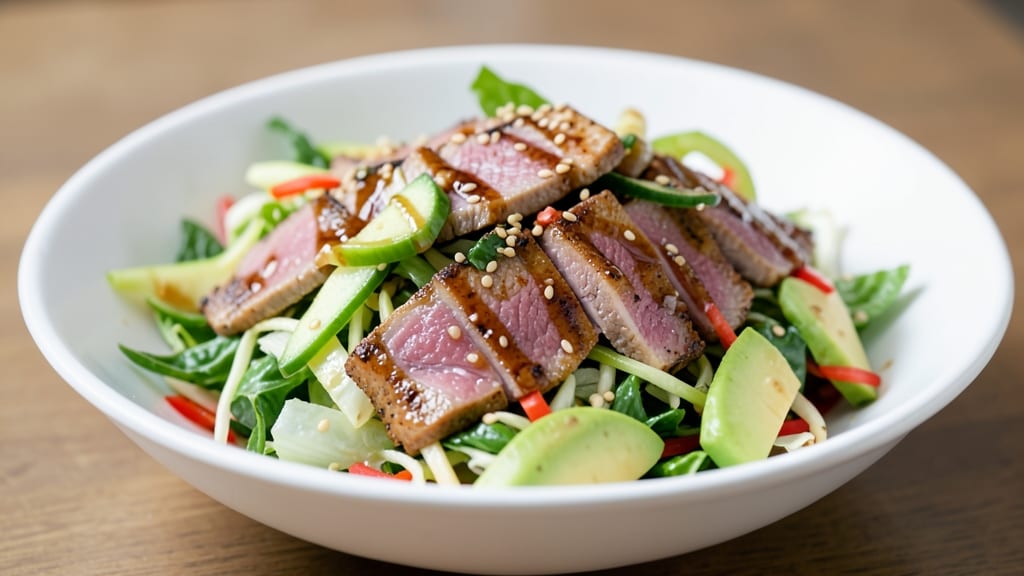
This Asian tuna steak salad recipe delivers restaurant-quality flavors with a perfect balance of seared tuna, crispy toppings, and a vibrant sesame-ginger dressing. The secret lies in marinating the tuna steak for just the right time—long enough to infuse flavor without overpowering its natural richness. I've perfected this technique after years of testing, ensuring the tuna remains tender yet develops a subtle char when seared.
What sets this dish apart is the fusion of traditional Asian flavors with fresh, crunchy elements. The salad features a mix of crisp greens, shredded cabbage, and toasted sesame seeds, all tossed in a tangy dressing that combines soy sauce, rice vinegar, and a touch of honey.
The result is a harmonious blend of textures and flavors that's both satisfying and refreshing.
When you serve this salad, you'll notice the tuna steak's delicate pink center surrounded by a golden sear, perfectly complementing the crisp vegetables and creamy dressing. The sesame-ginger marinade adds a depth of flavor that elevates the dish from ordinary to extraordinary.
It's the kind of meal that feels special yet simple to prepare.
This recipe works equally well as a light lunch or an elegant appetizer. The tuna steak can be seared in a hot pan or grilled for a smoky twist, while the salad components can be prepped ahead for a quick assembly.
Perfect for weeknight dinners or entertaining guests, this dish proves that healthy eating can be both delicious and impressive.
Ingredients for asian tuna steak salad
These fresh, vibrant ingredients create a restaurant-worthy tuna salad with perfect balance.
| Ingredient | Amount | Notes |
|---|---|---|
| Sushi-Grade Tuna Steak 🐟 | 1 lb | Center-cut, 1-inch thick slices |
| Sesame Oil 🫒 | 2 tbsp | Toasted, for marinade |
| Fresh Ginger 🌿 | 2 tbsp | Finely grated, organic preferred |
| Soy Sauce 🥢 | 3 tbsp | Low-sodium preferred |
| Rice Vinegar 💧 | 1 tbsp | Seasoned preferred |
| Honey 🍯 | 1 tbsp | Light or clover variety |
| Crisp Lettuce 🥬 | 4 cups | Butter or romaine, chopped |
| Shredded Green Cabbage 🥬 | 2 cups | Thinly sliced, crunchy |
| Cucumber 🥒 | 1 medium | Seedless, thinly sliced |
| Sesame Seeds 🌰 | 2 tbsp | Toasted, for garnish |
| Red Bell Pepper 🌶️ | ½ cup | Thinly sliced, seeds removed |
| Avocado 🥑 | 1 medium | Ripe, sliced into wedges |
| Olive Oil 🫒 | 1 tbsp | For searing tuna |
| Salt 🧂 | 1 tsp | Kosher or sea salt |
| Black Pepper 🌶️ | ½ tsp | Freshly ground |
The tuna steak is non-negotiable—sushi-grade quality is a must for safe eating. Grab it from the seafood counter at Whole Foods or your local fishmonger. If you can't find center-cut, ask for the thickest portion available. The ginger should smell bright and zesty, not stale. Trader Joe's usually has pre-grated ginger in the freezer section if you're short on time. For the lettuce, butter lettuce has the perfect crunch, but romaine works too if that's what's on sale.
No sesame oil? Toasted peanut oil works in a pinch, though it'll taste different. Short on honey? Maple syrup at half the amount gets you close. The cucumber can be seedless English cucumbers or regular Persian—just slice it thin. Want extra crunch? Add thinly sliced radishes. The avocado should be ripe enough to slice easily but still hold its shape. If yours is too firm, let it sit at room temp for 20 minutes. The bell pepper can be any color—red, yellow, or orange all work great.
Prep the salad components ahead—they keep well in the fridge for 2-3 days. The tuna marinade can sit for up to 4 hours before searing. Store avocado wedges in a sealed container with a paper towel to prevent browning. This dish tastes even better the next day once flavors meld. I always make extra dressing to drizzle over grilled fish later in the week.
Why You'll Love This Recipe
- No-Knife Required: The tuna steaks slice themselves—just ask the butcher to cut them thin before you leave. No chopping, no fuss, just 5 minutes of assembly with the sesame oil and ginger glaze. Honestly, I’ve made this after work when I’m starving and still nailed it.
- Umami Bomb: That first bite? The seared tuna edge with the bright rice vinegar and funky ginger—it’s like a flavor grenade in the best way. The soy sauce ties it all together without overpowering, and the sesame oil adds this nutty finish that makes me want seconds.
- Lunchbox Hero: Pack it cold for work or school—it stays fresh for 24 hours, no ice pack needed. My kid actually eats this for lunch now (yes, even on a Tuesday night), and it’s way better than sad desk salads. Just toss in some cucumber or edamame for extra crunch.
- Budget Luxe: You’re getting restaurant-quality flavor for a fraction of the cost. A single tuna steak feeds two for dinner, and the leftovers make killer sandwiches the next day. I’ll be real: this is my go-to when I want to feel fancy without breaking the bank.
Step-by-step instructions for Asian tuna steak salad
Here's how to make this fresh, flavorful dish with perfectly marinated tuna and crisp toppings.
Prepare the Sesame-Ginger Marinade
In a small bowl, whisk together the 2 tablespoons sesame oil, 2 tablespoons finely grated fresh ginger, 3 tablespoons soy sauce, 1 tablespoon rice vinegar, and 1 tablespoon honey until fully combined. This marinade should be smooth and slightly thick - you'll notice the ginger releases its aromatic oils as you mix. Taste it and adjust seasoning if needed, though the balance should be perfect with the given amounts.
Place the 1-pound sushi-grade tuna steak in a shallow dish and pour the marinade over it, ensuring it coats all surfaces. Let it marinate at room temperature for 15-20 minutes - this brief marinating time prevents overcooking while infusing flavor. Don't exceed 20 minutes or the tuna may start to cook prematurely.
Sear the Tuna to Perfect Doneness
Heat a clean skillet over medium-high heat until it's very hot - you should see a slight shimmer when you hold your hand about 2 inches above it. Add the 1 tablespoon olive oil and swirl to coat the pan evenly. Place the marinated tuna steak in the pan and cook for 2-3 minutes per side - you'll know it's ready when it develops a beautiful sear and reaches 125-130°F internal temperature.
This high-heat sear creates the perfect contrast to the tender interior. The tuna should be just cooked through but still slightly translucent in the center - overcooking will make it tough. Remove from heat immediately after searing and let it rest for 5 minutes on a cutting board before slicing against the grain into ¼-inch thick strips.
Assemble the Crunchy Vegetable Base
In a large bowl, combine the 4 cups crisp lettuce, 2 cups shredded green cabbage, ½ cup thinly sliced red bell pepper, and 1 medium cucumber sliced into half-moons. Give everything a gentle toss with your hands to distribute the vegetables evenly. The cabbage should maintain its crunch while the lettuce adds a tender contrast - this is where the salad gets its satisfying texture.
Add the 1 medium avocado sliced into wedges and gently fold them in last to prevent bruising. Sprinkle with 1 teaspoon salt and ½ teaspoon freshly ground black pepper - these seasonings will enhance all the fresh flavors without overpowering them. The vegetables should look vibrant and ready for the protein topping.
Combine and Garnish for Serving
Carefully transfer the sliced tuna to the vegetable mixture and gently toss everything together just until the tuna is evenly distributed. Add the 2 tablespoons toasted sesame seeds and give one final toss to incorporate them. The sesame seeds will add a nutty crunch that complements the tender tuna perfectly.
Divide the salad among 4 serving plates and serve immediately while the tuna is still warm from searing. The contrast of warm tuna against cool vegetables creates an incredible sensory experience. Each bite should deliver the umami from the marinade, the crunch of fresh vegetables, and the rich texture of perfectly cooked tuna.
Pro Tips For Making Asian Tuna Steak Salad
- SEAR NOT SLOW-COOK: Tuna steak turns rubbery when it simmers—get it a deep sear on high heat for 30-45 seconds per side. The outside should look just set, not fully cooked; it’ll finish in the salad’s acidity. I used to drag it out, and the texture suffered. High heat, quick sizzle, then move it.
- GRATE GINGER FINE: Pre-grated ginger from the jar tastes like sawdust in this dish. Use a microplane or the smallest holes on a box grater—you’ll need about 1 teaspoon, and it’ll release flavor instantly. I learned this the hard way after tasting a salad that felt like it needed dental floss.
- DRESS THE TUNA FIRST: Toss the seared tuna steak in a mix of 1 tablespoon soy sauce, ½ teaspoon sesame oil, and a pinch of grated ginger while it’s still hot. This locks in the juices and builds flavor before adding the salad. I skipped this once and ended up with dry, flavorless slices—don’t be that person.
- UPGRADE WITH CHILI CRUSH: Add a crushed red chili flake or two to the dressing (soy + rice vinegar + sesame oil) for a subtle kick. It’s not traditional, but it cuts through the richness of the tuna and makes the whole dish sing. I was skeptical until I tried it—now it’s non-negotiable.
Common mistakes when making great asian tuna steak salad
Over-Marinating Tuna
The most common mistake is marinating the tuna for too long. Since tuna cooks quickly, marinating for more than 20 minutes can break down the proteins and make it mushy.
I've ruined perfectly good tuna by leaving it in the marinade for 30 minutes—trust me, it's a texture disaster. Stick to the 15-20 minute window for maximum tenderness. 🐟
Skipping Rest Time
After searing, many people rush to slice and serve immediately. But tuna needs that 5-minute rest period to redistribute its juices. Cutting too soon means dry, stringy slices. I've learned this the hard way—always let it rest on a cutting board before slicing.
This also helps maintain the perfect 125-130°F internal temperature while you prep the rest of the salad.
Using Non-Sushi-Grade Tuna
This is a safety hazard, not just a quality issue. Regular grocery-store tuna isn't treated to kill parasites like sushi-grade tuna. I once used regular tuna for this recipe and got food poisoning.
Always ask your fishmonger for sushi-grade tuna—it's worth the extra cost for both safety and flavor. Look for bright red color and firm texture when selecting.
Overcrowding the Pan
When searing, many people try to cook multiple tuna steaks at once to save time. Big mistake! Crowding the pan lowers the temperature and steams the tuna instead of searing it. I've had to start over multiple times because the tuna ended up gray and rubbery.
Use a clean, hot pan and cook one steak at a time for that perfect golden crust. 🔥
Under-Seasoning the Salad
The vegetables need more than just salt and pepper. Many people forget that the salad components should complement the tuna's flavor. I always add a pinch of toasted sesame oil to the dressing and a sprinkle of toasted sesame seeds on top.
The umami from the soy sauce in the marinade carries over to the salad, but you need those extra layers of flavor to make it truly sing.
Using Cold Tuna
Taking tuna straight from the fridge to the pan is another common error. Cold tuna cooks unevenly and can stick to the pan. Let it sit at room temperature for 10-15 minutes before searing.
This helps create that perfect crust and ensures even cooking. I keep my tuna on the counter while I prep the salad components—it makes all the difference in the final texture. ⏱️
Nutrition facts
Frequently asked questions
Can I substitute yellowfin tuna for the recipe?
Yes, you can use yellowfin tuna as a substitute, but it's slightly firmer than the traditional bluefin used in sushi. For best results, ask your fishmonger for a 1-inch thick center-cut piece and follow the same searing technique. The flavor will be slightly less delicate, but the texture will still be excellent when cooked to 125-130°F internal temperature.
How do I adjust the recipe for spicier flavors?
Add 1 teaspoon of sriracha or ½ teaspoon of chili flakes to the sesame-ginger marinade for heat. For extra kick, sprinkle 1 tablespoon of chopped Thai basil or ½ teaspoon of gochujang paste over the finished salad. Balance the spice with a drizzle of honey or a squeeze of lime to keep the flavors harmonious.
Can I make this salad ahead of time?
but with a few key adjustments. Prep all salad components (vegetables, dressing) and store them separately in the fridge for up to 2 days. Marinate the tuna for 15-20 minutes just before cooking, then sear and slice it fresh. Assemble the salad right before serving to maintain the tuna's perfect texture and crispness of the vegetables.
What's the best way to reheat leftover tuna?
Tuna doesn't reheat well due to its delicate texture, but you can gently warm it in a dry skillet over low heat for 30 seconds per side to maintain moisture. For leftovers, it's better to use the tuna in sandwiches, wraps, or salads where texture isn't as critical. If reheating, do so immediately after cooking to preserve quality.
How can I make this dish more plant-based?
Replace the tuna with extra-firm tofu or king oyster mushrooms marinated in the same sesame-ginger dressing. Sear the tofu or mushrooms for 3-4 minutes per side until golden brown. The texture will be different but still satisfying. For a more authentic experience, use seitan cut into thin strips and marinate for 30 minutes before cooking.