
Salads
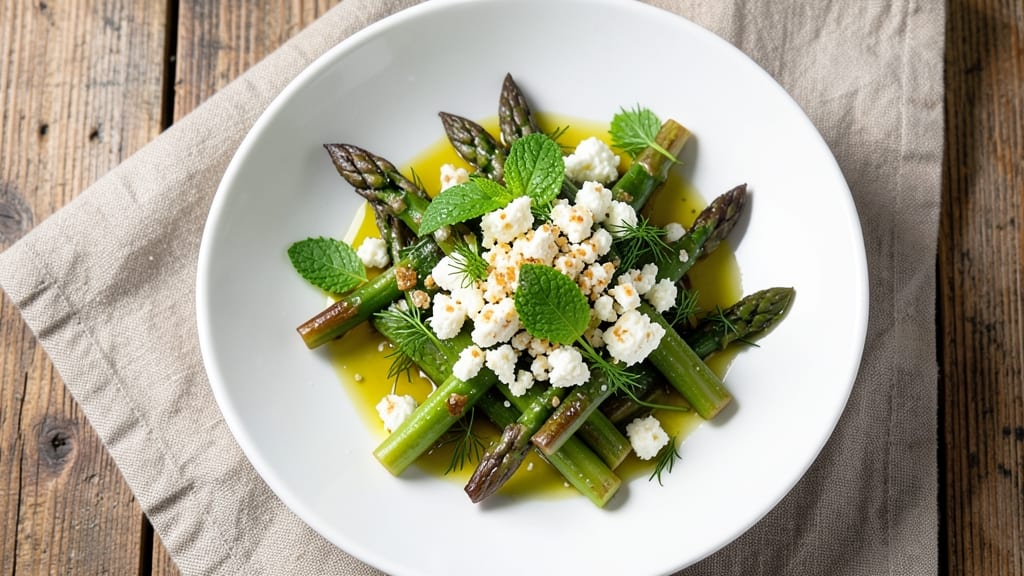
This asparagus salad recipe with feta delivers a perfect balance of crisp blanched stems and creamy, tangy cheese that transforms spring vegetables into a restaurant-worthy dish. 💛 The secret lies in blanching the asparagus first—just 2 minutes in boiling water preserves that satisfying crunch while softening the stalks to perfection.
I developed this recipe during early spring when fresh asparagus was at its peak, and it quickly became my go-to vegetarian main dish that feels indulgent yet light.
The foundation of this salad is simple: blanched asparagus, flaky feta, fresh herbs, and a bright lemon vinaigrette that ties everything together. What makes it special is the texture contrast—crisp asparagus against creamy feta, with optional additions like toasted almonds or grilled chicken for extra substance.
The dressing is quick to make with just 5 ingredients, and you can adjust the lemon to tang ratio to suit your preference.
By the time you've tossed everything together, you'll have a salad that's vibrant, satisfying, and packed with spring flavors. The blanched asparagus holds its shape beautifully while absorbing the dressing, and the feta adds that salty, creamy element that makes every bite irresistible.
It's the kind of dish that feels special enough for dinner guests but simple enough for a weeknight supper.
This recipe works equally well as a vegetarian main course or light lunch, and it keeps beautifully in the refrigerator for up to 2 days—making it perfect for meal prep.
Whether you're serving it to a crowd or treating yourself to a fresh spring meal, this asparagus salad delivers on both flavor and presentation. Let's get started!
Ingredients for asparagus salad recipe with feta
Bright spring flavors and crisp textures—this salad transforms simple ingredients into a restaurant-worthy vegetarian dish.
| Ingredient | Amount | Notes |
|---|---|---|
| Fresh Asparagus Spears 🌱 | 1 lb | Medium-thick spears, trimmed |
| Crumbled Feta Cheese 🧀 | 6 oz | High-quality, brined feta |
| Extra-Virgin Olive Oil 🫒 | ½ cup | Light, fruity variety |
| Lemon Juice 🍋 | ⅓ cup | Freshly squeezed |
| Fresh Mint Leaves 🌿 | ⅓ cup | Finely chopped |
| Fresh Dill 🌿 | ¼ cup | Chopped, stems removed |
| Toasted Almond Slices 🌰 | ½ cup | Optional, for crunch |
| Diamond Crystal Kosher Salt 🧂 | ½ tsp | For seasoning |
| Freshly Ground Black Pepper 🌶️ | ¼ tsp | Freshly cracked |
| Honey 🍯 | 1 tbsp | For dressing sweetness |
| Red Wine Vinegar 🍷 | 1 tbsp | Dry variety preferred |
| Garlic Cloves 🧄 | 2 cloves | Minced for dressing |
The asparagus makes or breaks this dish. Look for spears with tightly closed tips and vibrant green color—those at Whole Foods or local farmers markets are usually the freshest. Trim the woody ends by bending spears until they snap naturally. For the feta, avoid pre-crumbled varieties—they're often packed with additives. Buy a wedge of Olympos or Kalamata feta from the deli section and crumble it yourself. The difference in texture and flavor is worth the extra step. If you can't find fresh asparagus, frozen asparagus works in a pinch—just thaw and pat dry before blanching.
No mint? Fresh basil or parsley will work, though mint's bright flavor is ideal. Running short on almonds? Toasted walnuts or pecans add a similar crunch. The dressing is where you can get creative—swap the honey for maple syrup if you prefer, or add a pinch of red pepper flakes for subtle heat. For the olive oil, avoid heavily processed brands—look for extra-virgin with a harvest date within the last year. The vinegar can be white wine vinegar too, but red wine vinegar adds a deeper complexity that pairs beautifully with the feta. If you're making this ahead, prepare the dressing separately and toss it with the salad just before serving to keep everything crisp.
Blanched asparagus keeps its best texture for 2 days in the fridge, but the dressing should always be made fresh. Store the feta in its original brine if possible—it stays fresher longer. For meal prep, keep the salad components separate until ready to serve. The almonds stay crisp for 5 days if stored in an airtight container. This salad tastes even better the next day as the flavors meld together—perfect for make-ahead lunches. If you have leftovers, drizzle a little extra olive oil before storing to help preserve the herbs' freshness.
Why You'll Love This Recipe
- No-Cook Magic: I swear by this trick—just trim the asparagus, toss it with the feta, and let the lemon and olive oil work their charm. Zero stove time, zero fuss, and somehow it still feels like a meal.
- Salty-Sweet Crunch: That first bite? The bright snap of asparagus meets the crumbly, tangy feta—like a Mediterranean vacation in your mouth. The mint just ties it all together with a fresh little bow.
- Picnic to Potluck: Pack it in a jar for lunch or bring it to a BBQ—this salad holds up like a champ. Honestly, it’s my go-to when I need something that’s equal parts fancy and effortless.
- Feta on a Budget: A small block of feta and a bunch of asparagus go a long way. I’ve stretched this recipe for four days of lunches, and it’s always better the second time around—if that’s even possible.
Step-by-step instructions for crisp asparagus salad with feta
Here's how to create a vibrant, textured salad where blanched asparagus meets briny feta.
🍳 Step 1: Blanch Asparagus for Perfect Crisp-Tender Texture
Fill a large pot with 2 inches of water and bring to a rolling boil. While waiting, trim the tough ends from the 1 lb fresh asparagus spears by bending each spear until it snaps naturally—this is where the fibrous ends break. The spears should be about 6-8 inches long after trimming.
Once boiling, add the asparagus and cook for exactly 2 minutes. You want them to be bright green and just tender enough to pierce with a fork but still hold their shape. Immediately drain in a colander and run under cold water to stop the cooking process. This quick shock treatment preserves their vibrant color and crisp texture.
👨🍳 Step 2: Prepare the Herb-Vinegar Dressing
In a medium bowl, whisk together the 0.5 cup extra-virgin olive oil, 0.33 cup lemon juice, 1 tbsp honey, and 1 tbsp red wine vinegar until fully emulsified. The dressing should look smooth and slightly thickened. Add the 2 minced garlic cloves and mix briefly—don't let them sit too long or they'll become bitter.
Next, fold in the 0.33 cup finely chopped fresh mint leaves and 0.25 cup chopped fresh dill using a silicone spatula. The herbs should be evenly distributed throughout the dressing. Taste and adjust seasoning with 0.5 tsp diamond crystal kosher salt and 0.25 tsp freshly ground black pepper—this is your flavor base, so balance is key.
🥘 Step 3: Assemble the Salad with Crunchy Elements
In a large serving bowl, combine the blanched asparagus spears, 6 oz crumbled feta cheese, and 0.5 cup toasted almond slices. The feta should be distributed evenly throughout, and the almonds add a delightful crunch that contrasts with the tender asparagus. Gently toss everything together with a pair of tongs to avoid breaking the spears.
Drizzle the herb-vinegar dressing over the salad and toss again, being careful not to overmix. The dressing should coat the asparagus and feta evenly without making the salad soggy. Here's the thing—this salad tastes best when assembled right before serving, so hold off on tossing until you're ready to eat.
⏰ Step 4: Rest and Serve for Optimal Flavor
Let the salad rest for 5 minutes before serving. This brief resting period allows the flavors to meld together—you'll notice the feta softens slightly, absorbing some of the dressing, and the asparagus releases its natural juices, creating a more cohesive texture.
Garnish with additional chopped fresh dill and mint leaves for a pop of color and freshness. Serve immediately while the asparagus is still crisp and the dressing is vibrant. Pair with a glass of chilled white wine or sparkling water for the perfect light meal or appetizer.
Pro Tips For Making Asparagus Salad Recipe With Feta
- CHAR THE ASPARAGUS: Blister the asparagus over high heat for 2-3 minutes until the tips blacken slightly—this concentrates the flavor and makes them tender without overcooking. Skip the boiling water; the grill or skillet gives that smoky edge no raw spears can match.
- TRIM THE WOODY ENDS: Snap the asparagus stalks at a natural break where they bend easily—this is where the tough fibers end and the tender part begins. No knife needed; just grip and bend until they snap cleanly. (Yes, even if you’re impatient like me.)
- DRESS THE SALAD LAST: Add the olive oil and lemon juice right before serving, not hours ahead—feta gets soggy, and mint loses its punch when left in dressing too long. Toss everything together just as you’re ready to eat, or the texture suffers.
- USE SALTED FETA: Skip the pre-crumbled stuff from the block—it’s often dry and bland. Salt your own feta (about ½ teaspoon per 4 oz) and let it sit for 10 minutes before crumbling. The salt dissolves into the cheese, making every bite brighter and more cohesive. (Your future self will notice.)
Troubleshooting this dish
Overcooked Asparagus
If your asparagus turns mushy or loses its vibrant color, you likely overcooked it. The key is timing—blanch for exactly 2 minutes in boiling water. I recommend setting a timer and testing one spear at the 1-minute mark to gauge doneness.
Undercooked asparagus will be tough, while overcooked spears will be limp and grayish. For extra insurance, use a kitchen thermometer to confirm the water reaches 212°F before adding the asparagus. 🌱
Feta Too Salty
Store-bought feta can sometimes be overly salty, which can throw off the balance of your salad. To fix this, soak the crumbled feta in 1 cup cold water for 10-15 minutes, then drain and pat dry with a paper towel. This removes excess salt while preserving the creamy texture.
For a milder flavor, opt for Olympos feta, which tends to be less salty than other brands. Taste as you go—adjust the dressing with a touch more honey or lemon to compensate.
Dressing Too Thin
A dressing that's too thin can make your salad soggy and dilute the flavors. If yours separates or feels watery, whisk in 1 tsp Dijon mustard or 1 tsp cornstarch mixed with 1 tsp water to thicken it.
For a quicker fix, add 1 tbsp more olive oil and whisk vigorously. The dressing should coat the back of a spoon but still flow smoothly. If you're making this ahead, store the dressing separately and whisk it back together before tossing with the salad.
Wilted Greens
While this recipe doesn't include leafy greens, if you decide to add spinach or arugula, they can wilt quickly when combined with warm asparagus. To prevent this, chill the asparagus under cold running water for 1 minute after blanching, then pat dry completely.
When assembling, add any greens last and toss gently. For extra crispness, store greens separately in the fridge until ready to use, and keep them dry by placing them in a paper towel-lined container.
Uneven Texture
If your salad has inconsistent textures—some asparagus too soft, others still crunchy—your blanching time was uneven. Use a slotted spoon to remove the asparagus from the boiling water immediately after 2 minutes. Avoid crowding the pot, as overcrowding leads to uneven cooking.
For thicker asparagus spears (½ inch diameter), reduce blanching time to 1 minute 30 seconds. Thinner spears can handle the full 2 minutes without turning mushy.
Dressing Too Strong
A dressing that overpowers the delicate asparagus and feta can ruin the balance. If your dressing tastes too sharp or bitter, dilute it with 1 tbsp more olive oil or a splash of water. For a sweeter profile, add an extra ½ tsp honey.
If the herbs are too overpowering, reduce the amount of fresh mint or dill by 1 tbsp in future batches. Taste as you go—this is where most flavor adjustments happen, so don't skip this step!
Nutrition facts
Frequently asked questions
Can I use frozen asparagus instead of fresh?
Frozen asparagus works well, but you'll need to adjust the cooking time. Thaw it first, then blanch for 3-4 minutes instead of 2 minutes to ensure tenderness. Pat dry thoroughly afterward to maintain crispness. For best results, choose high-quality frozen asparagus with no ice crystals.
How do I make this salad ahead of time?
Prepare all components separately for optimal freshness. Blanch and shock the asparagus, store it in an airtight container with paper towels to absorb moisture, and keep the feta in its brine. Make the dressing separately and toss everything together just before serving. The salad keeps well for 2 days in the fridge—flavors actually improve overnight!
What are good protein additions for this vegetarian salad?
Grilled chicken breast, chickpeas, or white beans work beautifully. For a plant-based option, try ½ cup cooked quinoa or ¼ cup roasted red peppers. If adding protein, increase the dressing slightly to account for moisture. The key is keeping the asparagus crisp—always add proteins after blanching the asparagus.
Can I substitute goat cheese for feta?
Yes, but the flavor will differ significantly. Goat cheese adds a tangier, creamier profile that pairs well with the asparagus. Use 4 oz of crumbled goat cheese instead of feta, and consider reducing the lemon juice in the dressing by 1 tbsp since goat cheese is naturally more acidic. The texture will be softer than feta's crumbly consistency.
Why does my feta turn rubbery?
This usually happens if the feta was stored incorrectly or is too old. Always buy feta in its brine and store it submerged in the fridge. For best results, use feta within 1 week of purchase. If your feta has gone rubbery, try soaking it in ½ cup warm water for 5 minutes before using—this can restore some moisture. Fresh feta from a specialty cheese shop will give the best texture.