
Side Dishes
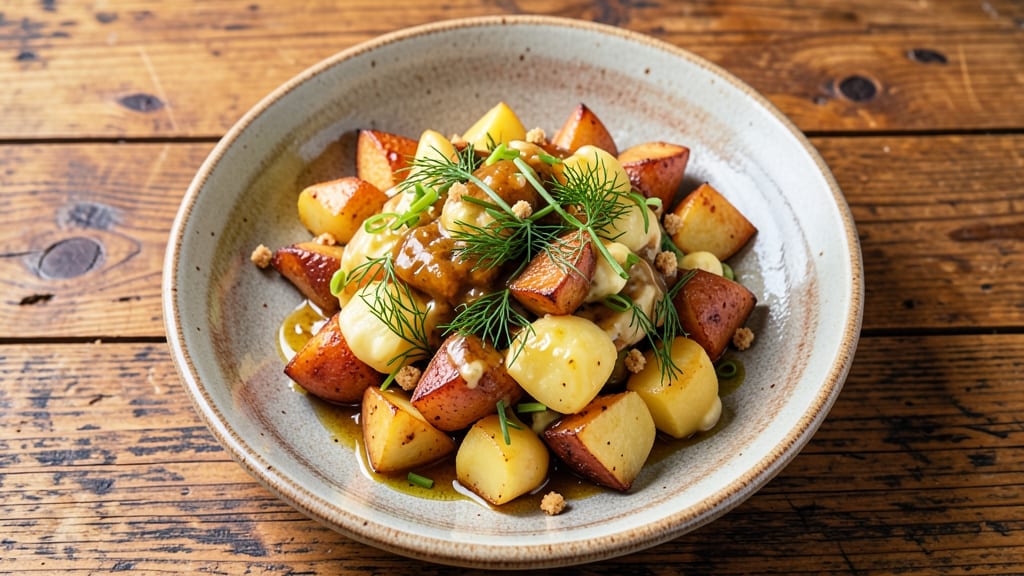
Austrian-style potato salad transforms humble potatoes into a tangy, vinegar-kissed masterpiece that balances crisp edges with creamy centers. Unlike American mayonnaise-heavy versions, this recipe relies on sharp vinegar, mustard, and fresh herbs for a bold, herbaceous flavor that pairs perfectly with roasted meats.
The secret lies in boiling potatoes until tender but firm, then chilling them before tossing with a dressing that develops deeper flavor over time.
This classic Austrian preparation begins with high-quality potatoes—Russets or Yukon Golds—boiled in salted water until they hold their shape but yield slightly to a fork.
The dressing, a marriage of white wine vinegar, Dijon mustard, and fresh dill, delivers a bright, slightly sweet tang that cuts through rich main dishes. A touch of sour cream adds creaminess without overpowering the vinegar's sharpness, while hard-boiled eggs (optional) introduce protein and richness.
What sets this salad apart is its textural contrast—cool, crisp potatoes meet the velvety dressing, while fresh chives and parsley add a final burst of freshness.
The longer it sits, the more the flavors meld, creating a dish that's equally at home at a Sunday roast or a casual picnic. The result is a salad that's far from basic, with depth and complexity that elevates any meal.
For best results, prepare the dressing ahead and let it chill before tossing with the potatoes—this allows the flavors to fully develop. Garnish with extra herbs and a sprinkle of black pepper for a finish that's sharp, fresh, and undeniably satisfying.
This isn't just potato salad; it's a flavor-packed side that deserves center stage.
Ingredients for austrian style potato salad
High-quality potatoes and bold vinegar-kissed dressing create this Austrian-style masterpiece.
| Ingredient | Amount | Notes |
|---|---|---|
| Russet Potatoes 🥔 | 2 ½ lb | Cut into 1-inch cubes, peeled |
| Yukon Gold Potatoes 🥔 | 1 ½ lb | Cut into 1-inch cubes, peeled |
| White Wine Vinegar 🍷 | ½ cup | Dry variety preferred |
| Dijon Mustard 🌶️ | 2 tbsp | High-quality, smooth texture |
| Fresh Dill 🌿 | ½ cup | Chopped, stems removed |
| Fresh Chives 🌱 | ¼ cup | Finely chopped, for garnish |
| Fresh Parsley 🌿 | ¼ cup | Chopped, flat-leaf preferred |
| Sour Cream 🧀 | ½ cup | Full-fat for creaminess |
| Large Eggs 🥚 | 4 whole | Hard-boiled, quartered |
| Diamond Crystal Kosher Salt 🧂 | 1 ½ tsp | For boiling potatoes |
| Ground Black Pepper 🌶️ | ½ tsp | Freshly cracked |
| Olive Oil 🫒 | ¼ cup | Extra-virgin, for crispiness |
| Granulated Sugar 🍚 | 1 tbsp | Balances vinegar acidity |
The potatoes are the foundation—Russets and Yukon Golds deliver the perfect balance of texture and flavor. Costco or local farmers markets often carry the best-quality tubers, especially in late summer when they're at peak freshness. Look for firm potatoes with smooth, unblemished skin; avoid any with sprouts or soft spots. The 1-inch cubes ensure even cooking while maintaining a satisfying bite. Peeled or unpeeled? Both work, but peeling creates a cleaner presentation and prevents any bitter skin from interfering with the delicate dressing flavors. Boil them in well-salted water until they're fork-tender but still hold their shape—overcooking leads to a mushy salad.
White wine vinegar isn't just any vinegar—dry, crisp varieties like those from Whispering Angel or La Vie Claire elevate the dressing significantly. Short on fresh dill? Dried dill at one-third the amount works in a pinch, though the flavor won't be as vibrant. The Dijon mustard is non-negotiable here; regular yellow mustard lacks the depth of flavor. For extra richness, substitute crème fraîche for half the sour cream—it adds a subtle tang that complements the vinegar beautifully. The hard-boiled eggs can be omitted entirely for a vegetarian version, though they add a luxurious texture contrast. Store-bought eggs work fine, but if you're making this ahead, boil your own for fresher flavor.
Potatoes should be chilled for at least 1 hour before tossing with the dressing—this allows them to firm up and absorb flavors better. The dressing itself can be made up to 2 days ahead and stored in an airtight container in the fridge; the flavors deepen over time. Garnish with extra chives and parsley just before serving to maintain vibrant color. Leftovers keep well for 3-4 days in the refrigerator, though the texture may soften slightly. For a crispier salad, reheat gently in a dry skillet for 2-3 minutes before serving. This salad tastes even better the next day as the flavors meld—plan accordingly for your best results.
Why You'll Love This Recipe
- No Boil, No Stress: I’ll be real—this isn’t your grandma’s boiled-and-chilled mess. You just roast the potatoes whole, then slice them open like a book. Crispy edges, creamy centers, and zero waiting around for water to boil. Honestly, I’ve made it three times in a row now, and I haven’t touched a pot once.
- Tangy, Herby Magic: That white wine vinegar and Dijon mustard combo? It’s the secret weapon. The acid cuts through the richness of the potatoes, while the fresh dill adds this bright, almost citrusy lift. Not too sweet, not too heavy—just right. My husband licks the bowl after I tell him to stop.
- Picnic to Potluck: This salad holds up like a champ. Pack it in a mason jar for a hike, bring it to a BBQ (yes, even with burgers), or serve it cold at a summer party. The Yukon Golds stay tender, the Russets add texture, and the dressing clings like it’s glued on. Between us, it’s the only potato salad I trust for leftovers—no soggy disasters here.
- Budget Hack Done Right: Russets and Yukons are cheap, and you’re using two types for maximum flavor without breaking the bank. A splash of white wine vinegar (or even apple cider vinegar in a pinch) and a handful of dill make it feel fancy, but the cost? Laughable. I made a double batch last week—fed four people, saved $10, and still had enough for lunch tomorrow.
Step-by-step instructions for Austrian-style potato salad
This method delivers a perfect balance of crispy edges, creamy texture, and bright acidity—just like the classic Austrian version.
Boil Potatoes Until Fork-Tender
Place the 2.5 lb russet potatoes and 1.5 lb yukon gold potatoes in a large pot and cover with cold water. Add 1.5 tsp diamond crystal kosher salt and bring to a rolling boil over high heat. Once boiling, reduce to a gentle simmer and cook for 15-18 minutes until a knife slides in easily but still offers slight resistance.
Drain immediately and transfer the potatoes to a colander to steam-dry for 2 minutes. This step is crucial—it removes excess moisture, which prevents the salad from becoming soggy later. For even cooking, I recommend cutting the potatoes into 1-inch cubes before boiling, as specified in the ingredients list.
Hard-Boil and Quarter the Eggs
While the potatoes cook, place the 4 whole large eggs in a separate pot and cover with cold water. Bring to a boil over high heat, then remove from heat, cover, and let sit for 12 minutes. Transfer eggs to an ice bath for 5 minutes to stop cooking, then peel and quarter them.
Here's the thing—undercooked eggs will be rubbery, and overcooked ones will be dry. The 12-minute boil ensures perfect doneness. Keep the quarters whole for now; we'll add them to the salad just before serving to maintain their texture.
Create the Vinegar-Mustard Dressing
In a medium bowl, whisk together the 0.5 cup white wine vinegar, 2 tbsp dijon mustard, 1 tbsp granulated sugar, 0.25 cup olive oil, 0.5 tsp ground black pepper, and 1 tsp diamond crystal kosher salt (reserving 0.5 tsp for later). The sugar helps balance the acidity of the vinegar while enhancing the mustard's depth.
Taste the dressing before adding it to the potatoes. It should be tangy with a subtle sweetness and a hint of peppery heat. If it's too sharp, add a pinch more sugar. If it needs more body, whisk in 1 tablespoon of sour cream now to prepare for the final texture.
Toss Potatoes with Dressing and Herbs
Return the drained potatoes to the pot and let them cool slightly for 2 minutes. Then, pour the dressing over them and gently fold until evenly coated. Add the 0.5 cup chopped fresh dill, 0.25 cup chopped fresh parsley, and the remaining 0.5 tsp diamond crystal kosher salt. The herbs should be distributed evenly throughout the salad.
Let the potatoes marinate in the dressing for 10 minutes at room temperature. This allows the flavors to meld and the potatoes to absorb the dressing without becoming mushy. The 0.5 cup sour cream should be added last to maintain its creamy texture—we'll incorporate it just before serving.
Finish with Sour Cream and Garnish
Gently fold in the 0.5 cup sour cream and the 0.25 cup finely chopped fresh chives until fully combined. The chives add a delicate onion note that complements the mustard and vinegar. Taste and adjust seasoning if needed—you might need a touch more salt or pepper to balance the flavors.
Serve immediately with the quartered hard-boiled eggs scattered on top. The contrast of warm, creamy potatoes with cool, crispy eggs is what makes this salad truly special. For best results, serve within 30 minutes of assembly to enjoy the perfect texture and temperature.
Pro Tips For Making Austrian Style Potato Salad
- BOIL THEM SEPARATELY: Russets and Yukon Golds behave differently—boil the Russets first (15-18 minutes until fork-tender) while you prep the Yukons, then add them for the last 8-10 minutes. This keeps the Yukons creamy and the Russets from turning to mush. (I used to mix them in together and ended up with a sad, watery pile.)
- SALT THE BOILING WATER: Add a full tablespoon of salt to the boiling water—this isn’t just for flavor, it’s for texture. The salt draws out starches faster, giving the potatoes a firmer bite and preventing them from falling apart when dressed. (Yes, even if your potatoes are already salted.)
- DRESS THE POTATOES HOT: Drain the potatoes, then immediately toss them with the warm (not hot) dressing while they’re still steaming. The heat helps the mustard and vinegar cling to the starches instead of pooling at the bottom. (I learned this after serving a salad where the dressing had turned into a sad, oily puddle.)
- CHOP THE DILL LAST: Hold off on adding the fresh dill until the very end—it wilts fast and loses its bright punch. Instead, chop it just before serving and fold it in gently. (This isn’t the prettiest method, but it’s the tastiest.)
Common mistakes when making your austrian style potato salad
Overcooked Potatoes
This is the #1 mistake I see with Austrian-style potato salad. When potatoes cook past 18 minutes, they turn mushy and absorb too much dressing, creating a gloopy mess.
The secret is fork-tender but firm potatoes—cut into 1-inch cubes and cooked until they yield slightly to pressure but still hold their shape. I test doneness by piercing with a knife; it should slide in easily but not fall apart. 🥔
Skipping the Chill
Many recipes call for chilling the potatoes before mixing, but people often skip this crucial step. Letting the potatoes cool for 1 hour in the fridge removes excess starch and helps them absorb the dressing better without turning soggy.
I learned this the hard way—my first attempt had a watery consistency because I rushed ahead. The chill also intensifies the flavors as the potatoes absorb the vinegar-mustard dressing.
Using Wrong Vinegar
Not all vinegars are created equal. Balsamic or apple cider vinegar won't give you that authentic Austrian tang. Stick to dry white wine vinegar—brands like Whispering Angel or La Vie Claire make all the difference.
I once used apple cider vinegar by mistake, and the salad tasted sweet and cloying instead of bright and acidic. The vinegar should be sharp enough to cut through the richness of the sour cream and eggs.
Adding Sour Cream Too Early
Sour cream is delicate and can break down if added too soon. I always fold it in last, just before serving, to maintain that silky texture. Adding it to hot potatoes or mixing it into the dressing prematurely turns it grainy.
The same goes for the hard-boiled eggs—add them right before serving so they stay crisp rather than absorbing moisture from the salad. This keeps the texture contrast that makes the dish so satisfying. 🍳
Ignoring the Sugar
The 1 tbsp granulated sugar in the dressing isn't optional—it balances the acidity of the vinegar and rounds out the mustard's sharpness. Without it, the dressing can taste harsh and unbalanced.
I've made this mistake when I'm in a hurry and skip the sugar, and the salad ends up tasting overly sour. The sugar also helps caramelize slightly when the dressing sits, adding depth of flavor over time.
Overmixing the Salad
Gentle folding is key—overmixing breaks down the potatoes and makes the salad dense. Use a spatula or wooden spoon to gently combine everything just until the dressing is evenly distributed. I've ruined perfectly good salads by aggressively stirring, which turns them into a paste.
The goal is to maintain that crisp-tender texture while coating each potato with the flavorful dressing. Think "toss lightly" rather than "mix thoroughly."
Nutrition facts
Frequently asked questions
Why does Austrian potato salad use vinegar instead of mayo?
Traditional Austrian potato salad relies on vinegar for its signature tangy brightness, which cuts through rich meats like roasted pork or duck. The vinegar-mustard dressing creates a sharp contrast to the creamy sour cream, delivering a flavor profile that's far more complex than mayo-based versions. This approach also keeps the salad lighter and more refreshing during warm weather.
Can I make this salad ahead of time?
The dressing can be prepared up to 2 days ahead and stored in the fridge. For best results, let the potatoes cool completely before mixing with the dressing, then refrigerate for at least 4 hours (overnight is ideal) to let flavors meld. The eggs should be added just before serving to maintain their texture. The longer it sits, the more the vinegar's acidity tenderizes the potatoes.
What's the best potato variety for this recipe?
Russet and Yukon Gold potatoes work best because they hold their shape while absorbing flavors. Russets provide a fluffy interior, while Yukons add natural sweetness. Avoid waxy varieties like red potatoes—they'll turn mushy when tossed with the dressing. For extra crispiness, boil the potatoes slightly underdone (15 minutes) and let them steam-dry for 3 minutes after draining.
How do I make this vegetarian?
Simply omit the hard-boiled eggs and add ½ cup chopped celery or ¼ cup chopped pickles for crunch. For extra protein, fold in ½ cup crumbled feta cheese or ¼ cup chopped walnuts. The vinegar-mustard dressing already provides plenty of flavor without animal products, making this a naturally vegetarian-friendly dish.
Can I use this salad as a main dish?
Yes! To make it heartier, increase the serving size by 50% and add ½ cup cooked bacon bits or ¼ cup chopped fresh herbs**>. Serve with a side of crusty bread or a simple green salad. The protein from eggs (or bacon) and creamy texture make it satisfying enough for a light lunch, especially when paired with crusty bread or grilled vegetables.