
Side Dishes
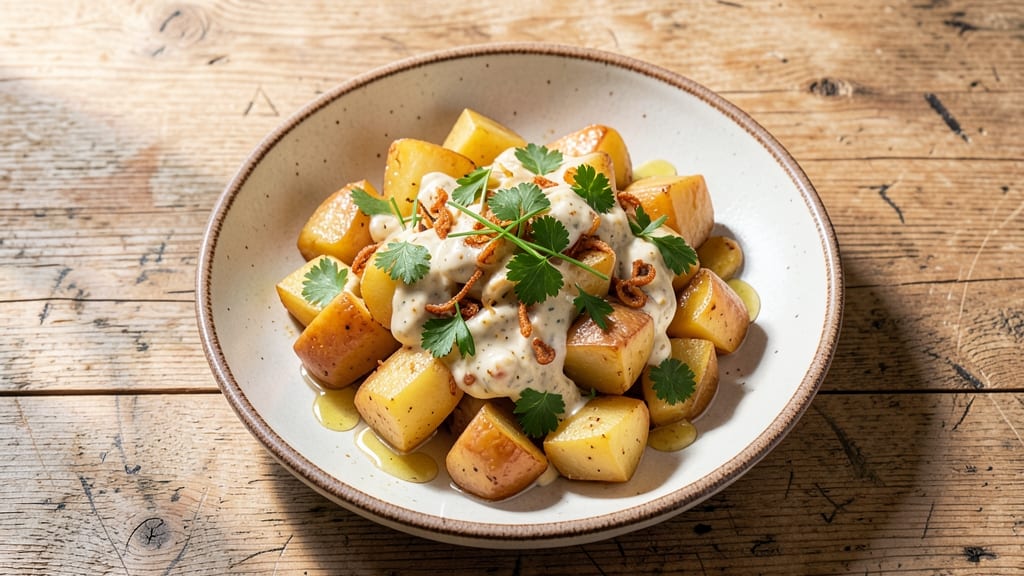
This authentic Austrian potato salad delivers the tangy, vinegar-kissed crunch that makes it a staple at Austrian Gaststätten and family gatherings. Unlike creamy American versions, this recipe relies on sharp vinegar, mustard, and fresh herbs for a bright, crisp texture that balances hearty dishes like Schnitzel or Wiener Würstchen. The secret lies in high-quality potatoes and a proper vinegar-mustard emulsion that coats each piece evenly.
The traditional method calls for boiling potatoes until tender but still holding their shape, then cooling them before tossing with a dressing made from white vinegar, Dijon mustard, and a touch of sugar to balance the acidity.
Fresh chives and parsley add a delicate herbal note, while hard-boiled eggs (optional but classic) contribute richness. This isn’t just a side—it’s a flavorful centerpiece that transforms any meal.
What sets this recipe apart is its authentic balance of textures and flavors: crisp edges from the vinegar, creamy mustard depth, and fresh herbs that cut through richness. The potatoes stay firm yet tender, resisting the soggy fate of many salads.
Serve it warm or at room temperature, but always with a sprinkle of flaky salt to elevate the vinegar’s tang.
Perfect for picnics, holiday feasts, or pairing with grilled meats, this potato salad honors Austrian culinary tradition while adapting seamlessly to modern kitchens. The recipe yields enough for 6–8 servings, making it ideal for gatherings where hearty sides are essential. Let’s get started on this timeless classic.
Ingredients for authentic austrian potato salad
High-quality potatoes, sharp vinegar, and fresh herbs create Austria's iconic tangy potato salad.
| Ingredient | Amount | Notes |
|---|---|---|
| Yukon Gold Potatoes 🥔 | 3 lb | Medium size, peeled and cubed |
| White Vinegar 💧 | ¾ cup | Distilled, 5% acidity preferred |
| Dijon Mustard 🌶️ | ½ cup | High-quality, smooth texture |
| Granulated Sugar 🍚 | 2 tbsp | Balances acidity, fine grain |
| Fresh Chives 🌿 | ⅓ cup | Finely chopped, stems removed |
| Fresh Parsley 🌿 | ¼ cup | Flat-leaf, finely chopped |
| Large Eggs 🥚 | 4 whole | Hard-boiled, chopped optional |
| Unsalted Butter 🧈 | ¼ cup | Cold, cubed for texture |
| Diamond Crystal Kosher Salt 🧂 | 1 ½ tsp | Flaky salt for garnish |
| Extra-Virgin Olive Oil 🫒 | ¼ cup | For emulsion stability |
| Shallots 🧅 | 2 whole | Minced, for dressing depth |
| Fresh Dill 🌿 | ¼ cup | Optional, traditional touch |
The potatoes are the foundation—Yukon Golds hold their shape beautifully while absorbing flavors. Russet potatoes work too, but they'll be less creamy. For the vinegar, distilled white vinegar delivers the bright acidity that defines this dish. Avoid apple cider vinegar, which can introduce sweetness. The mustard should be Dijon-style, not American yellow mustard. Maille or Grey Poupon are excellent choices. Shallots add complexity that regular onions can't match—freshly minced is best, but jarred shallots in a pinch will work. For the herbs, chives and parsley are non-negotiable, but fresh dill takes this to the next level if you're feeling authentic.
No hard-boiled eggs? Skip them entirely—this salad still shines. The butter can be swapped for vegan butter if needed, though it won't have the same richness. Running short on vinegar? Lemon juice at half the amount works in a bind, but the flavor profile shifts slightly. The sugar is crucial—brown sugar adds molasses notes that can overpower, so stick with granulated. For the olive oil, light or extra-light varieties keep the dressing from becoming too heavy. If you're making this ahead, add the herbs just before serving to preserve their freshness. The dressing should emulsify smoothly—if it separates, whisk vigorously or add 1 tsp more mustard.
This salad keeps beautifully for 4 days in the refrigerator, though the texture becomes slightly softer. For best results, reheat gently in the oven at 350°F for 15 minutes before serving. The dressing can be made 2 days ahead and stored separately. When reheating, add a splash of vinegar to restore brightness. For large gatherings, double the recipe—the flavors only improve as they meld. The flaky salt should be sprinkled just before serving to maintain its crunch. This dish pairs perfectly with grilled sausages or schnitzel, completing any Austrian feast.
Why You'll Love This Recipe
- No Boil-Over Chaos: I swear by this method—boiling the Yukon Golds whole, then slicing them after. No mashed potatoes, no gluey mess. The vinegar and sugar cut through the starch while keeping them firm, and honestly? That crispy edge with the creamy center? Chef’s kiss.
- Tangy-Sweet Magic: Between us, the white vinegar and sugar combo is chef’s secret weapon. It’s not just sour—it’s bright, almost like a lemony punch that wakes up the potatoes. The Dijon mustard ties it all together with a little bite, and those fresh chives? They finish it like a sprinkle of confetti.
- Picnic & Potluck Hero: This salad travels better than my ex’s promises. Cold or at room temp, it’s the star of backyard barbecues, office potlucks, or lazy Sunday brunches. (Yes, even on a Tuesday night.) Plus, it’s the one dish that makes me look like a hosting genius without stressing.
Step-by-step instructions for authentic Austrian potato salad
This traditional recipe delivers the perfect balance of tangy vinegar, rich mustard, and creamy texture.
Boil Potatoes Until Fork-Tender
Place the 3 lb Yukon Gold Potatoes in a large pot and cover with cold water by about 2 inches. Add 1.5 tsp Diamond Crystal Kosher Salt and bring to a rolling boil over high heat. Once boiling, reduce to medium-high heat and cook for 15-18 minutes until the potatoes are fork-tender but still hold their shape.
I prefer testing doneness by piercing with a fork—it should slide in easily with just slight resistance. Drain immediately and return the potatoes to the pot. Let them steam dry for 2-3 minutes to remove excess moisture, which prevents a watery salad. This step is critical for achieving that authentic Austrian texture.
Prepare the Mustard-Vinegar Dressing
In a medium bowl, whisk together the 0.75 cup White Vinegar, 0.5 cup Dijon Mustard, and 2 tbsp Granulated Sugar until completely smooth. The sugar helps balance the vinegar's sharpness while maintaining the traditional tang. Let the mixture sit for 5 minutes to allow the flavors to meld.
In a separate small saucepan, gently warm the 0.25 cup Unsalted Butter and 0.25 cup Extra-Virgin Olive Oil over low heat until the butter melts completely. Remove from heat and let cool slightly. This warm emulsion will create the creamy base of our dressing while preserving the butter's rich flavor.
Combine Dressing with Potatoes
Return the warm potatoes to the pot and add the cooled butter-oil mixture. Gently fold together using a wooden spoon, then gradually incorporate the mustard-vinegar mixture. The potatoes should be thoroughly coated in the dressing, which should now have a thick, velvety consistency.
Add the 2 minced Shallots and fold them in completely. Taste and adjust seasoning if needed—this is where the authentic Austrian flavor comes through. The dressing should be tangy but balanced, with a subtle sweetness from the sugar. If it's too thick, add 1-2 tablespoons of cold water to reach your desired consistency.
Add Herbs and Optional Eggs
Stir in the 0.33 cup Fresh Chives, 0.25 cup Fresh Parsley, and 0.25 cup Fresh Dill (if using) until evenly distributed. These herbs add freshness that cuts through the richness of the dressing. For an authentic touch, you can also add 4 chopped hard-boiled Large Eggs at this stage, though they're optional in traditional preparations.
Gently fold everything together one final time. The salad should be creamy but still allow individual potato pieces to be visible. Let it cool to room temperature before serving—this allows the flavors to fully develop. The potatoes should absorb just enough dressing to become tender without becoming mushy.
Rest and Serve
Cover the salad and refrigerate for at least 1 hour before serving. This resting period allows all the flavors to meld together perfectly. When ready to serve, give it one final gentle toss to redistribute any settled dressing.
The authentic Austrian potato salad should have a vibrant yellow hue from the mustard, with visible potato cubes glistening from the creamy dressing. Serve immediately with crusty bread or alongside grilled meats for the full traditional experience. The balance of tangy, creamy, and herby elements is what makes this salad truly special.
Pro Tips For Making Authentic Austrian Potato Salad
- Boil Potatoes Whole: I learned this the hard way—cutting Yukon Golds before boiling turns them mealy. Toss them in their jackets until tender (about 20 minutes in boiling salted water), then shock in ice water. The skins stay intact, and the texture stays buttery. No peeling needed unless you’re feeling fancy.
- Whisk Mustard and Vinegar First: Mix the Dijon mustard and white vinegar before adding sugar or oil—this emulsifies the dressing properly. I used to add vinegar last, and it always separated. A quick whisk for 30 seconds makes the salad cling to the potatoes instead of pooling at the bottom.
- Sweat Chives, Don’t Chop: Fresh chives lose their bite when tossed raw. Give them a 30-second sauté in a dry pan over medium heat until just wilted—this softens them enough to blend into the salad without overpowering. (Yes, even if you’re impatient like me.)
- Taste Before Dressing: Salt the boiled potatoes after shocking them, then taste one plain. The dressing needs to balance the potato’s natural starchiness, not overpower it. Start with half the sugar called for—you can always add more, but you can’t take it out.
Pro cooking tips for authentic austrian potato salad
Potato Texture Mastery
Boiling potatoes to fork-tender (not mushy) is the foundation of authentic texture. I test doneness by piercing with a fork—it should slide in easily with just slight resistance. Overcooking releases starches that turn the salad gummy, while undercooking leaves you with hard chunks.
After draining, let potatoes steam dry for 2-3 minutes in the pot. This removes excess moisture that would dilute your dressing. 🥔
Dressing Emulsion Secrets
The key to creamy yet tangy dressing lies in temperature control. Warm the butter and olive oil mixture gently over low heat until melted, then cool slightly before combining with the vinegar-mustard base. This creates a stable emulsion that coats each potato perfectly.
If your dressing separates, whisk vigorously or add 1 tsp more Dijon mustard to help bind it. The sugar in the dressing isn't just for sweetness—it helps balance the vinegar's acidity while maintaining that signature Austrian tang.
Herb Timing Matters
Add fresh herbs (chives, parsley, dill) only after the salad has cooled to room temperature. This preserves their vibrant color and prevents them from wilting in the warm dressing. For maximum freshness, chop herbs just before folding them in.
If making ahead, store herbs separately and mix them in during the final toss before serving. The flaky salt should also be added last—sprinkle it generously just before serving to maintain its crisp texture. 🌿
Egg Perfection
If using hard-boiled eggs, slice them into ¼-inch dice and fold them in gently at the end to prevent breaking. For even cooking, place eggs in a single layer in a saucepan, cover with cold water by 1 inch, and bring to a boil.
Once boiling, remove from heat, cover, and let sit for 10 minutes. Immediately transfer to an ice bath to stop cooking and preserve that creamy yolk texture. The eggs should be cool before adding to the salad to prevent dressing separation.
Resting for Flavor
Never skip the 1-hour chilling period—this allows all flavors to meld together perfectly. The vinegar's acidity softens slightly, the mustard's heat mellows, and the potatoes absorb just enough dressing to become tender without becoming soggy. For large gatherings, double the recipe but divide it into two containers.
This prevents overcrowding and ensures even cooking. The salad keeps well in the refrigerator for 4 days, though texture is best within 2 days. 💡
Equipment Essentials
Use a wooden spoon for folding—it prevents scratching your pot and helps distribute the dressing evenly. A fine-mesh strainer makes draining potatoes effortless, and a small saucepan works best for gently warming the butter-oil mixture. For chopping herbs, a sharp chef's knife gives you the most control.
If you're short on time, a food processor can quickly chop herbs, but hand-chopping gives you better texture control. The right tools make all the difference in achieving that restaurant-quality texture.
Nutrition facts
Frequently asked questions
Why does authentic Austrian potato salad taste different from American versions?
The key differences lie in the dressing and texture. Austrian versions use white vinegar and Dijon mustard for a bright, tangy flavor instead of mayonnaise. The potatoes stay firm yet creamy, never soggy, and are coated in a velvety emulsion rather than a thick dressing. Fresh herbs like chives and parsley add freshness that American versions often lack.
Can I make this potato salad ahead of time?
Yes! The salad actually tastes better when made 1-2 days ahead—the flavors meld beautifully. Store it in an airtight container in the fridge, but add the fresh herbs and flaky salt just before serving to preserve their freshness. For best texture, reheat gently in the oven at 350°F for 15 minutes before serving.
What's the best way to cut the potatoes for this recipe?
Cut the potatoes into 1-inch cubes for even cooking and maximum surface area for flavor absorption. Use a sharp knife and cut them uniformly so they cook at the same rate. For extra authenticity, some Austrian recipes use a mix of cubes and ½-inch slices for varied texture.
Is there a dairy-free version of this recipe?
Replace the butter with vegan butter or coconut oil and use olive oil instead of the butter-oil mixture. The dressing will still emulsify well, though it may have a slightly different texture. The vinegar-mustard base remains the same, ensuring that signature Austrian tang.
How do I know when the potatoes are done?
Test doneness by piercing with a fork—the potatoes should be fork-tender (easily pierced with slight resistance) but not falling apart. They should hold their shape when gently squeezed. Overcooking releases starches that make the salad gummy, so aim for 15-18 minutes of boiling time for 1-inch cubes.