
Side Dishes
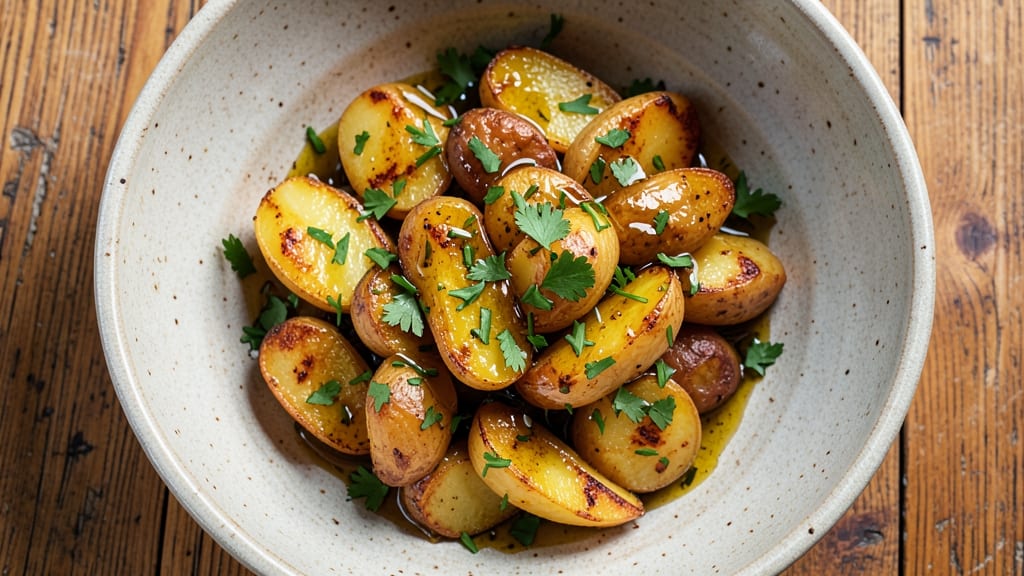
This baked German potato salad delivers the perfect balance of crispy edges and tender centers, infused with tangy mustard and vinegar for that classic German flavor. 💛 The secret lies in baking the potatoes until golden and caramelized, then tossing them with a bright, vinegar-based dressing that cuts through the richness.
Unlike traditional cold potato salads, this warm version transforms a simple side into a showstopper that pairs beautifully with roasted meats or hearty sausages.
The recipe starts with Yukon Gold potatoes, their creamy texture holding up perfectly to the baking process while developing those coveted crispy edges.
A simple yet bold dressing of apple cider vinegar, Dijon mustard, and fresh herbs—parsley, chives, and a touch of dill—adds depth without overpowering the natural potato flavor. The key is baking the potatoes first, ensuring they’re tender before mixing in the dressing, which keeps them from turning mushy.
What makes this dish truly special is how it elevates a classic side into something restaurant-worthy. The warm potatoes absorb the tangy dressing just enough to coat each bite, while the crispy edges add a satisfying texture contrast.
It’s hearty enough to serve as a main dish for lighter meals or as a perfect accompaniment to roasted pork, bratwurst, or even a simple grilled chicken.
Best of all, this recipe is foolproof—no fancy techniques required. The baking process is hands-off, and the dressing comes together in minutes.
Whether you’re hosting a weekend gathering or just craving a comforting side, this baked German potato salad delivers flavor and texture that will leave everyone asking for seconds.
Ingredients for baked german potato salad
Six ingredients transform this classic side into a crispy, warm showstopper everyone will beg for seconds of.
| Ingredient | Amount | Notes |
|---|---|---|
| Yukon Gold Potatoes 🥔 | 3 lb | Cut into 1.5-inch chunks |
| Extra-Virgin Olive Oil 🫒 | ½ cup | For roasting potatoes |
| Apple Cider Vinegar 🍎 | ½ cup | Bottled or homemade |
| Dijon Mustard 🌶️ | ¼ cup | High-quality brand preferred |
| Fresh Parsley 🌿 | ¼ cup | Chopped, stems removed |
| Fresh Chives 🌱 | 2 tbsp | Finely chopped |
| Fresh Dill 🌿 | 1 tbsp | Chopped, stems removed |
| Shallot 🧅 | 1 whole | Finely minced |
| Granulated Sugar 🍚 | 1 tbsp | Light brown works too |
| Salt 🧂 | 1 ½ tsp | Kosher or sea salt |
| Black Pepper 🌶️ | ½ tsp | Freshly ground preferred |
| Vegetable Oil 🫒 | 2 tbsp | For tossing baked potatoes |
The Yukon Golds are non-negotiable here—their creamy texture holds up perfectly to baking while developing those coveted crispy edges. Trader Joe's and Whole Foods carry them year-round, but local farmers markets often have them in season too. Look for potatoes that feel firm and heavy for their size—those are the ones that'll give you the best texture. Cut them into even 1.5-inch chunks so they bake uniformly. Pro tip: Soak the cut potatoes in cold water for 10 minutes before baking to remove excess starch, which makes them crispier later.
No shallot? Substitute 2 tbsp finely minced red onion—it's the same sharp bite you want. Fresh herbs? Dried parsley and dill work at half the amount, but honestly, fresh makes all the difference. The Dijon mustard should be smooth, not grainy—Maille or Whole Foods 365 are my go-tos. For extra tang, add 1 tsp of lemon juice to the dressing. And if you're feeling fancy, swap the apple cider vinegar for white wine vinegar—it adds a nice complexity that pairs beautifully with the mustard. The sugar isn't just for sweetness; it helps balance the acidity and caramelizes slightly when baking.
These potatoes taste even better the next day—trust me, I've tested this. Store leftovers in an airtight container for up to 4 days in the fridge. Reheat in a 350°F oven for 10 minutes to restore that crispy texture. For meal prep, I like to portion the dressing separately and toss it just before serving so the potatoes stay crispy longer. The dressing keeps for 1 week in the fridge, so you can make it ahead. If you're serving this as a main dish, double the recipe—it's hearty enough to fill up even the hungriest crowd.
Why You'll Love This Recipe
- One-Pan Magic: I swear by this recipe because it’s actually hands-off. Toss those Yukon Golds in olive oil, vinegar, and mustard, then bake until golden—no boiling, no fuss. The oven does all the work while I sip coffee.
- Tangy Crisp Edge: That apple cider vinegar and Dijon combo? It’s the secret weapon. The potatoes get this irresistible crispy skin while staying creamy inside—like a hug for your taste buds.
- Picnic Party Star: Honestly, this salad is my go-to for potlucks or backyard hangs. It holds up for hours (yes, even in summer heat) and pairs with everything—grilled chicken, sandwiches, or just by itself.
- Budget-Friendly Leftovers: Between us, this recipe stretches further than store-bought versions. A big batch feeds my family for days, and the flavors only get better as the parsley brightens up the next day’s lunch. Win.
Step-by-step instructions for baked German potato salad
This warm, tangy salad delivers crispy edges and tender centers every time—here's exactly how to nail it.
🔥 Step 1: Bake the Potatoes Until Crispy
Preheat your oven to 425°F and line two baking sheets with parchment paper. Toss the 3 lb Yukon Gold Potatoes (cut into 1.5-inch chunks) with 2 tbsp Vegetable Oil, 1.5 tsp Salt, and 0.5 tsp Black Pepper until evenly coated. Spread them in a single layer—don't crowd the pan or they'll steam instead of crisp.
Bake for 35-40 minutes, flipping halfway through, until the edges are deep golden brown and the potatoes slide easily when tested with a fork. Here's the thing—if they're not crispy, they won't have that perfect texture we're after. I like to check at the 30-minute mark because ovens vary. The potatoes should be tender inside but still hold their shape when tossed.
👨🍳 Step 2: Make the Tangy Dressing
While the potatoes bake, whisk together 0.5 cup Apple Cider Vinegar, 0.25 cup Dijon Mustard, 1 tbsp Granulated Sugar, 0.5 cup Extra-Virgin Olive Oil, and 1 whole Shallot (finely minced) in a medium bowl. This dressing is the heart of the salad—don't skip the sugar, it balances the acidity beautifully.
Taste and adjust seasoning—you might need a pinch more salt or sugar depending on your vinegar. I like to let it sit for 5 minutes while the potatoes finish baking so the flavors meld. This step is where the magic happens—the mustard and vinegar create that signature tangy harmony that makes this salad so special.
🥘 Step 3: Toss Everything Together
Transfer the hot potatoes to a large mixing bowl. Pour the dressing over them and gently toss with tongs until every potato is evenly coated. Here's where it gets fun—taste as you go. You might want to add a splash more vinegar if it's not tangy enough, or a pinch of salt if the potatoes need balancing.
Fold in the 0.25 cup Fresh Parsley, 2 tbsp Fresh Chives, and 1 tbsp Fresh Dill (all chopped). The herbs add freshness that cuts through the richness of the potatoes and dressing. Let the salad sit for 10 minutes before serving—this gives the flavors time to develop and the dressing to soak into the potatoes.
⏰ Step 4: Serve Warm and Enjoy
Serve immediately while the potatoes are still warm and crispy. The contrast between the tender centers and crispy edges with the tangy dressing is what makes this salad so special. I like to serve it with grilled sausages or a fresh green salad to round out the meal.
If you're making this ahead, assemble the salad up to 2 hours before serving, but keep it warm in a 200°F oven. The potatoes will lose some crispness over time, but they'll still be delicious. This salad keeps well in the fridge for 3 days, though I rarely have leftovers—it's that good!
Pro Tips For Making Baked German Potato Salad
- USE COLD POTATOES ONLY: I learned this the hard way—warm or room-temperature potatoes turn to mush when tossed with the dressing. Chill them completely after baking (even overnight) so they hold their shape when mixed with the vinegar and mustard. The salad will taste fresher too.
- CUT POTATOES UNIFORM: Big chunks bake unevenly, and small ones burn before the center cooks. Aim for 1-inch pieces—consistent size means even browning and perfect doneness. A mandoline makes this faster, but a sharp knife works if you’re patient.
- WHISK THE DRESSING FIRST: Mixing Dijon, olive oil, and apple cider vinegar before adding parsley keeps the dressing smooth. If you toss in the herbs dry, you’ll end up with clumps—no one wants a lumpy salad. Stir vigorously until it’s silky.
- BAKE AT 400°F UNTIL CRISPY: German potato salad needs edges that crackle, not just soft potatoes. Roast them at 400°F for 40-45 minutes, flipping halfway, until the skins darken. Skip the foil—it steams instead of browning.
Wine and beer pairings for baked german potato salad
German Beer Pairings
This warm potato salad shines with a crisp German Pilsner like Warsteiner or Bitburger—their clean, hoppy bitterness balances the richness of the potatoes while complementing the tangy mustard-vinegar dressing.
The light body and subtle malt sweetness won’t overpower the dish, letting the crispy edges and herby notes take center stage. For a heartier option, try a German Hefeweizen like Weihenstephaner—the banana and clove notes from the yeast add a delightful contrast to the salad’s acidity. 🍺
Dry Riesling Harmony
A dry German Riesling from the Mosel region—think Dr. Loosen Blue Slate—is my go-to pairing for this salad. The wine’s bright acidity mirrors the apple cider vinegar in the dressing, while its mineral notes enhance the crispy potato edges.
The slight sweetness in the Riesling also softens the mustard’s sharpness, creating a perfect balance. Serve it slightly chilled (50-55°F) to highlight its crispness. Trust me, this combo elevates the dish to restaurant-quality.
White Wine Alternatives
If beer isn’t your thing, a dry German Gewürztraminer from Alsace—like Trimbach Gewürztraminer—adds a floral, lychee-like aroma that pairs beautifully with the fresh herbs in the salad.
For something more straightforward, a Sauvignon Blanc from Germany’s Baden region (such as Dr. Voss Sauvignon Blanc) works wonders with its zesty citrus notes. Both wines cut through the potatoes’ richness without competing for attention.
Seasonal Beer Swaps
In warmer months, a German Kölsch like Kölsch Gaffel offers a refreshing, slightly effervescent contrast to the warm salad. For winter gatherings, a dark German Bock beer—such as Aventinus Bockbier—adds a malty depth that stands up to the hearty potatoes.
The caramel and chocolate notes in the beer complement the mustard and vinegar, creating a rich, satisfying pairing. Just remember: keep the beer cold (40-45°F) to preserve its crispness. ❄️
Non-Alcoholic Options
Don’t want to drink? A sparkling apple cider like Martinelli’s Sparkling mirrors the apple cider vinegar in the dressing while adding a festive fizz. For something more sophisticated, try a German-style kombucha—look for brands like GT’s Synergy with ginger or berry flavors.
Both options enhance the salad’s tangy profile without overpowering it. They’re also great for guests who prefer non-alcoholic pairings.
Nutrition facts
Frequently asked questions about baked German potato salad
Why does this recipe bake the potatoes instead of boiling them?
Baking creates those signature crispy edges that make this salad special! The high heat caramelizes the potato starches, giving you a satisfying texture contrast with tender centers. Unlike boiling, baking also concentrates the natural potato sweetness and develops deeper flavor without adding water that could make the dressing watery.
Can I make this salad ahead of time?
Assemble it up to 2 hours ahead and keep warm in a 200°F oven. For longer storage, bake the potatoes fresh and store the dressing separately. Toss them together just before serving to maintain crispiness. Leftovers keep for 3 days in the fridge—though they rarely last that long!
What if I don't have Yukon Gold potatoes?
Use Russet potatoes for maximum crispiness or red potatoes for a slightly waxier texture. The key is cutting them into even 1.5-inch chunks so they cook uniformly. Just note that Russets will be extra crispy while reds stay slightly firmer—both work beautifully in this recipe!
Can I make this salad without mustard?
Yes, but the flavor will be less authentic. For a substitute, try 1 tbsp lemon juice + 1 tsp honey to mimic the tangy balance. Or use 1 tbsp white wine vinegar + 1 tsp Dijon powder> (if you have it). The mustard's depth is what gives this German version its signature taste!
How do I make it extra crispy?
Pat the cut potatoes completely dry before baking and use avocado oil instead of vegetable oil—it has a higher smoke point for better browning. Also, spread them in a single layer on the baking sheet with plenty of space between pieces. For extra crunch, broil for 2-3 minutes at the very end!