
Sauces & Condiments
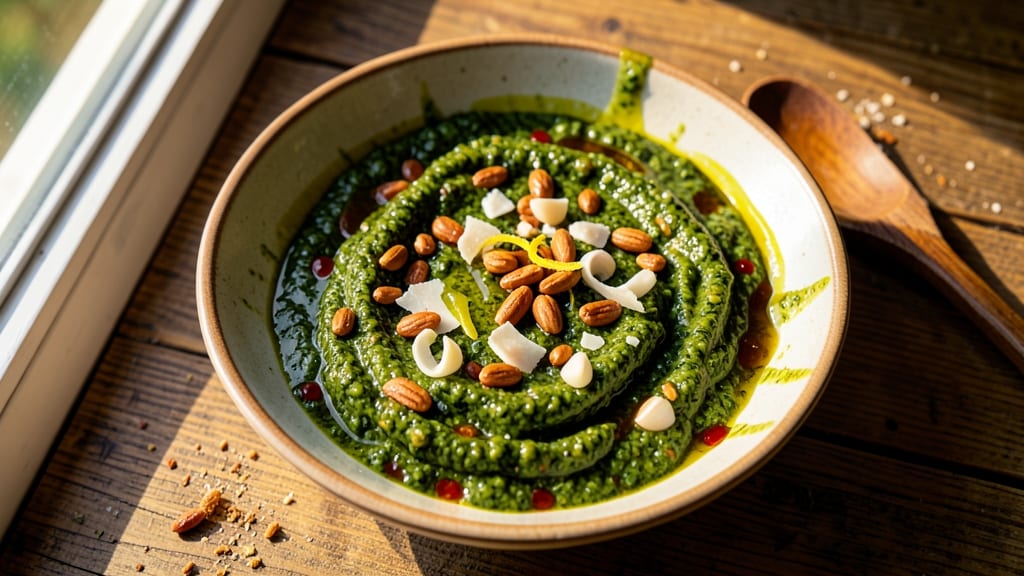
This basil pesto salad dressing transforms fresh herbs into a velvety, no-mayo creaminess that elevates every dish. The secret lies in blending vibrant basil, garlic, and Parmesan with high-quality olive oil until perfectly emulsified—creating a dressing that clings beautifully to greens, pasta, or grilled vegetables.
What sets this apart is the balance of acidity from lemon juice, which preserves freshness and prevents separation, ensuring your dressing stays vibrant for up to a week in the fridge.
The foundation of this dressing is simple yet powerful: fresh basil, garlic, and toasted pine nuts (or a nut-free alternative like sunflower seeds) provide texture and depth, while Parmesan adds a savory richness.
The emulsification technique—using a food processor or blender—ensures a smooth, creamy consistency without the need for mayo, making it lighter and more versatile. This dressing is ideal for brightening up salads, drizzling over grilled meats, or even as a dip for crusty bread.
What you’ll achieve is a dressing that’s bold in flavor but refined in texture—herbaceous, slightly tangy, and rich enough to stand up to hearty ingredients. The key to its success is the emulsification process, which creates a stable, creamy base that won’t separate.
Store it in an airtight container in the refrigerator, and it’ll keep its freshness and vibrancy for up to a week, making it perfect for meal prep.
Whether you’re dressing a simple green salad, tossing it with warm pasta, or using it as a dip, this basil pesto dressing delivers restaurant-quality results with minimal effort.
The creamy texture and bright herb notes make it a versatile addition to any meal, and the no-mayo formula ensures it’s lighter and more adaptable than traditional pesto-based dressings.
Ingredients for basil pesto salad dressing
Fresh basil, toasted nuts, and Parmesan blend into this creamy, no-mayo dressing that sticks like magic.
| Ingredient | Amount | Notes |
|---|---|---|
| Fresh Basil Leaves 🌿 | 2 ½ cups | Packed, stems removed |
| Toasted Pine Nuts 🥜 | ½ cup | Or sunflower seeds for nut-free |
| Garlic Cloves 🧄 | 3 cloves | Peeled, roughly chopped |
| Parmesan Cheese 🧀 | ¾ cup | Freshly grated, high-quality |
| Extra-Virgin Olive Oil 🫒 | ¾ cup | High-quality, fruity flavor |
| Fresh Lemon Juice 🍋 | 2 tbsp | Freshly squeezed, no pulp |
| Sea Salt 🧂 | ½ tsp | Fine grain preferred |
| Freshly Ground Black Pepper 🌶️ | ¼ tsp | Freshly cracked preferred |
| Ice Cubes ❄️ | ¼ cup | Helps emulsify, optional |
The basil is non-negotiable—farmers market bunches have the most vibrant flavor, but grocery store containers work too (just pick the freshest ones). Toast your pine nuts or sunflower seeds in a dry pan for 2-3 minutes until fragrant—this deepens their flavor. For Parmesan, grate it yourself from a wedge; pre-grated has anti-caking agents that ruin the texture. The olive oil should be something you'd drizzle on bread—California Extra Virgin or Colavita are my go-tos, but any fruity, peppery oil works. Skip the cheap stuff, trust me.
No pine nuts? Sunflower seeds or walnuts work perfectly—they just add a different texture. Short on basil? Stretch it with flat-leaf parsley at half the amount. The lemon juice is key for acidity—Meyer lemons add a hint of sweetness, but regular lemons work too. If your pesto separates, just give it a quick pulse in the food processor with a splash of water or more olive oil. And if you're really in a pinch, nutritional yeast can replace Parmesan for a vegan version (though it won't be exactly the same).
This dressing keeps beautifully—1 week in the fridge if you pour a thin layer of olive oil on top before sealing. For longer storage, freeze in ice cube trays and thaw as needed. It reheats perfectly, so toss it with warm pasta or grilled veggies for a restaurant-worthy finish. I always make a double batch—one for salads, one for dipping crusty bread. The leftovers? Even better the next day as flavors meld.
Why You'll Love This Recipe
- I’ll be real: this dressing is the kind of recipe that makes me feel like a genius for remembering it. Just toss basil, pine nuts, garlic, Parmesan, and olive oil into a food processor—no fancy techniques, no stress. The pine nuts toast in seconds, and boom, you’ve got a dressing that tastes like a fancy restaurant but took less time than boiling water.
- Five-Ingredient Magic: I’ll be real: this dressing is the kind of recipe that makes me feel like a genius for remembering it. Just toss basil, pine nuts, garlic, Parmesan, and olive oil into a food processor—no fancy techniques, no stress. The pine nuts toast in seconds, and boom, you’ve got a dressing that tastes like a fancy restaurant but took less time than boiling water.
- Garlic-Kissed Umami Bomb: That first bite of garlic and Parmesan? Pure satisfaction. The basil’s bright green freshness cuts through the richness, while the toasted pine nuts add a crunch that’s dangerously addictive. Honestly, I’ve caught myself dipping bread just to taste it—no salad required.
- Works Everywhere: Between us, this isn’t just for salads. Drizzle it over grilled chicken, toss it with roasted veggies, or even stir it into pasta. I’ve used it as a marinade for shrimp, and it turned a simple weeknight dinner into something special. The best part? It’s the kind of dressing that makes even the simplest meal feel intentional.
Step-by-step instructions for basil pesto salad dressing
Here's how to make this vibrant, creamy dressing that's perfect for any salad.
Toast the Pine Nuts for Nutty Depth
Heat a dry skillet over medium heat and add the 0.5 cup toasted pine nuts. Toast for 3-5 minutes, stirring constantly, until they're golden brown and fragrant. Watch them closely—they burn quickly! Remove from heat immediately and let cool for 2 minutes. This step develops their rich, toasty flavor that balances the fresh basil.
I like to use a small skillet so the nuts get plenty of contact with the pan. If you're making this nut-free with sunflower seeds, you can skip toasting and add them directly to the food processor cold. The seeds will still add texture, though they won't have that same toasted crunch.
Pulse Basil, Garlic, and Cheese Together
Place the 2.5 cups fresh basil leaves, 3 cloves garlic cloves, and 0.75 cup parmesan cheese in a food processor. Pulse 3-4 times until the basil is finely chopped but not completely puréed. You want visible texture—this gives the dressing body and prevents it from being too smooth. Stop before it turns into a paste, or you'll lose that fresh basil brightness.
Here's the thing—don't overload the processor. If it's too full, the basil won't chop evenly. I usually do this in two batches if my processor is on the small side. The garlic should be roughly chopped but still recognizable—you'll taste it more clearly this way, adding that authentic pesto flavor.
Add Olive Oil and Lemon Juice Gradually
With the processor running, slowly drizzle in the 0.75 cup extra-virgin olive oil. Let it mix completely before adding the 2 tbsp fresh lemon juice. The oil should incorporate smoothly, creating a thick, vibrant green paste. If it looks too thick, add 1 tablespoon of water to help it blend. The lemon juice brightens everything up and cuts through the richness of the cheese.
I always use a high-quality olive oil here—it makes a noticeable difference in flavor. If your pesto seems too thick at this stage, don't worry. We'll fix that next with the ice cubes. The lemon juice should be freshly squeezed, not bottled, for that real zing. Taste as you go—you want a balance of herby, nutty, and tangy flavors.
Emulsify with Ice Cubes for Perfect Texture
Add the 0.25 cup ice cubes to the food processor and pulse 3-4 times. The ice helps emulsify the dressing, creating that perfect creamy consistency without mayo. You're looking for a smooth, thick texture that's still pourable. If it's too thick after this, add 1 teaspoon of water at a time until it reaches your desired consistency.
This ice trick is my secret weapon—it gives you that creamy texture without any dairy or mayo. The ice melts quickly, so work fast once you add it. If you're in a hurry, you can skip the ice and just add a splash of cold water instead, though the texture won't be quite as velvety.
Season and Adjust to Perfection
Transfer the pesto to a bowl and stir in the 0.5 tsp sea salt and 0.25 tsp freshly ground black pepper. Taste and adjust seasoning—you might need a bit more salt to balance the acidity from the lemon. The dressing should be vibrant green, fragrant, and perfectly balanced between herby, nutty, and tangy flavors. If it's too acidic, add a tiny bit more parmesan or olive oil to mellow it out.
Here's where it gets fun—this dressing keeps well in the fridge for up to 5 days. Just give it a quick stir before using, adding a splash of water if it thickens. For the best flavor, use it within 2-3 days. The fresh basil flavor really shines when it's fresh. Store it in an airtight container with a thin layer of olive oil on top to preserve that bright green color.
Pro Tips For Making Basil Pesto Salad Dressing
- STACK THE BASIL: Use a food processor instead of a mortar and pestle—it’s faster and more consistent. Pulse the basil in batches if you’re making a big batch, or it’ll turn into a sad, watery paste instead of a vibrant dressing.
- TOAST PINE NUTS LOW: Skip the high-heat disaster zone. Toast pine nuts in a dry pan over medium-low heat, stirring constantly, until they’re golden—about 3-4 minutes. Burnt nuts taste bitter, and that ruins the whole dish.
- PULSE DON’T PUREE: Stop when the pesto looks like chunky peanut butter, not soup. Over-processing turns basil into a sad, green sludge. You want visible flecks of garlic, nuts, and cheese—it’s supposed to look rustic, not refined.
- SALT THE CHEESE FIRST: Grated Parmesan hides in plain sight. Toss it with a pinch of salt before adding it to the processor—it’ll dissolve better and make the dressing taste more balanced from the start. (Yes, even if the cheese is labeled "pre-shredded.")
Troubleshooting this dish
Separation Solutions
If your dressing separates after blending, don’t panic—this happens when oil and water phases split. First, pulse the separated dressing in your food processor with 1 tablespoon of cold water or 1 teaspoon of olive oil until smooth.
For stubborn separation, add ½ teaspoon of Dijon mustard (its emulsifying properties work wonders) and blend again. This trick revives the creamy texture instantly. 💫
Thickness Adjustments
Too thick? Thin it with ½ teaspoon of water or lemon juice at a time while blending until it reaches a pourable consistency. If it’s too thin, stir in 1 teaspoon of toasted nuts or extra Parmesan to restore body.
The ideal texture should coat the back of a spoon but still flow easily over salads. I’ve found that adding 1 ice cube at a time while blending also helps achieve the perfect balance.
Flavor Fixes
Need more brightness? Add ½ teaspoon of fresh lemon juice or a pinch of red pepper flakes for heat. If the basil flavor feels muted, blend in 1 extra tablespoon of fresh basil leaves.
For richness, stir in ½ teaspoon of grated Parmesan or a splash of high-quality olive oil. Taste as you go—small adjustments make all the difference!
Storage Mistakes
Never store pesto in a metal container—it reacts with the acidity and turns gray. Always use glass jars or airtight plastic containers. To extend freshness, press a plastic wrap directly onto the surface before sealing, minimizing air exposure.
If mold appears, toss it—pesto doesn’t last long once contaminated. For longer storage, freeze in ice cube trays and transfer to a bag for up to 3 months.
Nut Allergies
Skip pine nuts entirely and replace them with ¼ cup of sunflower seeds or walnuts for texture. For a nut-free version, add 1 tablespoon of nutritional yeast to mimic umami depth. Toast the seeds first for extra flavor—just 2 minutes in a dry pan until fragrant.
The key is balancing the extra moisture from seeds with 1 extra tablespoon of lemon juice to prevent separation.
Nutrition facts
Frequently asked questions
Can I make this basil pesto dressing without a food processor?
Use a sharp knife and cutting board instead. Finely chop the 2.5 cups basil leaves, 3 cloves garlic, and 0.5 cup toasted pine nuts, then mix with the remaining ingredients in a bowl. For a smoother texture, pulse the mixture in a mini food processor or mortar and pestle after chopping. The flavor will be just as vibrant!
How long does this dressing keep fresh in the fridge?
This basil pesto dressing stays fresh for up to 5 days when stored in an airtight container with a thin layer of olive oil pressed on top. For best flavor, use it within 2-3 days. The lemon juice helps preserve freshness, but the basil flavor will gradually mellow over time.
What can I substitute if I don't have pine nuts?
Try ¼ cup sunflower seeds (toasted for 2 minutes in a dry pan) or walnuts for texture. For a nut-free version, add 1 tablespoon nutritional yeast to boost umami. Just balance any extra moisture from seeds with an extra 1 tablespoon lemon juice to prevent separation.
Why did my dressing turn gray after storing?
This happens when pesto oxidizes from air exposure. Always store it in a glass jar with plastic wrap pressed directly on the surface to minimize contact. The gray color won't harm flavor, but it indicates the basil has broken down. For longer storage, freeze in ice cube trays for up to 3 months.
Can I use this dressing on hot pasta or grilled meats?
Yes! The high-quality olive oil and acidity make it heat-stable. Toss it with warm pasta or drizzle over grilled meats just before serving. The dressing will cling beautifully and add a fresh herbaceous note. For extra richness, warm it gently on the stove with a splash of water to restore creaminess if needed.