
Salads
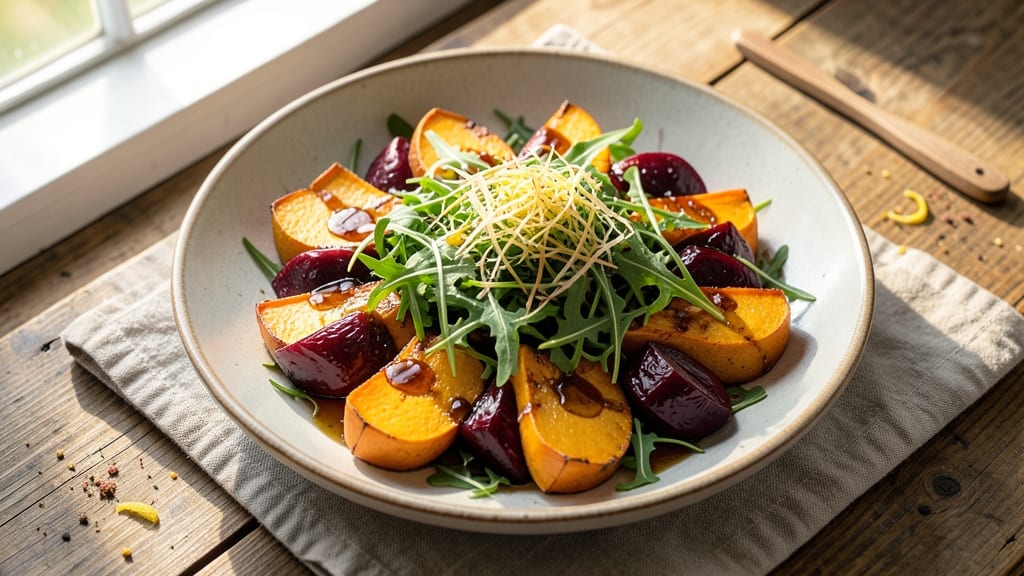
This beet and butternut squash salad transforms humble vegetables into a showstopping dish with deep earthy sweetness and crispy roasted texture. The secret lies in roasting the vegetables until caramelized—this process intensifies their natural flavors while creating that irresistible crunch.
I developed this recipe during autumn harvest season when fresh beets and squash are at their peak, and it quickly became my go-to for elegant yet simple meals.
The beauty of this salad is in its balance: tender roasted squash cubes, creamy beets, and a bright citrus vinaigrette that cuts through the richness. You'll need just five key ingredients (plus optional toppings) and about 40 minutes of hands-off roasting time.
The method is straightforward—simply roast, cool, toss with dressing, and arrange on a platter for a visually stunning dish that's as impressive as it is delicious.
What makes this salad truly special is how its flavors evolve as it sits. The roasted vegetables continue to mellow and deepen in sweetness, while the dressing's acidity brightens with each bite. This makes it perfect for meal prep—it actually tastes better the next day as the flavors meld.
The earthy tones of the roasted vegetables contrast beautifully with the vibrant green of fresh herbs, creating a dish that's as pleasing to the eye as it is to the palate.
Serve this salad as a side to roasted meats or grilled fish, or let it shine as a main dish with a sprinkle of toasted nuts and crumbled cheese.
The possibilities for customization are endless, but the core technique—roasting until caramelized—remains the foundation for its success. Let's get started on creating this seasonal masterpiece.
Ingredients for beet and butternut squash salad
Roasted beets and squash bring seasonal depth to this vibrant, vegan salad.
| Ingredient | Amount | Notes |
|---|---|---|
| Medium Beets 🍠 | 2 whole | Medium size, peeled and cubed |
| Butternut Squash 🎃 | 2 cups | Cubed, 1-inch pieces |
| Extra-Virgin Olive Oil 🫒 | ¼ cup | For roasting vegetables |
| Maple Syrup 🍯 | 2 tbsp | Grade B for deeper flavor |
| Fresh Lemon Juice 🍋 | 3 tbsp | Freshly squeezed |
| Dijon Mustard 🌶️ | 1 tbsp | For dressing tang |
| Fresh Thyme Leaves 🌿 | ¼ cup | Chopped, for garnish |
| Toasted Walnuts 🥜 | ½ cup | Chopped, optional topping |
| Sea Salt 🧂 | 1 ½ tsp | Diamond Crystal preferred |
| Freshly Ground Black Pepper 🌶️ | ½ tsp | For seasoning |
| Smoked Paprika 🌶️ | ½ tsp | For roasted depth |
| Avocado Oil 🫒 | 1 tbsp | For finishing drizzle |
The beets and squash are the stars here—look for firm, vibrant produce at your local farmers market or grocery store's organic section. Whole Foods and Trader Joe's often carry pre-peeled beets, which saves time, but peeling and cubing them yourself ensures better texture. For squash, choose a medium-sized butternut with a smooth, heavy feel—this indicates freshness. Smaller pieces roast faster, so aim for 1-inch cubes. If you can't find fresh thyme, dried works at one-third the amount, but fresh adds that bright herbal note that pairs beautifully with the earthy vegetables.
No maple syrup? Agave nectar or date syrup works equally well for the dressing. For extra crunch, swap walnuts for toasted pecans or candied pumpkin seeds. The avocado oil adds a subtle richness—if you're avoiding it, use more olive oil. For a quicker prep, roast the vegetables in advance and store them in the fridge for up to 3 days. The dressing can be made ahead too, but hold off on adding the lemon juice until just before serving to keep it bright. If you're serving this as a main dish, consider adding crumbled vegan feta or marinated tofu for extra protein.
Roasted vegetables keep well in the fridge for 4-5 days, though they're best enjoyed within 2 days for peak texture. Store them in an airtight container with a paper towel to absorb any moisture. The dressing should be refrigerated and used within 5 days. For meal prep, assemble the salad just before serving to maintain that crisp, vibrant presentation. If you're making this ahead for a party, roast the vegetables the day before and store them separately from the dressing. Reheat gently before tossing with the vinaigrette—this helps the flavors meld beautifully.
Why You'll Love This Recipe
- Here’s what sold me: the butternut squash’s natural sweetness pairs perfectly with the earthy beets, and that lemon juice cuts through like a bright wake-up call. Drizzle in olive oil, and suddenly you’ve got a salad that tastes like autumn in a bowl—no fancy ingredients, just honest flavor.
- I’ll be real: beets and squash are affordable, and they last. Roast a big batch, and you’ve got leftovers that taste just as good cold the next day. Plus, the maple syrup and olive oil stretch thin—no wasted drizzles here. It’s the kind of recipe that makes grocery day feel like a victory.
Step-by-step instructions for roasted beet and butternut squash salad
Transform simple vegetables into a vibrant, restaurant-worthy salad with this precise roasting technique.
🔥 Step 1: Roast Vegetables Until Caramelized
Preheat your oven to 400°F and line two rimmed baking sheets with parchment paper. In a large bowl, toss the 2 whole medium beets and 2 cups butternut squash with 0.25 cup extra-virgin olive oil, 1.5 tsp sea salt, 0.5 tsp smoked paprika, and 0.5 tsp black pepper until evenly coated. Spread in a single layer on the prepared sheets.
Roast for 25-30 minutes until the beets are tender when pierced with a fork and the squash edges begin to brown. I like to rotate the pans halfway through for even cooking. The vegetables should develop a deep caramelization—this is where the magic happens. If they're browning too quickly, tent with foil to prevent burning while maintaining tenderness.
👨🍳 Step 2: Create the Dressing
While the vegetables roast, whisk together the dressing in a small bowl. Combine 2 tbsp maple syrup, 3 tbsp fresh lemon juice, 1 tbsp Dijon mustard, and 1 tbsp avocado oil. The mixture should be slightly thick but pourable—this balance of sweet, tangy, and creamy creates the perfect harmony with the roasted vegetables.
Taste and adjust seasoning if needed. I usually find the lemon juice needs a pinch more salt to balance the sweetness. The dressing should coat the back of a spoon but remain fluid enough to emulsify when tossed with the salad. Keep this mixture at room temperature until ready to use—cold dressing can make the vegetables soggy.
🥘 Step 3: Assemble and Garnish
Transfer the roasted vegetables to a large serving bowl while still warm. Drizzle with the dressing and gently toss until evenly coated. The residual heat from the vegetables will help the dressing cling beautifully. If the salad seems dry, add 1-2 tablespoons of water to help distribute the dressing.
Sprinkle with 0.25 cup chopped fresh thyme leaves and 0.5 cup toasted walnuts just before serving. The thyme adds an aromatic brightness that cuts through the richness of the roasted vegetables, while the walnuts provide a satisfying crunch. I like to serve this immediately while the vegetables are still warm from the oven—this enhances their natural sweetness and caramelized flavors.
Pro Tips For Making Beet And Butternut Squash Salad
- ROAST BEETS UNTIL TENDER: I used to pull them out at 40 minutes, thinking they’d soften more later—wrong. Beets need a solid 50-55 minutes at 400°F (200°C) until a knife slides in like butter. If they’re still firm, they’ll turn mushy when dressed. Trust the clock, not your gut.
- PEEL SQUASH AFTER CHILLING: Warm butternut squash is stubborn. Cut it, roast it, then pop it in the fridge for 10 minutes before peeling. The flesh pulls away cleanly—no scrapping or fighting. (Yes, even if you’re impatient like me.)
- BALANCE THE DRESSING: Maple syrup and lemon juice are a dream team, but too much syrup makes this salad taste like dessert. Start with 1:2 ratio (1 tbsp syrup to 2 tbsp lemon juice), then adjust. Taste as you go—sweetness should brighten, not overpower.
- USE A MANDOLINE FOR EVEN SLICES: Hand-cutting beets and squash leaves uneven chunks. A mandoline gives consistent slices that roast uniformly—no undercooked centers or overcooked edges. (Skip it? Your salad’s texture will suffer.)
Creative variations of beet and butternut squash salad
Autumn Harvest Twist
Swap the butternut squash for acorn or delicata squash—both have sweeter flesh and thinner skins, making them easier to roast whole. Peel and cube 2 cups delicata (about one small squash) and roast alongside the beets.
The nutty flavor of delicata pairs beautifully with the earthiness of beets, creating a deeper autumnal profile. 🎃
For a true harvest celebration, add roasted sweet potatoes to the mix. Toss 1 cup cubed sweet potato with the squash and beets, then roast until tender. The natural sugars in sweet potatoes caramelize beautifully, adding another layer of sweetness to balance the bright lemon dressing.
Spiced Citrus Dressing
Elevate the dressing by infusing it with warm spices. Add ½ tsp ground cinnamon and ¼ tsp freshly grated nutmeg to the maple syrup before whisking with the lemon juice. This creates a cozy, spiced citrus dressing that complements the roasted vegetables perfectly.
The cinnamon adds warmth, while the nutmeg brings a subtle earthiness that ties into the beets' natural flavors.
For an extra kick, add 1 tsp grated fresh ginger to the dressing. The ginger brightens the flavors and adds a refreshing zing that cuts through the richness of the roasted vegetables. I love using this variation when serving the salad as a main dish—it feels festive and satisfying.
Protein-Packed Additions
Turn this salad into a complete meal by adding crumbled tempeh or marinated tofu. Press and bake ½ cup crumbled tempeh with 1 tbsp soy sauce, 1 tsp maple syrup, and ½ tsp smoked paprika until crispy.
The umami-rich tempeh adds a hearty texture that pairs wonderfully with the creamy beets and crispy squash. 🥜
For a lighter option, top with white beans or chickpeas. Toss ½ cup cooked white beans with 1 tsp olive oil, ½ tsp garlic powder, and a pinch of salt before adding to the salad.
The beans add a creamy texture and extra protein, making this dish even more satisfying as a standalone meal.
Global Flavors
Give this salad a Mediterranean twist by adding crumbled vegan feta, kalamata olives, and red onion slices. Toss the roasted vegetables with ¼ cup chopped kalamata olives and 2 tbsp thinly sliced red onion before drizzling with the dressing.
The briny olives and sharp onion add a tangy contrast that brightens the dish. 🌿
For an Asian-inspired version, swap the maple syrup for rice vinegar and add 1 tbsp sesame oil to the dressing. Top with toasted sesame seeds and thinly sliced scallions.
The umami-rich sesame and tangy vinegar create a completely different but equally delicious flavor profile that still highlights the roasted vegetables.
Nutrition facts
Frequently asked questions
Can I use pre-cooked beets or squash for this salad?
Yes! Pre-cooked beets and squash work perfectly—just slice them into 1-inch cubes and skip the roasting step. For best results, reheat them in the oven at 350°F for 10-15 minutes with a drizzle of olive oil and smoked paprika to restore their caramelized flavor. This cuts prep time significantly while keeping the dish delicious.
How do I store leftovers to keep them crispy?
Store the roasted vegetables and dressing separately in airtight containers. Reheat the veggies for 2-3 minutes in the microwave (covered with a damp paper towel) to refresh their texture. Toss with dressing just before serving—this prevents sogginess. The salad keeps well for 3-4 days in the fridge.
What's the best way to make this salad ahead of time?
Roast the vegetables 1-2 days ahead and store them at room temperature in an airtight container. Make the dressing separately and keep it refrigerated. When ready to serve, reheat the veggies briefly, toss with dressing, and garnish with fresh thyme and walnuts. This method preserves the best texture and flavor balance.
Can I substitute butternut squash with another winter squash?
Try acorn, delicata, or kabocha squash—they all roast beautifully and add different flavor profiles. Delicata has a naturally sweet taste, while acorn offers a nuttier depth. Just cube them to 1-inch pieces and adjust roasting time by 5-10 minutes based on size.
Why does my dressing separate when I toss it with the salad?
This happens when the dressing is too cold or the oil and vinegar aren't properly emulsified. Whisk the dressing ingredients vigorously until thickened, then let it sit at room temperature for 5 minutes before using. For extra stability, add 1 tsp Dijon mustard or ½ tsp xanthan gum to the dressing mixture.