Sauces & Condiments
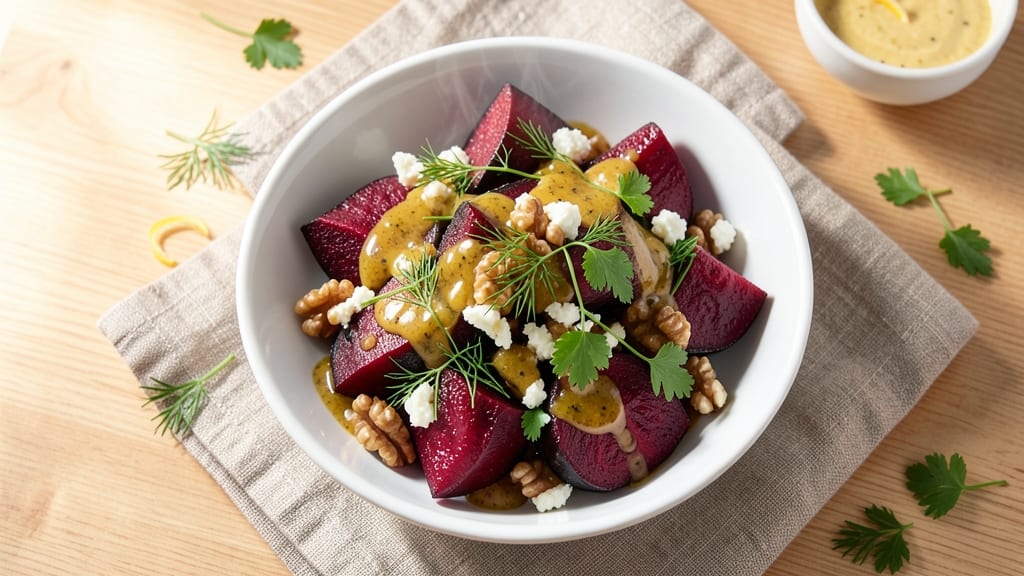
This beet salad vinaigrette recipe transforms humble beets into a bold, earthy dressing that elevates any greens—no honey or dairy needed. The secret lies in roasting beets until tender, then blending them with tangy apple cider vinegar and a touch of Dijon mustard for depth.
What sets this apart is the balance of natural sweetness and bright acidity, creating a dressing that's as vibrant as the salad it tops.
The base is simple: roasted beets, olive oil, and vinegar, but the magic happens in the finishing touches. Fresh herbs like dill or parsley add freshness, while a squeeze of lemon keeps the flavors bright.
This vinaigrette isn’t just vegan—it’s versatile, working equally well on arugula, kale, or even as a dip for roasted vegetables. The texture is silky yet light, ensuring every bite of your salad is coated in rich, beet-infused flavor.
One of the best parts? This dressing keeps beautifully in the fridge for up to 5 days, making it perfect for meal prep. Store it in an airtight jar, and the flavors will deepen over time, becoming even more complex.
Whether you're dressing a simple green salad or adding zing to grain bowls, this vinaigrette delivers restaurant-quality results with minimal effort.
For extra depth, consider adding a pinch of smoked paprika or a dash of maple syrup to enhance the beet’s natural sweetness. The key is to taste as you go—adjust the vinegar for more tang or the oil for richness until it’s exactly to your liking.
Once you try this, store-bought dressings will never compare again.
Ingredients for beet salad vinaigrette
Eight simple ingredients blend into a vibrant, earthy dressing that transforms any salad.
| Ingredient | Amount | Notes |
|---|---|---|
| Medium Beets 🍠 | 2 whole | Roasted until tender, peeled |
| Extra-Virgin Olive Oil 🫒 | ½ cup | High quality, fruity |
| Apple Cider Vinegar 🍎 | ¼ cup | Raw, unfiltered preferred |
| Dijon Mustard 🌶️ | 1 tbsp | Mild or strong variety |
| Fresh Dill 🌿 | ¼ cup | Chopped, stems removed |
| Fresh Parsley 🌿 | ¼ cup | Chopped, flat-leaf preferred |
| Lemon Juice 🍋 | 1 tbsp | Freshly squeezed |
| Maple Syrup 🍁 | 1 tsp | Pure, grade A |
| Smoked Paprika 🌶️ | ½ tsp | Adjust for smokiness |
| Sea Salt 🧂 | ½ tsp | Fine grain preferred |
The beets are the star—roast them until they're fork-tender, not mushy. Trader Joe's and Whole Foods carry pre-washed baby beets, which saves time, but regular beets work too. Look for deep red or purple ones—they've got the most natural sweetness. I usually roast mine at 400°F for about 45 minutes, wrapped in foil, until they're soft enough to mash easily. The skin should peel right off after roasting. If you're short on time, canned beets in juice (drained and rinsed) are a decent backup, though they won't have the same depth of flavor.
No Dijon mustard? Yellow mustard at half the amount works in a pinch, though it'll be less complex. Fresh herbs are ideal, but dried dill at one-third the quantity gets you close. The maple syrup can be swapped for agave nectar if you prefer, but maple has a more distinct flavor that pairs well with beets. Want extra tang? Add another tablespoon of vinegar. For a smoother texture, strain the beets after roasting—though I like the rustic look of tiny beet bits in the dressing. The smoked paprika is optional but adds a nice depth that makes this dressing feel restaurant-quality.
This keeps beautifully in the fridge for up to 5 days, though the flavors actually deepen over time. Store it in an airtight jar with a thin layer of olive oil on top to preserve freshness. It's perfect for meal prep—just shake before using. For extra convenience, portion it into small jars so you can grab exactly what you need. If you make a double batch, freeze half in ice cube trays for single-serving portions. The texture might separate slightly when refrigerated, but a quick shake brings it all back together—just like store-bought, but way better.
Why You'll Love This Recipe
- No Boil Required: I roast the beets whole—directly on the sheet pan—while I prep the rest. By the time they’re tender, the vinaigrette is mixed, and the dill is chopped. Zero fuss, zero mess.
- Sweet-Tangy Magic: That apple cider vinegar cuts through the earthy beets like a knife, while the Dijon mustard adds just enough bite. Honestly, the first bite always makes me pause mid-fork.
- Packable Lunch Hero: This salad keeps beautifully for days—toss it in jars for work or pack it for picnics. The vinaigrette clings to the beets, so no soggy greens here. (Yes, even on a Tuesday night.)
- Budget Brightener: Beets last forever, and a little olive oil goes a long way. I make this for four people for under $8, and it’s the one salad everyone actually finishes. No sad leftovers—just happy seconds.
Step-by-step instructions for beet salad vinaigrette recipe
This vinaigrette brings together earthy roasted beets with bright, tangy flavors—simple steps for big impact.
Roast the Beets Until Tender
Preheat your oven to 400°F. Wrap the 2 whole medium beets tightly in aluminum foil, then place them on a baking sheet. Roast for 45-60 minutes until a knife slides in easily and the beets feel soft when squeezed. The foil traps steam, ensuring they cook evenly without drying out.
Once done, let them cool for 10 minutes before peeling. I always run them under cool water first—this makes the skins slide off effortlessly. Peel away the outer layer, then roughly chop the beets into ¼-inch pieces. You'll need about 1 cup of chopped beets for the vinaigrette. Set them aside—they'll cool completely before mixing.
Whisk the Base Ingredients
In a medium bowl, combine the 0.5 cup extra-virgin olive oil, 0.25 cup apple cider vinegar, 1 tablespoon Dijon mustard, 1 tablespoon lemon juice, and 1 teaspoon maple syrup. Whisk vigorously for 1 minute until the mixture emulsifies and becomes smooth. The mustard acts as an emulsifier, helping the oil and vinegar blend seamlessly.
Next, add the 0.5 teaspoon sea salt and 0.5 teaspoon smoked paprika. Taste the mixture—it should balance sweet, tangy, and slightly smoky notes. If it's too sharp, add another ½ teaspoon maple syrup. If it needs more brightness, squeeze in a little more lemon juice. This is your flavor foundation, so don't rush it.
Fold in Fresh Herbs and Roasted Beets
Gently stir in the 0.25 cup chopped fresh dill and 0.25 cup chopped fresh parsley using a wooden spoon. The herbs add a vibrant herbal zing that cuts through the richness of the beets and oil. Let the mixture sit for 2 minutes—this allows the flavors to meld slightly before the final step.
Add the cooled, chopped beets and toss everything together until fully combined. The beets should be evenly distributed, adding their earthy sweetness to the tangy dressing. If the vinaigrette seems too thick, whisk in 1-2 teaspoons water to reach your desired consistency. For best results, let it rest for 15 minutes in the fridge before serving—this deepens the flavors even more.
Adjust and Serve
Taste the vinaigrette one last time before serving. The beets should add a natural sweetness that balances the acidity of the vinegar, while the herbs brighten everything up. If it needs more depth, add a pinch of smoked paprika. If it's too thick, thin it with a splash of water or extra lemon juice.
This vinaigrette works beautifully drizzled over mixed greens, roasted vegetables, or even as a marinade for grilled chicken. For extra flair, garnish with additional fresh dill or a sprinkle of flaky sea salt. Store any leftovers in an airtight container in the fridge for up to 5 days—it only gets better with time!
Pro Tips For Making Beet Salad Vinaigrette
- ROAST BEETS UNTIL TENDER: I learned this the hard way—medium beets need 45-50 minutes at 400°F (200°C), not the 30 minutes I kept checking. Poke one with a fork; if it slides in like butter, they’re done. Overcooked beets turn mushy and bleed like a crime scene when sliced.
- WHISK MUSTARD FIRST: Skip the "taste as you go" urge and mix the Dijon mustard with the vinegar before adding oil. This emulsifies the dressing right away—no last-minute scrambling to fix a broken vinaigrette. Trust me, your future salad will thank you.
- CHOP DILL AT THE END: Fresh dill loses its punch fast. Save it for the final toss over the salad, not the vinaigrette itself. If you must add it early, store the dressing in the fridge and stir it back in right before serving—it’ll taste like you just picked it.
- USE COLD BEETS FOR DRESSING: Let roasted beets cool completely before slicing and mixing into the vinaigrette. Warm beets release starch and make the dressing gluey—like eating a thick, sad pudding instead of a bright, tangy dressing. Patience here makes all the difference.
Creative variations of this beet salad vinaigrette
Roasted vs. Raw Beets
Roasting beets until tender brings out their natural sweetness and deepens their earthy flavor, making them the star of this vinaigrette. I always roast mine at 400°F for 45-60 minutes wrapped in foil to trap moisture.
For a quicker option, use 1 cup cooked canned beets (drained and rinsed), though they won’t have the same depth of flavor. The texture should be soft enough to mash easily—overcooking turns them mushy and watery. 🍠
Herb Variations
Fresh dill and parsley are my go-to herbs, but don’t be afraid to experiment. Swap in tarragon for an anise-like note or cilantro for a citrusy twist. For a Mediterranean flair, add ½ teaspoon dried oregano.
If you prefer milder flavors, use ½ cup basil instead—it pairs beautifully with the beets’ sweetness. Always chop herbs finely so they distribute evenly in the dressing.
Sweetness Adjustments
The 1 teaspoon maple syrup balances the tangy vinegar, but you can tweak it to taste. For extra sweetness, add ½ teaspoon agave nectar or a pinch of vanilla extract.
If you prefer a sharper contrast, reduce the syrup to ½ teaspoon and increase the lemon juice to 2 tablespoons. The key is harmony—too much sweetness overpowers the herbs, while too little leaves the dressing flat.
Smoky & Spicy Twists
For a smoky depth, boost the smoked paprika to 1 teaspoon or add ¼ teaspoon cayenne pepper for heat. A dash of liquid smoke (just ¼ teaspoon) intensifies the smokiness without altering the texture.
For a spicy kick, stir in 1 teaspoon hot honey or a finely minced jalapeño. These variations work especially well with hearty greens like kale or arugula.
Thickness Control
This vinaigrette should coat the back of a spoon but still pour smoothly. If it’s too thick after mixing, whisk in 1-2 teaspoons water or lemon juice to thin it out.
For a thicker consistency, reduce the oil slightly (¼ cup instead of ½ cup) or add 1 teaspoon cornstarch mixed with water. The ideal texture clings to greens without pooling—perfect for tossing or drizzling.
Global Flavor Infusions
Give your dressing an international twist! For a French-inspired version, add ½ teaspoon thyme and 1 teaspoon white wine vinegar. A Middle Eastern twist includes ½ teaspoon ground cumin and 1 teaspoon tahini (whisked in last).
For an Asian fusion, swap the apple cider vinegar for rice vinegar and add 1 teaspoon sesame oil. Each variation keeps the beet’s earthiness but tailors the dressing to your favorite global flavors. ✨
Nutrition facts
Frequently asked questions
Can I use raw beets instead of roasted in this vinaigrette?
Raw beets will work, but roasting enhances their natural sweetness and earthy depth. If you prefer raw, grate 1 cup peeled beets and let them sit for 10 minutes to soften before mixing. The texture will be slightly grainier, but the flavor remains bright. For best results, roasting is recommended—it creates that signature caramelized sweetness that makes this dressing stand out.
How do I adjust this vinaigrette for a sweeter or tangier taste?
For more sweetness, add ½ teaspoon maple syrup or agave nectar at a time. Need extra tang? Increase the apple cider vinegar by 1 tablespoon or add ½ teaspoon lemon juice. Always taste as you go—this dressing is all about balance! The goal is a harmonious mix of earthy beets, bright acidity, and herbal freshness.
Can I make this vinaigrette without Dijon mustard?
Yes! Swap the 1 tablespoon Dijon mustard for 1½ tablespoons yellow mustard or ½ teaspoon mustard powder mixed with 1 tablespoon water. The mustard acts as an emulsifier, so without it, whisk the oil and vinegar more vigorously or add 1 teaspoon honey or maple syrup to help bind the ingredients. The texture may separate slightly but can be fixed with a quick shake before use.
What’s the best way to store leftover vinaigrette?
Transfer any leftovers to an airtight jar or container and refrigerate for up to 5 days. The flavors actually improve over time! To preserve freshness, add a thin layer of olive oil on top before sealing. If the texture separates, simply shake or whisk before using. For longer storage, freeze in ice cube trays—thaw overnight in the fridge before shaking to recombine.
Why did my vinaigrette turn out too thick or too thin?
Thickness depends on the ratio of oil to vinegar. If it’s too thick, whisk in 1-2 teaspoons water or lemon juice to thin. Too thin? Add 1 tablespoon olive oil at a time until it reaches a pourable yet clingy consistency. The ideal texture should coat the back of a spoon but still drizzle easily over salads. Pro tip: Chilling the dressing for 15 minutes before serving can also help thicken it slightly.