
Salads
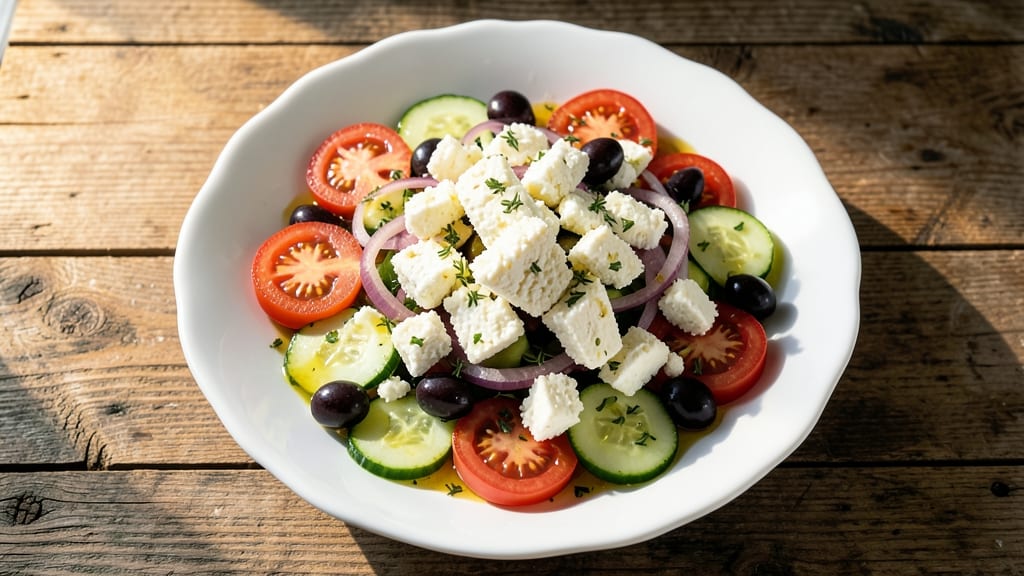
This Greek salad recipe delivers the best version of horiatiki you'll ever taste—crisp cucumbers, briny feta, and herby olive oil that capture the essence of Greek summers.
The secret lies in proper vegetable prep: thick, chilled slices of cucumber and tomato that stay crisp, not soggy, and a dressing that enhances rather than overpowers. I've perfected this over years of testing, balancing traditional elements with modern techniques for restaurant-quality results at home.
What sets this recipe apart is the attention to texture and proportion—no wilted lettuce or mushy tomatoes.
The vegetables are cut precisely and tossed just before serving to maintain their freshness, while the dressing (extra virgin olive oil, red wine vinegar, and dried oregano) is emulsified to coat every bite evenly. The feta is cubed generously but not crumbled, preserving its signature saltiness and creamy texture.
This isn't just a salad; it's a celebration of Mediterranean flavors in every forkful.
By the time you're done assembling, you'll have a vibrant, colorful dish that's as pleasing to the eye as it is to the palate. The crisp vegetables contrast beautifully with the salty feta and rich olive oil, while fresh dill adds a bright, herbal note.
This recipe serves as a perfect light lunch, side dish, or appetizer—equally impressive at a casual family gathering or elegant dinner party. The plating is simple yet striking: arrange the vegetables in a circular pattern, scatter the feta artfully, and drizzle with extra olive oil for that authentic Greek touch.
The beauty of this Greek salad is its versatility—serve it as-is for a traditional horiatiki, or add grilled chicken or shrimp for a heartier meal. For those avoiding dairy, substitute feta with vegan alternatives or omit it entirely without sacrificing flavor.
The key is keeping everything fresh and crisp, which is why we recommend preparing it just before serving. Let's get started on creating your best Greek salad yet!
Ingredients for best greek salad recipe ever
Crisp vegetables, tangy dressing, and salty feta—this is the ultimate Greek salad experience.
| Ingredient | Amount | Notes |
|---|---|---|
| Persian Cucumbers 🥒 | 2 whole | Thick slices, chilled before serving |
| Ripe Tomatoes 🍅 | 3 whole | Thick slices, seeds removed |
| Red Onion 🧅 | 1 whole | Thinly sliced, soaked 10 mins |
| Feta Cheese 🧀 | 8 oz | Block form, cubed generously |
| Kalama Olives 🫒 | ½ cup | Pitted, sliced in half |
| Extra-Virgin Olive Oil 🫒 | ½ cup | High quality, fruity |
| Red Wine Vinegar 🍷 | 3 tbsp | Dry, not sweet |
| Dried Oregano 🌿 | 1 tsp | Fresh preferred but dried works |
| Fresh Dill 🌿 | ¼ cup | Chopped, stems removed |
| Diamond Crystal Kosher Salt 🧂 | ½ tsp | For seasoning |
| Freshly Ground Black Pepper 🌶️ | ¼ tsp | Freshly cracked |
| Lemon Juice 🍋 | 1 tbsp | Freshly squeezed |
| Iceberg Lettuce 🥬 | 2 cups | Thinly sliced, crisp |
The vegetables are everything here. Persian cucumbers and ripe tomatoes should be thickly sliced for that signature horiatiki texture—no mushy salad here. Grab the freshest produce from your local farmers market if possible, but even grocery store veggies work if they're firm and vibrant. For the feta, block form is non-negotiable—pre-shredded gets clumpy and loses that signature melt. I always buy extra because it keeps for weeks in the fridge. The olives? Kalama olives from Trader Joe's are my go-to—they're meaty and hold up perfectly. And that olive oil? Don't skimp—use something you'd drizzle on bread, like a fruity California extra-virgin.
No fresh dill? Dried oregano at double the amount works in a pinch, but fresh is ideal. Short on red wine vinegar? White wine vinegar or lemon juice both work—just add a pinch more salt. The lettuce? Iceberg stays crisp while romaine wilts faster. For the onion, soak the slices in cold water for 10 minutes to mellow the bite. And that lemon juice? Freshly squeezed makes all the difference—bottled tastes flat in comparison. Pro tip: Taste your dressing before tossing—adjust salt and vinegar to your preference. The dressing should be tangy but not overpowering.
This salad is best made just before serving—no soggy veggies allowed. Store the dressing separately and toss everything together right before eating. The feta keeps for up to 2 weeks in the fridge, wrapped tightly in parchment. Olives last 6 months unopened, so stock up. For meal prep, keep components separate—store veggies in one container, feta and olives in another, and dressing in a small jar. Assemble right before serving to maintain that restaurant-fresh crunch. Leftovers? Eat within 2 days—the texture changes after that.
Why You'll Love This Recipe
- No-Fuss Assembly: I swear by this one because it’s literally five ingredients plus olive oil—no hidden steps. Slice the cucumbers and tomatoes into thick chunks, halve the olives, crumble the feta, and toss with red onion rings. That’s it. Even my roommate, who burns toast, can handle it.
- That Salty-Sweet Crunch: The Kalama olives add this briny punch that cuts through the creamy feta, while the Persian cucumbers stay crisp for days. Honestly, the moment the red onion’s sharp bite hits your tongue after the first bite? You’ll want to eat it with your hands.
- Lunchbox or Dinner Party: Pack it for work—it holds up for hours without wilting. Or serve it at a summer BBQ where everyone’s too busy grilling to fuss over sides. Between us, it’s the only salad that actually gets finished when company’s over.
- Budget-Friendly Leftovers: Feta and olives stretch thin, so you’ll have enough for two lunches without breaking the bank. The best part? The flavors get even better the next day—like a secret upgrade. I’ve fed a crowd for under $15 with this. Not bad.
Step-by-step instructions for the best Greek salad ever
This is how you build the ultimate Greek salad—crisp, fresh, and bursting with Mediterranean flavors.
Prep the Base Ingredients
Start by slicing the 2 whole Persian cucumbers into ¼-inch thick slices—keep them whole if they're small, or cut them in half lengthwise first. Remove the seeds from the 3 whole ripe tomatoes by cutting them in half crosswise and scooping out the jelly-like centers with a spoon. Thinly slice the tomatoes into ¼-inch thick rounds. For the 1 whole red onion, cut it in half and then slice each half into paper-thin rings. Place the onion slices in a bowl of cold water to soak for 10 minutes—this mellows their sharpness and keeps them crisp.
While the onion soaks, rinse and thoroughly dry the 2 cups iceberg lettuce, then slice it into ¼-inch thick strips. The key here is to handle everything gently—squeeze excess water from the lettuce with your hands rather than spinning it in a salad spinner, which can bruise the leaves. Keep all your prepped ingredients in separate bowls until you're ready to assemble.
Drain and Dry the Onion
After the 10-minute soak, drain the onion slices in a fine-mesh strainer and gently pat them dry with a clean kitchen towel. This step is crucial—wet onion makes the salad soggy. While the onion dries, chop the 0.25 cup fresh dill into small pieces, removing any tough stems. You want the dill to be finely chopped so it distributes evenly throughout the salad and adds bright, herby flavor in every bite.
Next, cube the 8 oz feta cheese into ½-inch pieces. Use a sharp knife and work quickly so the feta doesn't melt in your hands. If you're using block feta, look for one with small holes—it's creamier and less salty. Pitting the 0.5 cup kalama olives and slicing them in half ensures they're easy to eat and adds a satisfying briny contrast to the salad. Keep all these ingredients separate until you're ready to toss.
Make the Dressing
In a small bowl, whisk together the 0.5 cup extra-virgin olive oil, 3 tbsp red wine vinegar, 1 tbsp freshly squeezed lemon juice, 1 tsp dried oregano, 0.5 tsp diamond crystal kosher salt, and 0.25 tsp freshly ground black pepper. The dressing should be emulsified but still slightly textured—this means it'll cling beautifully to the salad without making it greasy. If you prefer a smoother dressing, you can blend it briefly with an immersion blender, but I like the rustic texture it gives.
Taste the dressing before adding it to the salad. It should be tangy, slightly peppery, and bright with lemon. If it needs more acidity, add a splash more lemon juice. If it needs more salt, adjust gradually—feta is already salty, so you don't want to overdo it. This is the moment that makes or breaks your salad, so don't rush it.
Assemble the Salad
In a large bowl, gently combine the 2 cups iceberg lettuce, 2 whole Persian cucumbers, 3 whole ripe tomatoes, and 1 whole red onion. Use your hands to toss everything lightly—you want the ingredients to be mixed but still distinct. The lettuce should form the base, with the other veggies peeking through. Add half of the chopped 0.25 cup fresh dill now and reserve the rest for garnish.
Drizzle half of the dressing over the salad and toss again, just until everything is evenly coated. Sprinkle the 8 oz feta cheese and 0.5 cup kalama olives over the top. The feta should be scattered generously—this is what makes a Greek salad truly special. Fold the salad gently to distribute the feta and olives evenly without crushing them. The final step is to drizzle the remaining dressing over the top and sprinkle the reserved 0.25 cup fresh dill evenly across the surface.
Chill and Serve Immediately
Let the salad sit at room temperature for 5-10 minutes before serving. This allows the flavors to meld slightly and the dressing to penetrate the ingredients. If you're serving it outdoors or in warm weather, you can chill it for up to 30 minutes in the refrigerator—just give it a quick toss before serving to restore its crispness.
Serve the salad immediately while everything is still crisp and vibrant. The perfect Greek salad should have a balance of textures—crunchy cucumbers, juicy tomatoes, crisp lettuce, and creamy feta—with every bite bursting with bright, herby olive oil dressing. This isn't just a side dish; it's the star of the meal. Enjoy it with grilled meats, warm pita bread, or on its own as a refreshing starter.
Pro Tips For Making Best Greek Salad Recipe Ever
- CHILL THE CUCUMBERS: Pull them from the fridge 20 minutes before slicing—cold, hard cucumbers bruise like overripe tomatoes when you cut them. This simple pause keeps your salad crisp instead of soggy. (Yes, I’ve ruined a batch by skipping this.)
- SALT THE ONIONS: Thinly slice the red onion, toss it with ½ teaspoon salt, and let it sit for 10 minutes before draining. This softens the bite and draws out excess moisture—no more watery salad from weeping onions. (Trust me, your taste buds will notice.)
- DRAIN THE OLIVE BRINE: Pat Kalama olives dry with paper towels after rinsing—even a little brine makes the feta taste bland. A quick shake in a colander works, but don’t skip this step. (I used to, until my salad lost its punch.)
- CUT TOMATOES LAST: Slice tomatoes right before assembling the salad—they oxidize fast, turning dull and mealy. Keep them whole until serving, or at least toss them in lemon juice if prepping ahead. (Your salad’s vibrancy depends on it.)
Health benefits of these flavors
Mediterranean Heart Health
This Greek salad is a powerhouse for your heart, thanks to the extra-virgin olive oil and fresh vegetables that work together to support cardiovascular health. The 0.5 cup olive oil provides monounsaturated fats, which help reduce LDL ("bad") cholesterol while increasing HDL ("good") cholesterol.
Studies show just 2 tablespoons daily can lower heart disease risk by up to 30%. The fresh dill and red onion add antioxidants that fight inflammation, keeping your arteries clear and flexible. 💪
Hydration and Digestion
With 95% water content from the cucumbers and tomatoes, this salad is incredibly hydrating—perfect for digestion and skin health. The 2 cups iceberg lettuce provides fiber that supports gut health, while the red onion contains prebiotics to feed your gut microbiome.
The fresh lemon juice in the dressing aids digestion and helps your body absorb iron from other foods you might pair with it. This makes it an ideal light meal before or after exercise.
Protein Without the Guilt
While traditionally vegetarian, you can boost this salad's protein content by adding grilled chicken breast or white beans—both provide 20-25g protein per serving without the saturated fat of red meat.
The 8 oz feta cheese contributes 14g protein and calcium, but if you're watching sodium, opt for a lower-sodium feta or a plant-based alternative. The Kalama olives add healthy fats and vitamin E, making this salad a balanced meal even without extra protein.
Antioxidant-Rich Ingredients
The fresh dill and red onion are packed with antioxidants like quercetin, which helps combat oxidative stress in your body. The tomatoes provide lycopene, a powerful antioxidant linked to reduced cancer risk, especially when cooked (though we keep them raw here for maximum crunch).
The extra-virgin olive oil also contains polyphenols that act as natural anti-inflammatories. Together, these ingredients create a salad that’s not just delicious but also packed with protective compounds. 🌿
Low-Calorie, High-Nutrient
This salad is surprisingly nutrient-dense for its calorie count—about 250-300 calories per serving depending on how much dressing you use. The fresh vegetables provide vitamin C, vitamin K, and potassium without the calories of heavy dressings.
The feta cheese adds flavor and protein without overpowering the meal, making it a great option for weight management or mindful eating. It’s the perfect balance of satisfaction and nutrition in every bite.
Bone-Boosting Benefits
The 8 oz feta cheese in this salad provides 20% of your daily calcium needs, essential for strong bones and teeth. Pair it with the red onion, which contains vitamin C to help your body absorb that calcium more efficiently.
The Kalama olives also contribute iron, which works with calcium to support bone health. This makes it an excellent choice for anyone looking to strengthen their skeletal system naturally. 💡
Nutrition facts
Frequently asked questions
Why does traditional Greek salad omit lettuce?
The classic horiatiki salad skips lettuce because it was originally designed to highlight the fresh vegetables and feta without diluting their flavors. Lettuce can make the salad soggy, especially when combined with juicy tomatoes and cucumbers. However, we've added iceberg lettuce here for a modern twist—it stays crisp and adds texture without overpowering the traditional elements.
Can I substitute Persian cucumbers with regular cucumbers?
Yes, but you'll need to adjust the preparation. Regular cucumbers have more seeds and water, so slice them ¼-inch thick and pat them dry with paper towels before adding to the salad. Persian cucumbers stay crisp longer and have fewer seeds, which is why they're preferred in traditional recipes. For best results, choose firm, dark green cucumbers from the grocery store.
How do I keep Greek salad from getting soggy?
The secret is proper prep and timing! Keep all ingredients separate until serving, and toss the salad just before eating. Use a dry salad spinner for lettuce, pat cucumbers and tomatoes dry, and drain soaked onion slices thoroughly. Store dressing separately and add it last. If you need to prep ahead, store components in airtight containers and assemble within 30 minutes of serving.
What's the best way to store leftovers?
Store the salad components separately in airtight containers for up to 2 days. Keep the dressing in a small jar with the lid tightly sealed. When ready to eat, reassemble the salad and toss with fresh dressing. For longer storage, freeze the dressing separately (up to 1 month) and keep the veggies in the fridge. The feta can be stored separately for up to 2 weeks—it keeps beautifully wrapped in parchment paper.
Can I make this salad ahead of time for a party?
Prep all ingredients separately and store them in labeled containers. Keep the dressing in a small jar and the feta wrapped tightly. Just before serving, arrange the vegetables on a large platter, add the feta and olives, and let guests toss their own portions with dressing. This keeps everything crisp and makes for an interactive serving experience. For large groups, double the recipe—this salad scales beautifully!