
Salads
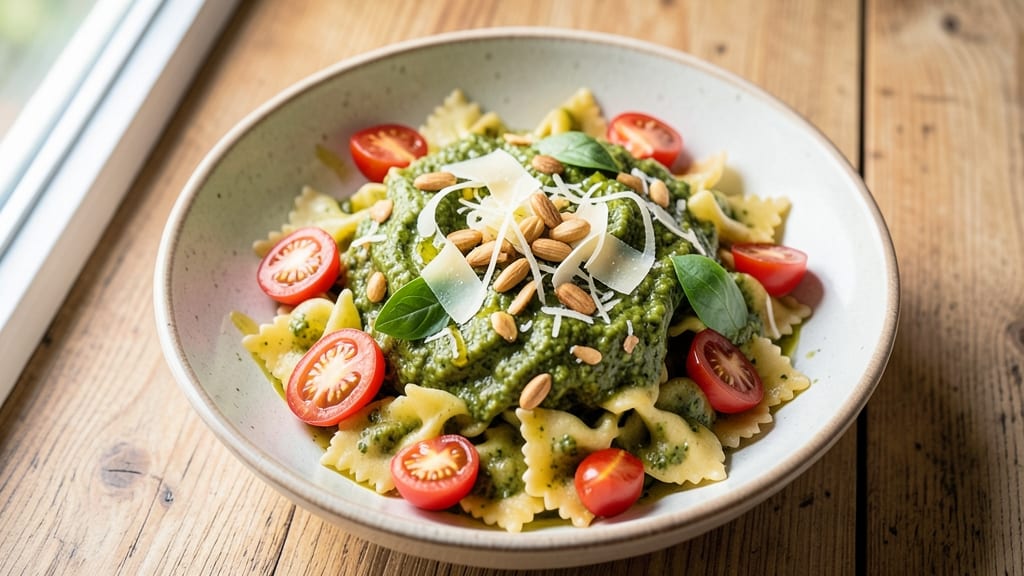
This pesto pasta salad recipe ever transforms a classic into something extraordinary—creamy, vibrant, and with zero soggy herbs. The secret lies in a fresh basil pesto that stays bright and a crunchy texture that holds up for hours, even after chilling.
I developed this after years of wilting basil and mushy salads, and it finally delivers the perfect balance of flavors and textures.
The magic starts with homemade pesto—just basil, garlic, pine nuts, parmesan, and olive oil—whisked together while still cold to preserve maximum freshness.
Tossed with al dente pasta and crisp vegetables like cherry tomatoes and cucumbers, the salad gets its structure from a light dressing of lemon juice and olive oil. The key? Adding the dressing just before serving to maintain that restaurant-fresh crunch.
What sets this apart is the no-wilt guarantee: the pesto is folded in last, and the salad is served immediately after assembly, ensuring every bite is vibrant and flavorful.
The result is a dish that’s creamy yet light, packed with fresh herbs, and perfect for picnics, potlucks, or a quick lunch. It’s the kind of salad that makes you forget about store-bought versions forever.
Whether you’re prepping for a summer gathering or just craving something fresh, this recipe delivers restaurant-quality results with minimal effort. The best part? It keeps well in the fridge for up to 2 days, making it the ultimate make-ahead meal. Let’s get started!
Ingredients for best pesto pasta salad recipe ever
These vibrant ingredients transform ordinary pasta salad into a basil-infused masterpiece with restaurant-quality crunch.
| Ingredient | Amount | Notes |
|---|---|---|
| Fresh Basil Leaves 🌿 | 3 cups | Bright green, stems removed |
| Garlic Cloves 🧄 | 6 cloves | Peeled, roughly chopped |
| Pine Nuts 🥜 | ¾ cup | Toasted for nutty flavor |
| Parmesan Cheese 🧀 | 1 cup | Freshly grated, high-quality |
| Extra-Virgin Olive Oil 🫒 | 1 cup | Fruity, cold-pressed preferred |
| Lemon Juice 🍋 | 2 tbsp | Freshly squeezed |
| Short Pasta 🍝 | 12 oz | Farfalle or penne, al dente |
| Cherry Tomatoes 🍅 | 1 ½ cups | Halved, vine-ripened |
| English Cucumbers 🥒 | 1 ½ cups | Diced, seeds removed |
| Red Onion 🧅 | ½ cup | Thinly sliced, white part removed |
| Salt 🧂 | 1 ½ tsp | Diamond Crystal kosher salt |
| Black Pepper 🌶️ | ½ tsp | Freshly cracked |
| Balsamic Vinegar 🍷 | 1 tbsp | Aged, for finishing touch |
The basil is non-negotiable—farmers market quality makes all the difference. Look for leaves that are deep green and fragrant, not wilted or yellowing. Trader Joe's often carries the best pre-washed bunches, but if you're at a grocery store, grab the freshest bunch you can find. Toasting the pine nuts in a dry pan for 2 minutes brings out their nutty flavor (don't burn them!). For the Parmesan, always grate it yourself—pre-grated has anti-caking agents that ruin the texture. The olive oil should be fruity and peppery, not mild. If you're unsure, California Olive Ranch or Colavita are reliable brands that deliver.
No pine nuts? Walnuts or cashews work beautifully—just toast them first. Running short on basil? Spinach or arugula at half the amount keeps the salad vibrant. For the pasta, farfalle or penne hold up best, but any short shape works. The cherry tomatoes should be ripe but firm—overripe ones get mushy. If you can't find English cucumbers, regular cucumbers with seeds scooped out work in a pinch. The red onion adds a nice bite, but if you hate raw onions, substitute with shallots or extra cucumber. For the dressing, if you're out of balsamic vinegar, red wine vinegar with a pinch of sugar mimics the depth.
This salad stays fresh for 2 days in the fridge if you keep the pesto and dressing separate until serving. Store the pasta and veggies in one container, and the pesto dressing in another. Portion into mason jars for easy transport—layer the dressing on the bottom, then pasta and veggies on top. When ready to eat, just give it a good shake. The pesto keeps for 1 week in the fridge if stored properly (cover with olive oil to preserve freshness). For extra crunch, add toasted nuts or croutons right before serving—they wilt fast, so wait until the last minute.
Why You'll Love This Recipe
- Five-Ingredient Magic: That’s it—just basil, garlic, pine nuts, Parmesan, and olive oil. No fancy gadgets, no hidden steps. I pulse everything in my food processor while I chop veggies for dinner, and boom, pesto’s ready. The fresh basil’s bright punch cuts through the richness, and the garlic? Oh, it sings.
- No-Burnt-Garlic Risk: Here’s what sold me—this recipe lets you control the garlic. Too much? Start with half a clove. Too little? Add more after tasting. I’ve ruined pesto before by letting garlic turn bitter, but this time, it’s always just right. That nutty Parmesan ties it all together without overpowering.
- Potluck Hero: Between us, this is my go-to for picnics, BBQs, or when my book club demands something "fancy but easy." Cold or at room temp, it holds up—no sad, soggy pasta here. Plus, the pine nuts add a crunch that makes it feel special, even when I’m packing it in a Tupperware.
- Leftover Goldmine: Make a big batch on Sunday, and you’ve got lunch for the week. The flavors deepen overnight, and the olive oil keeps it from drying out. I’ve brought this to work for three days straight—no one’s complained (yet). Honestly, it’s the kind of dish that makes you wonder why you ever bought takeout.
Step-by-step instructions for basil-infused pesto pasta salad
Here's how to create the perfect balance of vibrant flavors and crisp textures that stays fresh all day.
Toast the Pine Nuts and Make the Pesto Base
Preheat your oven to 350°F and spread the 0.75 cup pine nuts on a baking sheet in a single layer. Toast for 5-7 minutes until they're fragrant and just beginning to turn golden brown—watch them closely as they burn quickly. Let them cool completely before proceeding.
While the nuts toast, pulse the 6 cloves garlic cloves in a food processor until finely minced. Add the 3 cups fresh basil leaves and pulse until the basil is finely chopped but still retains some texture. Here's the thing—don't over-process or you'll turn the pesto into a paste. You want visible basil flecks for that authentic flavor and vibrant color.
Blend the Pesto to Perfection
With the food processor running, slowly drizzle in the 1 cup extra-virgin olive oil while scraping down the sides as needed. This gradual addition prevents the oil from splattering and ensures proper emulsification. Add the 1 cup freshly grated Parmesan cheese and process until fully combined.
Transfer half of the pesto to a small bowl and stir in the 2 tbsp lemon juice. This acidity brightens the flavors and prevents the pesto from turning bitter. Taste and adjust seasoning with 0.5 tsp black pepper and 0.75 tsp salt—you'll likely need more salt here since the cheese is salty. Set aside the remaining pesto for later use.
Cook the Pasta Al Dente
Bring a large pot of salted water to a rolling boil—it should taste like the sea. Add the 12 oz short pasta and cook for 1 minute less than package instructions recommend. You're aiming for al dente texture that will continue cooking slightly when tossed with the pesto. Reserve 1 cup pasta water before draining.
Drain the pasta and immediately toss it with the pesto mixture in the bowl. Add 2 tablespoons of the reserved pasta water and toss vigorously. The starch in the pasta water helps emulsify the pesto and creates a silky coating. If the mixture seems too thick, add more pasta water 1 tablespoon at a time until it reaches a creamy consistency.
Prepare the Fresh Vegetable Medley
While the pasta cooks, halve the 1.5 cups cherry tomatoes and dice the 1.5 cups English cucumbers, removing seeds for cleaner texture. Thinly slice the 0.5 cup red onion, keeping the white part out as it's more bitter. Toss all vegetables together in a large bowl and sprinkle with 0.5 tsp salt and 0.25 tsp black pepper.
Let the vegetables sit for 5 minutes to draw out excess moisture, then drain any liquid that collects in the bottom of the bowl. This step is crucial for preventing a soggy salad. The vegetables should be vibrant and slightly wilted but still crisp—this is the perfect texture for a fresh pasta salad that won't turn mushy.
Assemble and Finish the Salad
Transfer the pesto-coated pasta to the vegetable bowl and gently fold everything together. The reason we wait until now is that the residual heat from the pasta helps meld all the flavors without wilting the vegetables. Sprinkle the remaining pesto over the top and drizzle with the 1 tbsp balsamic vinegar.
Toss gently to combine, then taste and adjust seasoning. I always find I need a bit more salt at this stage—about 0.5 tsp more—to balance all the components. Let the salad sit for 10 minutes before serving to allow the flavors to fully meld. The result is a vibrant, basil-forward salad with perfect texture contrast that stays fresh for hours.
Pro Tips For Making Best Pesto Pasta Salad Recipe Ever
- Pulse Pine Nuts Fast: Toss the pine nuts in first, then pulse the basil and garlic—this way, you don’t turn them into sawdust. I learned this the hard way after making a batch where half the nuts were ground to nothing.
- Toast Nuts Before Pulsing: Dry-toast the pine nuts in a small pan over medium-low heat for 2-3 minutes until fragrant—this deepens their flavor and prevents them from turning bitter. (Yes, even if you’re impatient like me.)
- Use Cold Pasta: Drain your pasta, rinse it under cold water, and shock it in an ice bath for 1 minute before mixing. This stops the cooking and keeps the pasta from turning mushy when the pesto’s oil hits it.
- Grate Parmesan Fresh: Skip the pre-shredded cheese—it’s full of anti-caking agents that make the pesto grainy. Instead, grate your own over the basil while pulsing; it melts into the oil better and adds richness. (Your future self will notice the difference.)
Troubleshooting perfect results
Pesto Separation Fix
If your pesto starts separating or looks too thick, immediately whisk in 1 tablespoon of cold water while stirring vigorously. The key is to use cold water—hot water can cook the basil and make the pesto turn bitter.
For extra insurance, add ½ teaspoon of Dijon mustard to help emulsify. Stir in 1 teaspoon at a time until smooth. This trick works even if you've already mixed the pesto with pasta—just fold it in gently. 💫
Mushy Vegetables
Overly soft veggies happen when moisture isn't drained properly. After slicing cucumbers and tomatoes, toss them in a colander and let them sit for 10 minutes before adding to the salad. For extra crunch, add 1 tablespoon of lemon juice to the veggies right before mixing.
If your salad still feels too wet, drain it again or add ½ cup of toasted breadcrumbs for texture. The secret is timing—never let veggies sit in their own juices for more than 15 minutes.
Pasta Too Dry
If your pasta feels dry after mixing with pesto, revive it by adding 2 tablespoons of reserved pasta water and tossing vigorously. The starch in the water helps rehydrate the pasta while keeping the pesto creamy.
For a quick fix, stir in 1 tablespoon of heavy cream or Greek yogurt to add moisture and richness. If the pesto is too thick, thin it with 1 teaspoon of olive oil—this maintains the flavor while improving texture.
Basil Wilting
Fresh basil wilting in pesto is a common issue, but you can prevent it by adding the pesto last and serving immediately. If you notice wilting after mixing, sprinkle ½ teaspoon of salt over the salad and toss gently—this draws out excess moisture.
For extra freshness, add 1 tablespoon of cold water and toss again. The best defense? Store pesto separately in an airtight container with a thin layer of olive oil on top until ready to use.
Salad Too Salty
If your salad tastes overly salty, balance it with 1 tablespoon of lemon juice or vinegar to cut through the saltiness. For a creamy fix, stir in 2 tablespoons of Greek yogurt or sour cream, which adds tangy richness.
If the issue is from the pesto, thin it with 1 teaspoon of water or milk to dilute the salt concentration. Taste as you go—small adjustments make all the difference. 💡
Pesto Too Strong
If the basil flavor overpowers the salad, dilute it by adding ½ cup of cooked quinoa or couscous to the mix. The neutral grains absorb excess pesto while keeping the dish cohesive.
For a milder taste, stir in 1 tablespoon of olive oil or a splash of pasta water to mellow the intensity. If you prefer, reduce the pesto by half and add more veggies or protein to balance the flavors.
Nutrition facts
Frequently asked questions
Can I make this pesto pasta salad ahead of time?
Yes, but with a few key adjustments! Store the cooked pasta and chopped vegetables separately in airtight containers for up to 2 days. Keep the pesto dressing in a separate container and add it just before serving. This prevents wilting and keeps everything crisp. For best results, assemble the salad within 1 hour of serving to maintain that fresh, restaurant-style texture.
What's the best pasta shape for this recipe?
Short pasta shapes like farfalle (bowties), penne, or fusilli work best because they hold the creamy pesto sauce well without falling apart. Avoid long pasta like spaghetti, as it tends to stick together and can make the salad too dense. If you're short on time, cavatappi or rotini also add fun texture while keeping the dish cohesive.
How can I make this salad more substantial?
Add a protein like grilled chicken breast, shrimp, or white beans for extra heartiness. For chicken, grill or bake 6 oz of breast and slice before adding to the salad. For shrimp, cook ½ lb with a pinch of salt and pepper, then chill before mixing in. The protein adds a nice contrast to the creamy pesto and keeps the salad satisfying for a full meal.
Why does my homemade pesto turn bitter?
Bitter pesto usually means the basil was over-processed or the garlic was too strong. To prevent this, pulse the basil and garlic just until finely chopped (not pureed) and add 1 extra tablespoon of lemon juice to brighten flavors. Also, use fresh, high-quality olive oil—cheap oil can contribute to bitterness. If it's already bitter, stir in 1 teaspoon of honey or sugar to balance the flavor.
Can I use store-bought pesto instead?
but with one important tweak! Store-bought pesto often lacks freshness, so reduce the amount by 25% (use about ½ cup instead of ⅔ cup). Add 1 extra tablespoon of lemon juice and 1 teaspoon of olive oil to brighten the flavors. For best texture, stir in 1 tablespoon of reserved pasta water to help emulsify. This keeps the salad creamy without overpowering it with processed flavors.