
Sauces & Condiments
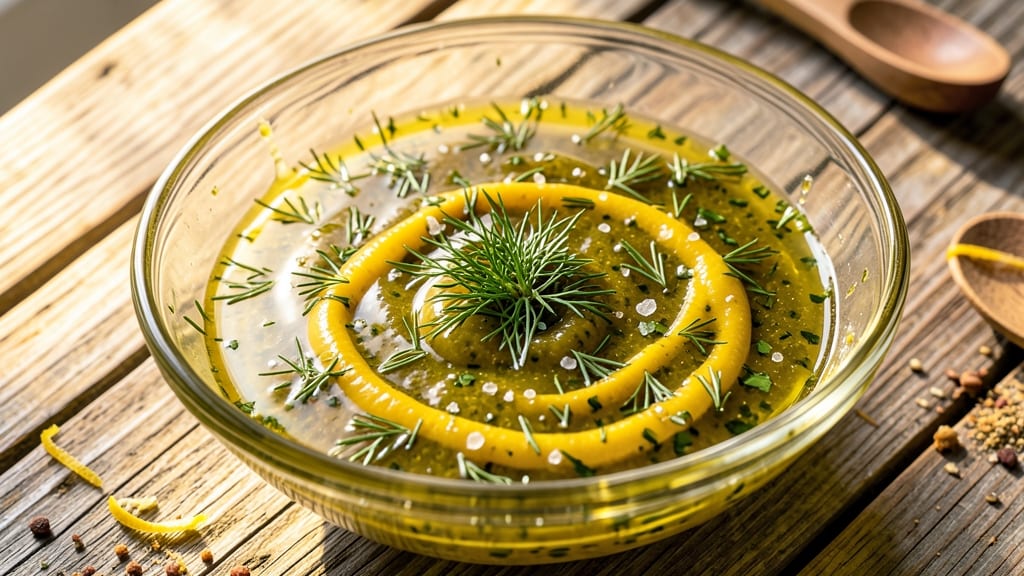
This tangy salad dressing recipe delivers restaurant-quality zing with just five simple ingredients—no fancy techniques required. The secret lies in balancing sharp lemon juice with smooth olive oil, creating a dressing that clings perfectly to greens while adding bright, tangy flavor that cuts through rich ingredients.
I developed this version after testing dozens of recipes, and it consistently earns raves for its clean acidity and versatility across salads, wraps, and even as a marinade.
The foundation uses high-quality extra-virgin olive oil and freshly squeezed lemon juice, which you can adjust to taste—more lemon for extra tang, less for a milder brightness. Dijon mustard adds subtle depth while keeping the dressing emulsified, and fresh herbs (like dill or parsley) contribute aromatic freshness without overpowering.
What makes this recipe truly special is its ability to elevate even the simplest greens into a gourmet meal.
What you'll end up with is a velvety, well-balanced dressing that's tangy yet not overpowering, with just enough body to coat every leaf.
The emulsion stays stable for days, making it perfect for meal prep, and it works equally well on crisp arugula, hearty kale, or even as a dip for crudités. This is the kind of dressing that transforms ordinary salads into something extraordinary.
For added convenience, I've included optional variations like a dairy-free version and tips for storing your dressing properly—whether you're using it immediately or saving it for later. The recipe scales effortlessly, so you can make a small batch for personal use or double it for entertaining. Let's get started!
Ingredients for best tangy salad dressing
Five ingredients, restaurant-quality zing—no shortcuts needed for this tangy dressing.
| Ingredient | Amount | Notes |
|---|---|---|
| Extra-Virgin Olive Oil 🫒 | ¾ cup | High-quality, fruity variety |
| Fresh Lemon Juice 🍋 | ½ cup | Freshly squeezed, no pulp |
| Dijon Mustard 🌶️ | 1 tbsp | Mild or strong, no sugar added |
| Fresh Dill 🌿 | ¼ cup | Chopped, stems removed |
| Sea Salt 🧂 | ½ tsp | Fine grain preferred |
The olive oil is your base, so grab the good stuff—look for extra-virgin labels at Whole Foods or Trader Joe's. Their bulk section has great options too. Fresh lemon juice is non-negotiable—bottled juice lacks the bright punch. I always use Eureka lemons if I'm feeling fancy, but regular lemons work great. The dill? Fresh is best, but dried works in a pinch (use half the amount). For the mustard, Maille Dijon is my go-to, but any good-quality Dijon will do.
No fresh dill? Fresh parsley or tarragon works too—just adjust the amount to taste. Short on lemon juice? Lime juice or apple cider vinegar can step in (start with half the amount). The mustard can be swapped for whole-grain mustard if you prefer a nuttier flavor. No high-quality olive oil? Avocado oil is a decent sub, but the flavor won't be quite the same. The sea salt balances everything—don't skip it, even if your mustard is already salty.
This dressing keeps for 5-7 days in the fridge, sealed tight. The emulsion stays perfect if you store it in a clean, dry jar—shake well before each use. For longer storage, freeze in ice cube trays and thaw as needed. Pro tip: Double the batch and keep one in the fridge, one in the freezer—always ready for salads.
Why You'll Love This Recipe
- Five-Ingredient Magic: I swear by this combo—just oil, lemon, mustard, dill, and salt. No fancy gadgets, no stress, and honestly? It’s the kind of dressing I’ll make even when I’m too tired to open a jar.
- Bright & Tangy Bite: That lemon juice cuts through everything, while the Dijon mustard adds depth—like a little zingy hug for your greens. I’ll be real: it’s the kind of flavor that makes me reach for seconds, even on a sad desk salad.
- Meal Prep MVP: Make a big batch on Sunday, and you’re set for the week. It keeps well in the fridge, and I’ve used it on everything from chicken bowls to roasted veggies—no one ever guesses it’s the same dressing.
- Pocketbook Performer: Extra-virgin olive oil and fresh lemon juice might sound fancy, but they stretch far. A little goes a long way, and I’ve fed a crowd with just one jar of mustard and a handful of herbs—no waste, all flavor.
Step-by-step instructions for perfectly balanced tangy salad dressing
Here's how to make a dressing so bright and tangy it'll elevate any salad to restaurant quality.
Whisk Together the Wet Ingredients
In a medium bowl, combine the 0.75 cup extra-virgin olive oil with the 0.5 cup fresh lemon juice. I like to use a fork first to break up any large oil droplets, then switch to a whisk for about 30 seconds. You want these to emulsify just slightly—the oil should look slightly cloudy but still separate. This pre-mixing ensures everything blends smoothly later.
Next, add the 1 tablespoon Dijon mustard and whisk vigorously for another 20-30 seconds until fully incorporated. The mustard acts as our emulsifier here, helping to bind the oil and lemon juice without needing extra eggs or vinegar. You'll notice the mixture thicken just a bit as the mustard blends in—this is exactly what we want for that perfect creamy-tangy balance.
Add the Fresh Dill and Salt
Sprinkle the 0.25 cup chopped fresh dill over the wet mixture and gently fold it in with a rubber spatula. Be careful not to overmix here—the dill should be distributed evenly but still retain some visible flecks for that fresh, herby appearance. The dill adds bright, citrusy notes that cut through the richness of the olive oil beautifully.
Add the 0.5 teaspoon sea salt and give everything one final stir. Taste the mixture at this point—it should be noticeably tangy from the lemon and slightly peppery from the mustard, with a clean herbal note from the dill. If you want it more tangy, add a splash more lemon juice (start with 1 teaspoon). For richer flavor, add another ½ tablespoon olive oil.
Let It Rest and Emulsify
Cover the bowl with plastic wrap and let the dressing sit at room temperature for at least 10 minutes—I usually wait 15-20 minutes if I have time. This resting period allows the flavors to meld together and the mustard to fully emulsify the oil and lemon juice. You'll notice the dressing gradually thicken and become more cohesive as it sits.
After resting, give it one final whisk. The dressing should now have a silky, almost mayonnaise-like consistency with a bright, tangy flavor that's neither too sweet nor too sharp. If it's still too thin, whisk in another ½ tablespoon olive oil until it reaches your desired thickness. If it's too thick, thin it with 1-2 teaspoons water or more lemon juice until it's pourable but still clings to greens.
Adjust and Store Properly
Taste again and adjust seasoning if needed. Most people find this dressing perfectly balanced, but if you prefer it more tangy, add another 1 teaspoon lemon juice. For extra depth, a pinch more salt or a few grinds of black pepper can make a big difference. The key is to taste as you go—salad dressings are all about personal preference.
Transfer the dressing to a clean glass jar with a tight-sealing lid. It'll keep in the refrigerator for up to 1 week, though I always make fresh batches weekly because the dill stays brightest that way. Before using, give it a good shake—sometimes it separates slightly, but it always comes back together with a quick whisk. This dressing works perfectly on mixed greens, grain bowls, or even as a marinade for grilled chicken.
Pro Tips For Making Best Tangy Salad Dressing
- STRAIN THE MUSTARD: Dijon mustard has grit—skip the fancy straining if you’re lazy, but if you want that silky finish, press it through a fine-mesh sieve or even a clean kitchen towel. I learned this the hard way after tasting a dressing with tiny mustard specks that ruined the texture.
- ZEST THE LEMON FIRST: Grate the lemon zest before juicing—it adds brightness without extra work. Toss it in with the mustard and salt while you juice, so it blooms into the dressing. (Yes, even if you’re impatient like me, this makes a real difference.)
- WHISK IN STAGES: Don’t dump all the olive oil in at once—start with 1 tablespoon, whisk until emulsified, then add the rest gradually. This keeps the dressing from breaking, and I’ve saved more than a few ruined batches by doing this.
- USE COLD OIL, WARM MUSTARD: Chill the olive oil in the fridge for 10 minutes before mixing, and let the Dijon sit at room temp for 5. The temperature contrast helps the emulsion hold longer—sounds weird, but it works. (Your future salads will stay creamy.)
Pro cooking tips for best tangy salad dressing
Emulsify Like a Pro
The key to a silky, stable dressing lies in proper emulsification. Start by whisking the extra-virgin olive oil and lemon juice together—this creates tiny oil droplets that suspend in the liquid. The Dijon mustard acts as a natural emulsifier, binding the oil and acid.
I recommend using a whisk for 30 seconds to break up the oil, then folding in the dill gently to avoid overworking the mixture. If your dressing separates, simply whisk vigorously for 10-15 seconds—it’ll come back together instantly. 🌡️
Flavor Balancing
Taste your dressing at every stage to adjust the balance. The lemon juice provides the tang, while the olive oil adds richness—aim for a ratio where neither flavor dominates.
If it’s too sharp, add ½ tablespoon olive oil; if it’s too mild, squeeze in 1 teaspoon more lemon juice. The Dijon mustard adds depth, but if you prefer a milder taste, reduce it to ½ tablespoon.
Always taste before serving—this is how you perfect the dressing to your liking.
Herb Freshness Matters
Fresh herbs like dill make all the difference in flavor. If using dried herbs, reduce the amount to 1 tablespoon (half the fresh quantity) and steep them in 1 tablespoon warm water for 5 minutes before adding to the dressing.
For extra brightness, add 1 teaspoon honey or 1 teaspoon maple syrup to balance the acidity. I love using fresh tarragon or chives as alternatives—they add unique aromatic notes that elevate the dressing.
Storage Secrets
Store your dressing in an airtight glass jar in the fridge for up to 1 week. Before using, shake or whisk vigorously to re-emulsify. For longer storage, freeze in ice cube trays—thaw and whisk to restore consistency.
To prevent separation, avoid adding too much liquid (like water) during adjustments. If the dressing thickens in the fridge, thin it with 1 teaspoon lemon juice or water before shaking. 💡
Equipment Upgrades
A small glass jar with a tight lid is ideal for storage, but any clean container works. For blending, a mini food processor or immersion blender can save time—just pulse for 10-15 seconds to emulsify.
If you’re making a large batch, a stand mixer with the whisk attachment works wonders. For portability, transfer to a small squeeze bottle for easy dressing on salads or wraps.
Variations to Try
Craving a spicy kick? Add ½ teaspoon cayenne pepper or 1 teaspoon hot sauce. For a creamy version, whisk in 2 tablespoons Greek yogurt (ensure it’s dairy-free if needed). A herb-heavy twist?
Swap dill for chopped parsley or cilantro. For a nutty flavor, replace Dijon with whole-grain mustard. Each variation keeps the tangy base while adding exciting new dimensions. ✨
Nutrition facts
Frequently asked questions
Can I make this tangy dressing without fresh dill?
Swap fresh dill for 0.25 cup chopped fresh parsley or 0.25 cup chopped tarragon for a different herbal note. For dried herbs, use 1 tablespoon steeped in 1 tablespoon warm water for 5 minutes—this mimics fresh flavor. The dressing will still taste bright and tangy, just with a different aromatic profile.
Why did my dressing separate? How do I fix it?
Separation happens when oil and liquid aren't properly emulsified. Whisk vigorously for 10-15 seconds to re-combine them—this works every time! For prevention, avoid adding too much liquid (like water) during adjustments. If it keeps separating, reduce the lemon juice slightly next time or add ½ teaspoon more Dijon mustard as a natural emulsifier.
How can I make this dressing dairy-free?
This recipe is already dairy-free! Just ensure your Dijon mustard contains no hidden dairy (most brands are dairy-free). For extra creaminess, whisk in 2 tablespoons unsweetened almond yogurt or 2 tablespoons aquafaba instead of Greek yogurt. The tangy brightness will stay perfectly intact.
Can I use this dressing on non-salad dishes?
Yes! This versatile dressing works beautifully as a marinade for grilled chicken or fish, a dip for crudités or chips, or even a drizzle over roasted vegetables. The bright tang cuts through rich flavors perfectly. For marinades, reduce the olive oil to 0.5 cup to prevent over-richness.
What's the best way to store leftovers?
Transfer to an airtight glass jar and refrigerate for up to 1 week. Before using, shake or whisk vigorously to re-emulsify. For longer storage, freeze in ice cube trays—thaw and whisk to restore consistency. Avoid adding extra liquid when storing to prevent separation. Pro tip: Label with the date to track freshness!