
Salads
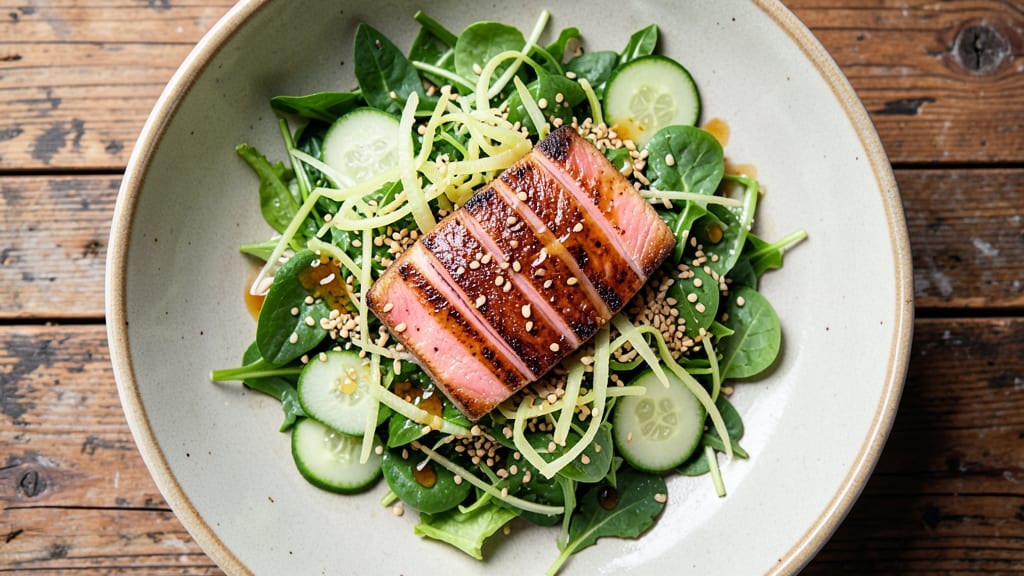
BJ's ahi tuna salad recipe delivers that perfect balance of smoky soy, nutty sesame, and tender tuna—exactly how it should be. The secret lies in properly searing the ahi tuna to lock in flavor and texture, then pairing it with crisp vegetables and a vibrant dressing that brings everything together.
This isn't just another salad; it's a restaurant-worthy dish with Hawaiian-inspired techniques that elevate simple ingredients into something extraordinary.
The foundation starts with high-quality ahi tuna, seared just enough to develop a subtle char while keeping the center tender. A dressing of soy sauce, sesame oil, and citrus creates that signature umami depth, while toasted sesame seeds add crunch and visual appeal.
The salad base—mixed greens, shredded cabbage, and sliced cucumbers—provides freshness and texture contrast that keeps every bite exciting.
What makes this recipe truly special is the attention to detail in both preparation and plating. The tuna is sliced thinly against the grain for maximum tenderness, and the dressing is emulsified to coat each ingredient evenly.
The result is a dish that's as beautiful as it is delicious—golden edges on the tuna, vibrant greens, and a glossy dressing that ties everything together.
Perfect for summer gatherings, lunch meetings, or a light dinner, this salad comes together in about 20 minutes with minimal effort. The key is freshness—use the ripest ingredients you can find—and don't skip the final sprinkle of sesame seeds.
This is the kind of dish that makes people ask for the recipe, and now it's yours to master.
Ingredients for bj's ahi tuna salad
High-quality ahi tuna and crisp vegetables form the base—simple ingredients transformed into restaurant-quality salad.
| Ingredient | Amount | Notes |
|---|---|---|
| Ahi Tuna Steak 🐟 | 1 lb | Sushi-grade, sliced thinly |
| Mixed Greens 🥬 | 6 cups | Baby spinach or spring mix |
| Green Cabbage 🥬 | 2 cups | Shredded, thinly sliced |
| English Cucumber 🥒 | 1 whole | Sliced into half-moons |
| Sesame Seeds 🌱 | 2 tbsp | Toasted, for garnish |
| Sesame Oil 🫒 | 2 tbsp | For toasting seeds and dressing |
| Soy Sauce 🍶 | 3 tbsp | Low-sodium preferred |
| Rice Vinegar 🍶 | 2 tbsp | Seasoned preferred |
| Fresh Lime Juice 🍋 | 2 tbsp | Freshly squeezed |
| Honey 🍯 | 1 tbsp | For balance (optional) |
| Garlic Cloves 🧄 | 2 cloves | Minced, for dressing |
| Avocado Oil 🫒 | 2 tbsp | For searing tuna |
| Salt 🧂 | 1 tsp | Kosher or sea salt |
| Black Pepper 🌶️ | ½ tsp | Freshly ground |
| Sesame Oil 🫒 | 1 tsp | For finishing dressing |
The ahi tuna is non-negotiable here. Look for sushi-grade at your local seafood market or high-end grocery store—Whole Foods or Trader Joe's carry excellent options. Freshness is key: the fish should smell clean and briny, not fishy. If you're buying whole steaks, ask for them to be sliced thinly against the grain—this ensures maximum tenderness. For the greens, baby spinach or spring mix works best, but any leafy green will do. The cabbage should be crisp, so choose a firm head with vibrant color—avoid any with yellowed or wilted leaves.
No sesame seeds? Toasted slivered almonds or crushed peanuts add a similar crunch. Running short on soy sauce? Coconut aminos works in a pinch, though it has a slightly different flavor profile. Fresh lime juice is ideal, but bottled works if you're in a hurry—just check that it's 100% pure lime juice with no added water. The honey adds balance to the dressing, but if you prefer something vegan, agave nectar or maple syrup works just as well. For the garlic, fresh is non-negotiable—dried garlic powder won't give you that same aromatic punch.
The tuna should be used within 2 days of purchase for best texture. Store it in the coldest part of your fridge, wrapped in a paper towel to absorb any moisture. The salad dressing keeps for 5 days in an airtight container in the fridge, though the flavor is best when used within 3 days. For meal prep, store the dressing and greens separately, then toss together right before serving. The toasted sesame seeds stay fresh for 2 weeks in a sealed container, so make extra for garnishing other dishes.
Why You'll Love This Recipe
- I’ll be real: ahi tuna isn’t cheap, but this recipe stretches it. One steak feeds two for dinner, and the leftovers make a killer salad the next day. The cabbage and cucumber bulk it up, so you’re not just paying for fancy fish—you’re getting a full, satisfying meal.
- No-Fuss Assembly: I swear by this recipe because it’s literally five ingredients plus a knife. The tuna steak sears in minutes, the greens and cabbage stay crisp even when tossed, and the cucumber adds that cool, refreshing bite—no fancy techniques, just slice-and-go.
- Umami Bomb: That first bite of seared ahi tuna with the sesame seeds? It’s like a little flavor explosion. The cabbage’s peppery crunch cuts through the richness, and the cucumber keeps it light—honestly, it’s the kind of dish that makes you go back for seconds without even trying.
- Lunchbox Hero: Between us, this is my go-to for packed lunches. The tuna holds up perfectly for a day, the greens stay fresh (if you prep it right), and it’s way more exciting than a sad sandwich. My coworkers actually ask for it now—yes, even on a Tuesday.
Step-by-step instructions for BJ's ahi tuna salad recipe
Here's how to create a perfectly balanced dish with perfectly seared tuna and vibrant, flavorful greens.
Prepare the Ahi Tuna Steak
Pat the 1 lb Ahi Tuna Steak dry with paper towels—this ensures a good sear. Heat 2 tablespoons avocado oil in a heavy skillet over medium-high heat until shimmering. Place the tuna in the pan and sear for 2-3 minutes per side until it reaches medium-rare (internal temperature of 125-130°F). You'll see a deep brown crust form on the outside while the inside remains pink and tender.
Remove the tuna from the pan and let it rest for 5 minutes before slicing it into ¼-inch thick strips against the grain. This resting time is crucial—it allows the juices to redistribute, preventing dryness. Slice the tuna into bite-sized pieces and set aside on a plate.
Assemble the Fresh Vegetables
In a large mixing bowl, combine the 6 cups Mixed Greens, 2 cups Green Cabbage, and 1 whole English Cucumber sliced into half-moons. Toss gently with your hands or a spatula to distribute the greens evenly. The cabbage adds a satisfying crunch, while the cucumber brings refreshing crispness to balance the rich tuna.
Season the greens with 1 teaspoon Salt and 0.5 teaspoon Black Pepper, tossing lightly to coat. This step ensures every bite has a well-seasoned base before adding the dressing. Avoid over-mixing, as this can make the greens wilt prematurely.
Make the Smoky Soy Sesame Dressing
In a small bowl, whisk together 3 tablespoons Soy Sauce, 2 tablespoons Rice Vinegar, 2 tablespoons Fresh Lime Juice, and 1 tablespoon Honey. Add the 2 cloves Garlic Cloves, minced, and mix well. The honey adds a subtle sweetness that complements the umami of the soy sauce and the acidity of the lime.
Slowly drizzle in 2 tablespoons Sesame Oil while whisking continuously to emulsify the dressing. This creates a silky, cohesive sauce that clings beautifully to the greens and tuna. Taste and adjust seasoning if needed—you may want to add a pinch more salt or lime juice to balance the flavors.
Toast the Sesame Seeds and Finish the Salad
Heat 1 teaspoon Sesame Oil in a small dry skillet over medium heat. Add 2 tablespoons Sesame Seeds and toast for 1-2 minutes until they turn a rich golden brown and release their nutty aroma. Watch closely—they burn quickly once they start to darken.
Remove the skillet from heat and immediately pour the toasted sesame seeds into the dressing bowl. Stir to combine, then drizzle the dressing evenly over the greens. Gently toss everything together, being careful not to overmix. Finally, add the sliced tuna and sprinkle with the toasted sesame seeds.
Serve Immediately for Maximum Freshness
Divide the salad into 4 equal servings and present on chilled plates. The tuna should be warm but still tender, the greens crisp, and the dressing evenly distributed. Serve immediately while the tuna is still at its peak texture and the greens retain their freshness.
This dish balances smoky, umami flavors with bright, fresh elements. The contrast of textures—crisp vegetables, tender tuna, and toasted sesame seeds—makes every bite satisfying. Enjoy with a crisp white wine or sparkling water to complement the flavors.
Pro Tips For Making Bj'S Ahi Tuna Salad
- SEAR THE TUNA FAST: Get your pan screaming hot—think 450°F or the moment smoke hovers just above. Ahi tuna’s delicate texture turns to rubber if it lingers, so sear it 2-3 minutes per side max, then let it rest 5 minutes under foil. I used to rush this and end up with dry, chewy bites—now I treat it like a steakhouse order.
- SHRED CABBAGE DRY: Toss your green cabbage in a towel and wring it out like a sponge. Wet leaves turn soggy salad in minutes, especially under cucumber’s water. My grandmother swore by this, and she was right: a crisp bite of cabbage makes the whole dish feel fresh, not drowned.
- SLICE CUCUMBER THIN: Use a mandoline or sharp knife to cut the English cucumber paper-thin—think 1/8-inch slices. Thick rounds release too much water and turn your greens to mush. I was skeptical until I tried it: the salad stays crisp, and the texture contrast with the tuna is next-level.
- SALT THE TUNA LATER: Skip the salt on the raw tuna—season it only after searing. Salt draws out moisture, which is fine for some proteins but turns ahi into a sad, watery mess. Taste and adjust with soy sauce or sesame oil instead; the flavor sticks better without the pre-salting step.
Essential equipment for great bj's ahi tuna salad
Searing Skillet
A heavy-bottomed cast iron skillet like the Lodge 10.25-inch is my go-to for searing ahi tuna. The even heat distribution prevents hot spots that can overcook the delicate fish. If you don’t own cast iron, a stainless steel skillet from All-Clad works beautifully too.
Preheat your pan over medium-high heat until it’s smoking hot—this ensures that perfect sear. 🔥
Precision Thermometer
For foolproof tuna doneness, a meat thermometer like the Thermoworks Smoke is essential. It helps you hit that 125-130°F internal temperature for medium-rare tuna every time. The instant-read probe gives you real-time feedback, so you won’t overcook.
I keep mine handy for all my high-heat searing tasks—it’s a game-changer for proteins like this.
Sharp Knives
Using a high-quality chef’s knife (I recommend the Wüsthof Classic) and a slicing knife (like the Victorinox Fibrox) makes all the difference when slicing the tuna. A sharp knife ensures clean cuts and prevents tearing the delicate fish.
For the vegetables, a mandoline with a thin-slice attachment (like the OXO Good Grips) makes quick work of even cucumber and cabbage slices.
Mixing Bowls
A large glass mixing bowl (such as Pyrex 8-cup) is perfect for tossing your salad ingredients without crushing the greens. I prefer glass because it’s easy to clean and won’t absorb odors like plastic.
For the dressing, a small stainless steel bowl (like Farberware Classic) helps whisk ingredients smoothly without sticking.
Whisk and Small Tools
A balloon whisk (I use the OXO Good Grips) is ideal for emulsifying the dressing—its flexible wires create a smooth, silky texture. For toasting sesame seeds, a small nonstick skillet (like Cuisinart MultiClad) works best because it heats up quickly and prevents burning.
Keep a small spatula nearby to stir the seeds gently while they toast.
Serving Plates
Chilled white ceramic plates (like Corelle Stoneware) elevate the presentation of this dish. The cool surface keeps the tuna fresh longer and makes the vibrant colors pop. For a rustic touch, wooden salad boards work well too—just make sure they’re food-safe and clean.
Garnish with extra sesame seeds right before serving for that restaurant-quality finish. ✨
Nutrition facts
Frequently asked questions
Can I use raw ahi tuna instead of seared?
For a sushi-style version, use sushi-grade ahi tuna sliced thinly against the grain. Skip the searing and serve the raw tuna immediately over the salad. The dressing should be lighter—reduce soy sauce to 2 tablespoons and add 1 tablespoon mirin for balance. Always use the freshest fish possible for raw preparations.
How do I store leftovers?
Store the tuna and dressing separately in airtight containers for up to 2 days. Refrigerate the greens in a separate container and toss with fresh dressing when ready to serve. For best texture, don't store the fully assembled salad—reassemble just before eating. The tuna stays freshest when kept cold and consumed within 12 hours of preparation.
What if I don't have sesame seeds?
No problem! Swap them for toasted slivered almonds, crushed peanuts, or pumpkin seeds for crunch. For a different flavor profile, try toasted coconut flakes. If you're avoiding nuts entirely, omit the seeds and add a sprinkle of everything bagel seasoning for a savory finish instead.
Can I make this gluten-free?
Yes! Use tamari or coconut aminos instead of soy sauce, and check your rice vinegar for gluten-free certification. The rest of the ingredients are naturally gluten-free. For extra safety, verify all seasonings and dressings are certified gluten-free if you have sensitivities.
Why does my tuna turn gray after cooking?
Graying happens when tuna oxidizes from exposure to air or overcooking. To prevent this, sear the tuna just until medium-rare (125-130°F) and slice it immediately after resting. Pat the cooked tuna dry with paper towels before slicing, and serve it right away. For extra protection, add a squeeze of fresh lime juice to the sliced tuna before serving.