
Side Dishes
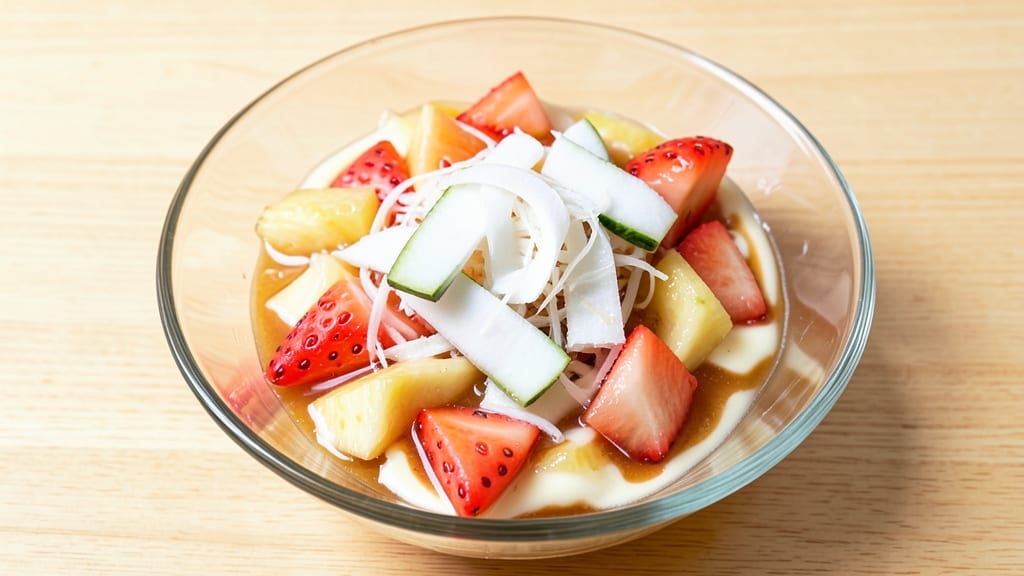
This buko salad ingredients and recipe delivers the perfect balance of tropical creaminess and young coconut crunch—every bite is a taste of Filipino comfort food. ✨ The secret lies in the combination of tender young coconut, sweet fruits, and a velvety gelatin base that transforms this into a refreshing yet indulgent dessert or side dish.
I've perfected this version to stay light yet satisfying, with just the right amount of sweetness to complement any meal.
The classic ingredients—young coconut, nata de coco, sweetened condensed milk, and gelatin—create that signature creamy texture, while fresh fruits like pineapple and guava add vibrant color and natural sweetness.
What makes this recipe special is the flexibility: you can adjust the fruit combinations based on what's seasonal, or even experiment with vegan gelatin alternatives for a lighter version. The key to success is letting the gelatin set properly for that perfect wobble between firm and jiggly.
What you'll end up with is a visually stunning dessert that's as beautiful as it is delicious—layers of creamy coconut, chewy nata de coco, and fresh fruit create a texture that's impossible to resist.
The gelatin holds everything together while keeping the salad light enough to serve as a refreshing palate cleanser or a sweet ending to a meal. This recipe is foolproof and adaptable, whether you're making it for a family gathering or a quick treat.
Serve it chilled in individual cups or as a large bowl for sharing, and watch as everyone reaches for seconds. The tropical flavors and satisfying crunch make this more than just a dessert—it's an experience. Let's get started on this crowd-pleasing classic!
Ingredients for buko salad ingredients and
Tropical ingredients that transform into a velvety, crunchy dessert masterpiece.
| Ingredient | Amount | Notes |
|---|---|---|
| Fresh Young Coconut Meat 🥥 | 2 cups | Shredded, from 1 medium young coconut |
| Nata De Coco 🌿 | 14 oz | Pre-packaged, drained before use |
| Sweetened Condensed Milk 🥛 | 14 oz | Canned, premium brand preferred |
| Unflavored Gelatin 🍬 | 2 tsps | Powdered, or 1 envelope |
| Hot Water 💧 | ½ cup | For dissolving gelatin |
| Fresh Pineapple 🍍 | 1 cup | Diced, small pieces preferred |
| Fresh Guava 🍈 | 1 cup | Diced, or substitute mango |
| Fresh Jackfruit 🌱 | 1 cup | Diced, for tropical crunch |
| Granulated Sugar 🍚 | ¼ cup | Adjust to taste |
| Vanilla Extract 🌸 | 1 tsp | Pure, for subtle flavor |
| Toasted Coconut Flakes 🥥 | ¼ cup | For garnish, optional |
| Lime Juice 🍋 | 1 tbsp | Freshly squeezed |
| Salt 🧂 | ¼ tsp | Fine sea salt |
The young coconut is the heart of this dish—look for firm, unopened young coconuts at Asian markets or specialty grocers. Filipino markets often sell pre-shredded versions, but fresh is always better. Nata de coco should be translucent and chewy; avoid any with a yellowish tint or slimy texture. For the condensed milk, premium brands like Carnation work best—they have a smoother texture. Gelatin quality matters too; Knox brand is reliable, but any unflavored powdered gelatin will do. Fresh tropical fruits should be ripe but firm, with vibrant color—avoid overripe or mushy pieces.
No nata de coco? Substitute agar-agar jelly cubes for a vegan option, though texture will differ slightly. Running short on young coconut? Extra shredded coconut meat can compensate, but reduce other liquids slightly. The gelatin can be swapped for agar-agar powder at double the amount for a vegetarian version. For fruit, kiwi or papaya work beautifully as substitutes. If you're making this ahead, prepare the gelatin mixture first—it needs at least 4 hours to set properly. The sugar amount is flexible; taste as you go, especially if using very sweet fruits like mango.
This salad keeps beautifully—up to 5 days in the fridge once fully set. For best texture, store the gelatin mixture separately until ready to assemble. Garnish with toasted coconut flakes just before serving to maintain crunch. Individual portions can be frozen for up to 2 months—thaw in the fridge overnight. The flavors actually deepen after chilling, so making it a day ahead is ideal. Serve in elegant glasses or as a centerpiece for gatherings—it's always a crowd favorite.
Why You'll Love This Recipe
- No Chopping Needed: I swear by this—just scoop the young coconut meat, shred the nata de coco, and mix. The gelatin? Dissolve it in hot water like a lazy chef’s dream. Honestly, my hands stay clean while the magic happens.
- Creamy-Crunchy Bliss: That first bite—cool, jelly-like nata de coco with the chewy young coconut and the rich condensed milk? It’s like dessert and a snack had a baby. Between us, the gelatin gives it that perfect wobble that’s oddly addictive.
- Party in a Bowl: Serve it at potlucks, birthdays, or even as a "healthy" dessert for the kids. I’ve seen this feed 10 people with just one big bowl—no fuss, no extra dishes, and zero complaints. (Yes, even on a Tuesday night.)
- Leftovers? Better Than Fresh: Make a double batch and store it in the fridge. The flavors meld overnight, making it even richer. I’ve had mine last five days—still delicious, still crave-worthy. Budget-friendly? Absolutely. Time-saving? Even more so.
Step-by-step instructions for buko salad
Here's how to assemble this creamy tropical dessert with perfect texture and balance.
👨🍳 Step 1: Prepare the Gelatin Mixture
In a small bowl, sprinkle the 2 tsps unflavored gelatin evenly over the 0.5 cup hot water. Let it bloom for 5 minutes—you'll see the gelatin granules absorb the liquid and become translucent. This step is crucial for creating that signature silky texture in your buko salad.
While the gelatin blooms, whisk the 14 oz sweetened condensed milk and 0.25 cup granulated sugar together in a large mixing bowl until completely smooth. This creates your creamy base that will bind all the ingredients together. The sugar helps balance the natural sweetness of the tropical fruits while enhancing the coconut flavor.
🥘 Step 2: Combine Fruit and Coconut Base
Add the bloomed gelatin mixture to the condensed milk and whisk vigorously for 2 minutes until fully dissolved and the mixture becomes thick and glossy. This is your creamy foundation that will perfectly coat all the ingredients.
Gently fold in the 2 cups fresh young coconut meat, 1 cup fresh pineapple, 1 cup fresh guava, and 1 cup fresh jackfruit using a silicone spatula. Work carefully to avoid crushing the delicate nata de coco we'll add next. The fruit should be evenly distributed throughout the mixture, maintaining its fresh texture while being coated in the creamy base.
🥘 Step 3: Add Nata De Coco and Final Touches
Drain the 14 oz nata de coco thoroughly using a fine-mesh strainer or paper towels to remove excess liquid. Gently fold this in last, being careful not to tear the strands. The nata de coco should be evenly dispersed throughout the mixture, maintaining its characteristic chewy texture that contrasts beautifully with the creamy base.
Mix in the 1 tsp vanilla extract, 1 tbsp lime juice, and 0.25 tsp salt. The vanilla adds depth, the lime brightens the flavors, and the salt enhances all the sweet components. Taste and adjust the sweetness if needed—you can add more sugar if desired, but start with the measured amount for balance.
🍽️ Step 4: Chill and Garnish
Transfer the buko salad to a serving dish or individual glasses and refrigerate for at least 4 hours, preferably overnight. This chilling time is essential—it allows all the flavors to meld together perfectly and ensures the nata de coco reaches its ideal chewy texture.
Before serving, sprinkle with 0.25 cup toasted coconut flakes for added texture and aroma. The toasted coconut adds a delightful crunch that contrasts beautifully with the creamy and chewy elements of the salad. Serve chilled and enjoy the perfect balance of textures and tropical flavors.
Pro Tips For Making Buko Salad Ingredients And
- CHOP COCONUT FINE: Use a sharp knife or mandoline—tiny, even cubes (about ½-inch) soak up the condensed milk better than big chunks. I learned this the hard way when my first batch had half-soggy, half-crunchy coconut after sitting overnight.
- SOAK GELATIN COLD: Dump the gelatin into cold water first, then heat it—this prevents clumping like glue. My grandmother swore by this, and she was right: a smooth mix is what keeps your buko salad from turning grainy.
- DRAIN NATA WELL: Press nata de coco between paper towels to squeeze out excess water before adding it to the mix. Skimp here, and your salad will turn into a watery mess instead of that perfect chewy texture.
- STIR CONDENSED MILK LAST: Mix everything except the condensed milk first, then fold it in gently at the end—this keeps the gelatin from seizing up and turning rubbery. Sounds weird, but it works: the heat from the milk activates the gelatin just right.
Storing and reheating this dish
Refrigerator Storage
Store your buko salad in an airtight container with a lid, pressing plastic wrap directly on the surface to prevent a skin from forming. Keep it refrigerated at 40°F or below for up to 5 days—the flavors actually deepen over time.
I like using glass containers because they keep the salad looking fresh and make it easy to check the texture before serving. 🥥
Freezer Storage
For longer storage, portion the salad into freezer-safe containers or wrap individual servings tightly in plastic wrap and place in a ziplock bag. Freeze for up to 2 months, but know the nata de coco may lose some of its chewiness.
Thaw overnight in the fridge before serving. I recommend freezing the gelatin mixture separately and adding fresh fruit when ready to eat for the best texture. ❄️
Reheating Tips
Buko salad doesn't need reheating—it's best served chilled! If you've stored the gelatin mixture separately, simply mix it with fresh fruit and nata de coco, then chill for 2-3 hours before serving.
For a quick refresh, place the container in an ice bath for 10 minutes to restore crispness. The tropical flavors taste even better after a night in the fridge. 💫
Reviving Texture
If your buko salad loses its crunch after storage, don't worry! Gently fold in 1-2 tablespoons of cold water to restore moisture, then chill for another 1 hour.
For extra crunch, sprinkle with toasted coconut flakes just before serving. The key is keeping the nata de coco hydrated—never let it dry out completely. 🌿
Portioning for Parties
For gatherings, divide the salad into individual serving cups before refrigerating. This makes it easy to grab and serve directly from the fridge, keeping the texture perfect. I like using clear glass cups so guests can see the beautiful layers of coconut, fruit, and nata de coco.
Label with the date to track freshness—this salad stays delicious for up to 5 days when stored properly. 🎉
Make-Ahead Strategy
Prepare the gelatin mixture 2 days ahead and store it in the fridge. When ready to serve, simply add fresh fruit and nata de coco, then chill for 3-4 hours. This approach saves time while ensuring the best texture.
For extra convenience, pre-shred the young coconut and dice the fruit ahead of time—just store them separately in the fridge until ready to assemble. 📅
Nutrition facts
Frequently asked questions
Can I make buko salad without gelatin?
For a vegetarian version, use 2 tsps agar-agar powder dissolved in 0.5 cup hot water instead. For a vegan option, try 1 tbsp chia seeds mixed with 3 tbsp water as a thickener—let it sit for 10 minutes to gel. The texture will be slightly firmer but still delicious.
What's the best way to shred young coconut?
Use a sharp chef's knife or a mandoline slicer for even shreds. Cut the coconut in half, scoop out the meat, then slice it against the grain into thin strips. For faster results, a food processor works too—just pulse briefly to avoid grinding. Always wear gloves when handling coconut to prevent staining.
How do I fix if my buko salad is too runny?
Add 1 extra tsp gelatin dissolved in 1 tbsp hot water, then whisk into the mixture. Chill for 1 additional hour to set properly. If using agar-agar, increase by 0.5 tsp and boil the extra water first. For immediate fixes, place the container in an ice bath for 15 minutes to help it firm up.
What fruits can I substitute if I can't find jackfruit?
Try kiwi for tangy sweetness, papaya for juiciness, or mango for richness. For extra crunch, add diced apple or pear (sprinkle with lemon juice to prevent browning). Stick to 1 cup total of substitute fruit to maintain balance. The key is choosing fruits with contrasting textures—soft fruits work best with the chewy nata de coco.
Why did my nata de coco turn slimy?
This happens when nata de coco absorbs too much liquid. Drain it thoroughly before adding and pat dry with paper towels. For extra insurance, soak it in ice water for 5 minutes before using to firm it up. Always store nata de coco in its original packaging with minimal air exposure to prevent spoilage.