
Salads
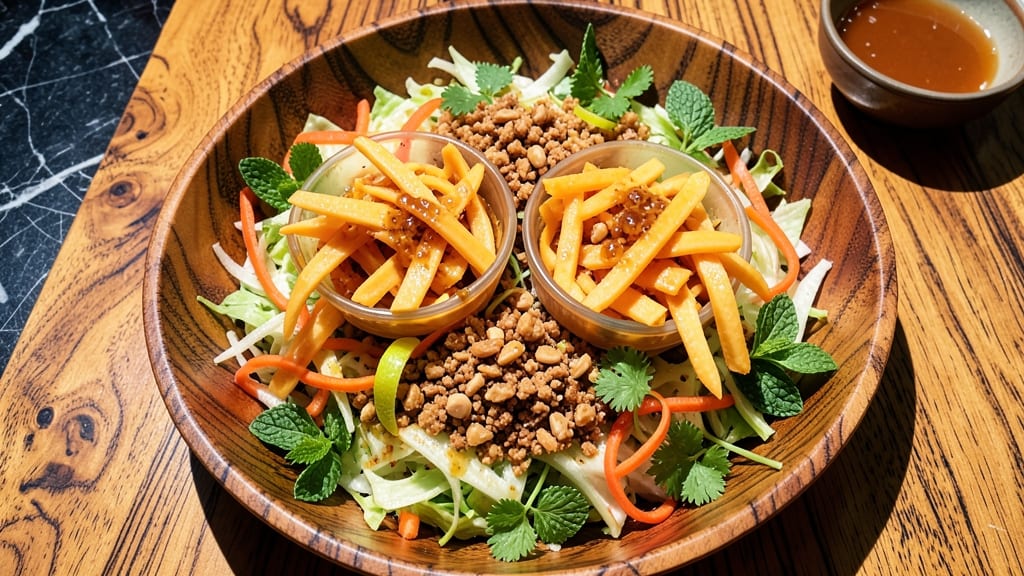
This Burmese mango salad recipe brings the vibrant flavors of Myanmar to your table with a perfect balance of sweet, tangy, and nutty notes. The secret lies in tamarind paste and toasted sesame, which create a dressing that's both complex and addictive.
I've perfected this dish over years of exploring Southeast Asian cuisine, and it's become a staple in my summer repertoire.
The salad features ripe mangoes shredded into delicate strips, paired with crisp vegetables like shredded cabbage and carrots. Fresh herbs like cilantro and mint add brightness, while crushed peanuts contribute satisfying crunch.
The dressing—tamarind, lime, garlic, and sesame—ties everything together with its signature tangy-sweet profile that's both refreshing and deeply flavorful.
What makes this dish special is its versatility—serve it as a light lunch, a side for grilled meats, or even as a refreshing appetizer. The balance of textures and flavors makes it impossible to eat just one bite.
Whether you prefer it slightly spicy or sweet, this recipe delivers restaurant-quality results at home.
The best part? It comes together in just 20 minutes, making it perfect for weeknight dinners or last-minute gatherings. The key is using ripe mangoes and letting the dressing sit for 10 minutes before tossing—this allows the flavors to meld beautifully. Let's get started!
Ingredients for burmese mango salad
Sweet, tangy, nutty—this salad brings Myanmar's bold flavors to your table in 20 minutes.
| Ingredient | Amount | Notes |
|---|---|---|
| Ripe Mangoes 🍈 | 2 cups | Shredded into delicate strips |
| Green Cabbage 🥬 | 1 ½ cups | Shredded, thinly sliced |
| Carrots 🥕 | 1 cup | Shredded, medium julienne |
| Fresh Cilantro 🌿 | ½ cup | Chopped, stems removed |
| Fresh Mint Leaves 🌿 | ¼ cup | Torn by hand, not chopped |
| Crushed Peanuts 🥜 | ½ cup | Toasted for extra flavor |
| Tamarind Paste 🍯 | ¼ cup | High-quality, unsweetened |
| Lime Juice 🍋 | ¼ cup | Freshly squeezed |
| Garlic Cloves 🧄 | 4 cloves | Minced, not chopped |
| Toasted Sesame Oil 🫒 | 2 tbsp | High smoke point preferred |
| Fish Sauce 🍜 | 1 tbsp | Vegetarian alternative (soy sauce) |
| Palm Sugar 🍚 | 2 tbsp | Or substitute brown sugar |
| Red Chili Flakes 🌶️ | 1 tsp | Adjust for heat preference |
| Salt 🧂 | ½ tsp | Diamond Crystal preferred |
The mangoes are everything here—ripe but firm, with just a hint of sweetness. Local Asian markets usually carry the perfect variety, but any ripe mango will work if you cut it yourself (skip the pre-shredded stuff). The cabbage should be crisp—green or red both work, but avoid wilted outer leaves. For the tamarind paste, Mae Ploy or Thai Kitchen brands are my go-tos, but check the ingredients—some versions contain fish sauce. If you can't find tamarind, lime juice plus 1 tbsp brown sugar gets you close. The sesame oil? Toast your own seeds for 2-3 minutes in a dry pan—the nutty aroma is worth the extra minute.
No fish sauce? Soy sauce or coconut aminos work perfectly—just reduce the amount by half. The palm sugar can be swapped for brown sugar, but it adds that authentic caramel depth. Chili flakes are optional, but I always toss in a pinch—it cuts through the sweetness beautifully. Fresh herbs are non-negotiable here, but if you're out of mint, double the cilantro. The peanuts should be toasted until golden—skip the pre-crushed kind from the bin; buy whole and crush them yourself for maximum crunch. Pro tip: Toast your garlic with the peanuts for a double flavor boost.
This salad shines fresh but keeps beautifully—2 days in the fridge if stored in an airtight container. The dressing can be made ahead and stored separately for 3 days. For serving, I always toss the dressing with the salad just before eating—10 minutes of resting time lets the flavors meld perfectly. Double the recipe if you're feeding a crowd; it disappears faster than you can say 'tangy tamarind.' Leftovers? Toss with extra lime juice to keep it bright.
Why You'll Love This Recipe
- No-Cook Magic: I swear, this salad takes five minutes—just slice the mango, shred the cabbage, and toss. No boiling, no frying, no waiting. Honestly, it’s the kind of recipe that makes me feel like a lazy genius.
- Sweet-Savory Balance: That first bite? Juicy mango meets tangy lime, bright mint, and a little heat from the garlic—it’s like a party in your mouth. My kids fight over the last piece, and I don’t even have to bribe them.
- Picnic to Potluck: Pack it in a jar for lunch or bring it to a BBQ—it’s light enough for summer but hearty enough to stand up to grilled meats. Between us, it’s the one dish I always make when I’m hosting because it’s foolproof and always a hit.
- Budget Brightener: Cabbage and carrots stretch this salad into a whole meal for pennies. I’ve fed four people for under $10 with just mango (when on sale), veggies, and a little fish sauce. Plus, leftovers? They taste just as good the next day.
Step-by-step instructions for Burmese mango salad
Here's how to create this vibrant, tangy-sweet masterpiece with perfect texture and balance.
Prepare the Vegetable Base
Start by shredding the 2 cups ripe mangoes into delicate strips using a mandoline or sharp knife—aim for uniform pieces about ¼-inch wide. The goal is to preserve their natural sweetness while creating enough surface area for the dressing to cling.
Next, thinly slice the 1.5 cups green cabbage and shred the 1 cup carrots into medium julienne strips. I like to use a julienne peeler for the carrots to get those perfect matchstick shapes. Place all prepared vegetables in a large mixing bowl and set aside. This prep work ensures your salad has that satisfying crunch and visual appeal that makes it irresistible.
Create the Signature Dressing
In a small bowl, whisk together the 2 tbsp palm sugar with 0.25 cup tamarind paste until fully dissolved—this creates the perfect balance of sweet and tangy that defines Burmese cuisine. The tamarind paste should blend smoothly, so don't rush this step.
Add the 0.25 cup lime juice, 1 tbsp fish sauce, 1 tsp red chili flakes, and 0.5 tsp salt, whisking continuously. The dressing should be thick enough to coat the back of a spoon but still pourable. Taste as you go—you want a perfect harmony of sweet, sour, spicy, and umami. If it needs more heat, add a pinch more chili flakes; if it needs more depth, a splash of fish sauce helps.
Toast the Peanuts and Garlic
Heat a dry skillet over medium heat and add the 0.5 cup crushed peanuts. Toast them for 2-3 minutes, stirring constantly, until they're fragrant and just beginning to turn golden. Remove from heat immediately—they'll continue cooking from residual heat, and you want them nutty but not burnt.
In the same pan (no need to clean it—the peanut oil adds flavor), add the 2 tbsp toasted sesame oil and 4 minced garlic cloves. Cook for 30 seconds until the garlic is fragrant but not browned—this prevents bitterness. Transfer the toasted peanuts and garlic mixture to a small bowl to cool slightly.
Combine All Ingredients
Pour the dressing over the vegetable mixture in the large bowl and toss gently but thoroughly to coat evenly. The vegetables should glisten with the dressing, but not be swimming in it—if it looks too wet, let it sit for 5 minutes to allow excess liquid to absorb.
Add the toasted peanuts and garlic mixture, along with the 0.5 cup chopped cilantro and 0.25 cup torn mint leaves. Toss everything together one final time, being careful not to bruise the vegetables. The herbs should be distributed evenly throughout for that fresh, aromatic finish that makes this salad truly special.
Rest and Serve
Cover the salad and let it rest at room temperature for 10-15 minutes before serving. This resting period allows all the flavors to meld together beautifully, with the tamarind and lime juice mellowing slightly and the spices developing their full complexity.
Serve immediately while the peanuts are still crisp and the vegetables retain their crunch. The salad should be vibrant with colors that pop—bright orange carrots, crisp white cabbage, and juicy pink mangoes all coated in that glossy, tangy dressing. Each bite should deliver a perfect balance of sweet, sour, spicy, and nutty flavors that make this dish unforgettable.
Pro Tips For Making Burmese Mango Salad
- Shred Cabbage Thin: Use a sharp knife or mandoline for even, paper-thin strips—this keeps the cabbage crisp and prevents it from wilting into a soggy mess. I learned this the hard way after tossing salad with uneven shreds that turned limp by the second bite.
- Cut Mango Against Grain: Slice the mango lengthwise first, then cut against the grain to create long, tender strips instead of mushy chunks. This trick keeps the texture perfect, especially when mixed with the crunchy cabbage and carrots.
- Toss Dressing Last: Wait until the very end to add the lime juice, fish sauce, and chili—otherwise, the cabbage will start to soften immediately. I used to mix everything together ahead of time, and the salad always lost its crunch by the time I served it.
- Use Cold Water for Herbs: Rinse the cilantro and mint in ice water, then drain and pat very dry before chopping. This keeps the herbs vibrant and prevents them from turning to sludge in the dressing. (Yes, even if you’re impatient like me.)
Perfect pairings for this recipe
Crispy Appetizer Pairing
Serve this vibrant salad alongside spring rolls or crispy fried wontons for a perfect balance of textures. The crunch from the fried appetizers contrasts beautifully with the salad's tender mango and cabbage.
I love using rice paper spring rolls filled with shrimp, vermicelli, and fresh herbs—just a few golden bites complement the salad's tangy notes. 🥟
Grilled Protein Pairings
Pair this salad with grilled lemongrass chicken or garlic butter shrimp skewers for a complete meal. The smoky char of grilled meats enhances the salad's bright, citrusy flavors.
For an extra touch, brush the proteins with a mix of 1 tbsp lime juice, 1 tbsp soy sauce, and 1 tsp honey before grilling. The acidity in the salad dressing will cut through any richness in the meat.
Beverage Pairings
A cold Thai iced tea with its creamy, slightly sweet profile is my go-to beverage pairing. The tannins in the tea balance the salad's tangy tamarind and lime, while the creaminess complements the mango's natural sweetness.
For a non-dairy option, try coconut water chilled with a splash of lime juice—it refreshes the palate between bites. Avoid heavy sodas or dark beers, as they can overpower the delicate flavors. 🍹
Dessert Complements
End your meal with a light dessert like coconut rice pudding or mango sticky rice to echo the tropical flavors in the salad. The creamy coconut and sticky rice provide a satisfying contrast to the salad's crunchy texture.
For a modern twist, serve lychee sorbet—its floral notes and tartness make an unexpected but delightful pairing with the tamarind dressing. 🍮
Regional Variations
In Myanmar, this salad is often served with steamed fish or rice noodle dishes like mohinga. For a fusion twist, pair it with Thai green papaya salad—the combination of two Southeast Asian classics creates a flavor explosion.
The spicy, tangy papaya salad balances the mango salad's sweetness, while both dishes share similar umami-rich dressings. 🌏
Seasonal Adaptations
In summer, this salad shines as a refreshing main course, but in cooler months, serve it as a side with warm congee or steamed dumplings. The contrast of hot and cold makes each bite more satisfying.
For a winter variation, add shredded Brussels sprouts or jicama to the mix—their crisp texture holds up well to the dressing's tangy profile. 🌿
Nutrition facts
Frequently asked questions
What's the secret to getting perfectly ripe mangoes for this salad?
Look for mangoes that yield slightly to gentle pressure at the stem end, with a sweet fragrance near the stem. Ripe ones should have smooth skin—no green patches—and feel heavy for their size. If you can't find ripe ones, let them sit at room temperature for 1-2 days until they soften. Avoid mangoes with bruises or overly soft spots, as they'll be mushy in the salad.
Can I make this salad ahead of time?
Yes, but store the dressing and vegetables separately. The dressing can be made 3 days ahead and kept in the fridge. Prep the veggies 1 day ahead and store them dry in an airtight container. Toss everything together just before serving to keep the peanuts crisp and vegetables crunchy. The flavors actually develop better when combined fresh!
What's the best fish sauce substitute for vegetarians?
Use soy sauce or coconut aminos—reduce the amount by half since they're less salty. For extra umami, add 1 tsp mushroom powder or 1 tbsp nutritional yeast. The key is balancing the sweet-tangy dressing with a savory element. If you're avoiding soy, try a splash of liquid aminos (soy-free version) with a pinch of salt.
How spicy should the salad be?
The recipe includes 1 tsp red chili flakes as a starting point, but you can adjust to taste. For mild heat, reduce to ½ tsp or skip entirely. For extra kick, add ½ tsp finely chopped fresh chili or a dash of chili crisp. The tamarind and lime already provide enough tang, so the chili just enhances—don't overdo it unless you love heat!
Can I use other tropical fruits instead of mango?
Try ripe papaya or pineapple for similar sweetness and texture. Papaya works especially well since it shreds similarly to mango. For pineapple, use ½ cup and add 1 tsp extra lime juice to balance its acidity. Just avoid overly watery fruits like watermelon—they'll make the salad soggy. Stick to firm, juicy varieties.