
Salads
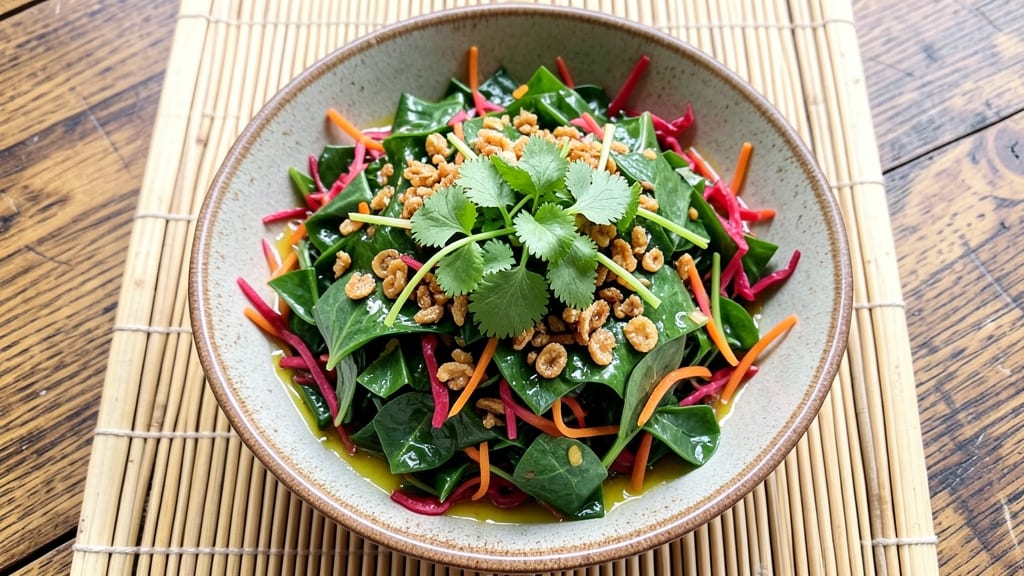
This Burmese pennywort salad recipe brings vibrant Southeast Asian flavors to your table with a perfect balance of tangy lime, fiery chili, and fresh herbal notes. The dish showcases pennywort—a leafy green with a peppery, slightly bitter taste—paired with crisp vegetables and a zesty dressing that's both refreshing and complex.
What makes this salad special is its ability to deliver restaurant-quality flavors at home, using simple yet thoughtful preparation techniques.
The foundation of this salad lies in its dressing: a bright tamarind-lime blend infused with garlic, shallots, and a touch of fermented fish sauce (or a vegetarian alternative). This tangy dressing cuts through the peppery pennywort while enhancing the natural sweetness of the vegetables.
The salad also incorporates fresh herbs like cilantro and mint, adding layers of aroma and freshness that elevate every bite.
When assembled, you'll have a visually stunning dish with crisp textures from shredded cabbage and carrots, the peppery crunch of pennywort, and the satisfying bite of toasted peanuts or crushed chili flakes.
The dressing ties everything together, creating a harmonious balance of flavors that's both bold and refreshing. This salad is perfect for warm weather, potlucks, or as a light yet satisfying main course.
One of the best aspects of this recipe is its versatility—you can adjust the spice level to your preference or swap in other greens if pennywort is unavailable. The key to success is fresh ingredients and a well-balanced dressing, ensuring each bite delivers that signature Burmese tang and herbal zing.
Let's dive into the details to bring this dish to life!
Ingredients for burmese pennywort salad
Fresh pennywort and vibrant veggies meet a tangy lime-chili dressing for this restaurant-quality Burmese salad.
| Ingredient | Amount | Notes |
|---|---|---|
| Pennywort Leaves 🌿 | 4 cups | Fresh, stems removed, leaves chopped |
| Green Cabbage 🥬 | 2 cups | Shredded, outer leaves removed |
| Carrots 🥕 | 2 medium | Julienned or matchstick cut |
| Fresh Cilantro 🌱 | ½ cup | Stems removed, finely chopped |
| Fresh Mint Leaves 🌿 | ¼ cup | Finely chopped, stems removed |
| Lime Juice 🍋 | ½ cup | Freshly squeezed, strained |
| Tamarind Paste 🍯 | 2 tbsp | Dissolved in 2 tbsp warm water |
| Garlic Cloves 🧄 | 4 cloves | Minced, fresh preferred |
| Shallots 🧅 | 2 small | Finely minced, about 2 tbsp |
| Vegetarian Fish Sauce 🍶 | 1 tbsp | Or coconut aminos for umami |
| Red Chili Flakes 🌶️ | 1 tbsp | Adjust for heat preference |
| Toasted Peanuts 🥜 | ½ cup | Crushed, for garnish |
| Sesame Oil 🫒 | 1 tsp | Toasted, for finishing |
| Salt 🧂 | 1 tsp | Diamond Crystal preferred |
| Black Pepper 🌶️ | ½ tsp | Freshly cracked |
Pennywort is the star here—look for bright green, crisp leaves at Asian markets or specialty grocers. Trader Joe's often carries it, but if unavailable, substitute with watercress or a mix of arugula and spinach. The cabbage should be firm and crisp; outer leaves can be discarded. For the dressing, Red Boat tamarind paste delivers the most authentic flavor, but any good-quality paste works. Toast your peanuts in a dry pan until golden for maximum flavor—about 3-4 minutes.
No tamarind paste? Lime juice plus 1 tsp maple syrup mimics the tangy-sweet balance. Vegetarian fish sauce? Coconut aminos or soy sauce work well, though the umami won't be identical. Short on mint? Extra cilantro plus a pinch of cardamom adds depth. For the chili heat, adjust to taste—start with 1 tbsp flakes and add more if you love spice. The dressing should be bright and slightly thick; if too thin, reduce with an extra squeeze of lime.
This salad keeps best when stored in an airtight container with dressing separated—mix just before serving. The greens stay crisp for 2 days in the fridge, while the dressing lasts 5 days. For meal prep, store components separately and assemble when ready to eat. Garnish with toasted peanuts and a drizzle of sesame oil just before serving to maintain that restaurant-fresh crunch and aroma.
Why You'll Love This Recipe
- No Fuss Assembly: I swear by this recipe because it’s the kind of salad that lets you almost skip chopping. Pennywort leaves stay crisp even when roughly torn—no knife skills required—and the carrots and cabbage can be shredded while you’re half-listening to a podcast. (Yes, even on a Tuesday night.)
- Herb-Packed Punch: That mix of fresh mint and cilantro? It’s like a cool breeze through your mouth. The pennywort has this subtle earthiness that balances the crunch of cabbage and carrots, while a squeeze of lime ties it all together. Honestly, it’s the kind of flavor that makes you forget it’s just a salad.
- Lunchbox Legend: Between us, this is my go-to for packed lunches or potlucks. It holds up for days in the fridge—no wilting, no soggy bits—and the flavors actually improve after a night of resting. Toss in some grilled chicken or tofu for protein, and you’ve got a meal that’s as easy to eat as it is to make.
- Budget Brightener: Pennywort grows wild in many places, and even if you buy it, it’s cheaper than most greens. Cabbage and carrots stretch forever, and herbs like mint and cilantro last weeks if you store them right. I’ll be real: this salad saved me from takeout more times than I can count.
Step-by-step instructions for Burmese pennywort salad
Here's how to craft this vibrant, tangy salad with perfect balance every time.
Prepare the Vegetable Base
Start by washing all the 4 cups pennywort leaves thoroughly and removing any thick stems. Chop the leaves into bite-sized pieces—about ½-inch wide. In a large mixing bowl, combine the pennywort with the 2 cups shredded green cabbage and 2 medium julienned carrots. Toss gently to distribute everything evenly. This base should look bright and colorful, with the pennywort's tender leaves contrasting beautifully against the cabbage's crisp texture.
Real talk: Pennywort can be slightly bitter if not fresh, so if yours tastes strong, soak the chopped leaves in ice water for 10 minutes before draining and adding to the bowl. This simple step makes a world of difference in the final flavor profile.
Create the Tangy Dressing
In a small bowl, whisk together the 0.5 cup lime juice, 2 tbsp tamarind paste (dissolved in 2 tbsp warm water), 1 tbsp vegetarian fish sauce, 1 tbsp red chili flakes, 1 tsp salt, and 0.5 tsp black pepper. The tamarind paste should dissolve completely—if it's lumpy, strain it through a fine-mesh sieve. This dressing is the heart of the salad, delivering that signature Burmese tanginess with just the right amount of heat and umami.
Taste the dressing before adding it to the salad. You want a balance of sweet, sour, salty, and spicy—adjust the lime juice for more tartness or add a pinch more salt if needed. This is where the magic happens, so don't rush it.
Combine and Marinate
Pour the dressing over the vegetable mixture in the large bowl and toss everything together thoroughly. Add the 0.5 cup finely chopped fresh cilantro and 0.25 cup finely chopped fresh mint leaves at this stage—their bright flavors will mingle beautifully with the dressing. Let the salad marinate in the refrigerator for at least 30 minutes (or up to 2 hours for deeper flavor development). The acid in the lime juice will begin to soften the pennywort slightly, making it more tender while keeping the cabbage crisp.
Here's the thing—if you're short on time, you can serve it immediately, but the flavors truly come alive after that 30-minute rest. The mint and cilantro will release their essential oils, and the dressing will penetrate every leaf, creating that perfect harmony of textures and flavors.
Add the Final Touches
Before serving, give the salad one final toss to redistribute everything evenly. Drizzle with 1 tsp toasted sesame oil and sprinkle with the 0.5 cup crushed toasted peanuts. The peanuts add a delightful crunch that contrasts perfectly with the tender pennywort and crisp cabbage. For extra aroma, lightly toast the peanuts in a dry skillet over medium heat for 2-3 minutes until fragrant before crushing them—this enhances their nutty flavor significantly.
Garnish with additional fresh mint leaves if desired, and serve immediately while the peanuts are still crisp. This salad tastes best when enjoyed fresh, so don't let it sit too long before serving. The balance of textures and flavors is what makes this dish so special—crunchy peanuts, tender pennywort, crisp cabbage, and that bright, tangy dressing working together in perfect harmony.
Pro Tips For Making Burmese Pennywort Salad
- Wash Pennywort Gently: I learned this the hard way—roughly tossing pennywort leaves in water turns them mushy. Instead, hold a bunch and swish it in a bowl of cool water for 10 seconds, then drain. The leaves stay crisp, and the bitterness stays in check.
- Shred Carrots Fine: Thick carrot strips make this salad look like a veggie platter, not a harmonious bite. Use a peeler or mandoline for ribbons, or pulse in a food processor with a shredding blade—just 2-3 seconds. The texture should be almost paste-like for that authentic Myanmar mouthfeel.
- Add Dressing Last: Pennywort wilts faster than a politician at a press conference. Keep the lime-tamarind dressing separate until serving. Toss everything together right before eating so the leaves stay vibrant and the flavors pop.
- Balance Mint and Cilantro: I was skeptical until I tried it—equal parts mint and cilantro (about 1/4 cup each) keeps the salad from tasting like a minty punch or a cilantro-heavy salsa. If your mint is super strong, halve it and double the cilantro. Trust the process.
Storing and reheating your burmese pennywort salad
Refrigerator Storage
Store your Burmese pennywort salad in an airtight container with the dressing separated to maintain crispness. The greens stay fresh for 2 days when refrigerated at 40°F or below. I like using glass containers with snap-on lids—they keep the salad tasting fresher longer.
The dressing can be stored separately for up to 5 days in a small sealed jar. 🥬
Freezing Components
While pennywort doesn’t freeze well, you can freeze the dressing separately for up to 3 months. Use freezer-safe silicone molds or ice cube trays for portion control.
The cabbage and carrots can be blanched for 2 minutes in boiling water, then cooled in ice water before freezing in airtight freezer bags for up to 2 months. Label everything clearly with dates! ❄️
Reheating Dressing
To revive the dressing after freezing, thaw it in the fridge overnight. Warm it gently on the stovetop over low heat for 2-3 minutes while stirring constantly—never boil it, or the tamarind will curdle.
Add a splash of lime juice to refresh the tang. The dressing should be smooth and glossy again, ready to toss with fresh greens. 🍋
Reviving Wilted Greens
If your cabbage or pennywort starts to wilt, place them in a bowl of ice water for 10 minutes to crisp them up. Drain well and pat dry with a clean kitchen towel.
This trick works wonders for restoring texture—just like when I first learned it from a Burmese chef in Yangon. Toss with a little extra lime juice and sesame oil to revive the flavors too. 💫
Serving After Storage
When ready to serve, combine the stored greens with fresh herbs and the reheated dressing. Add the crushed toasted peanuts and sesame oil just before serving to maintain that perfect crunch and aroma.
This salad is best enjoyed fresh, but with proper storage, it still delivers that restaurant-quality tang you crave. 🥜
Nutrition facts
Frequently asked questions
Can I substitute pennywort if I can't find it?
For the best results, use a mix of watercress and arugula (about 3 cups total) to mimic pennywort's peppery bite. If you prefer milder greens, try spinach or butter lettuce, but add ½ tsp ground black pepper to enhance the flavor. The key is balancing the texture—keep some crunch with shredded cabbage or radish slices.
How do I make this salad spicier or milder?
For extra heat, add ½ tsp cayenne pepper or 1 chopped Thai bird's eye chili to the dressing. To mellow the spice, reduce the red chili flakes to ½ tbsp or swap them for sweet paprika. Taste as you go—Burmese cuisine balances heat with acid, so extra lime juice can help balance any spiciness. Adjust gradually!
Is this salad gluten-free?
Yes, this recipe is naturally gluten-free! Just ensure your vegetarian fish sauce or coconut aminos are certified gluten-free (some brands may contain soy sauce). Double-check tamarind paste labels too—most are gluten-free, but always verify. The salad’s base ingredients are all gluten-free by nature.
Can I add protein to this salad?
For a heartier meal, add ½ cup cooked shrimp or grilled tofu (cubed and pan-fried). Keep portions small—this salad is designed to shine with its vibrant flavors. If adding protein, toss it in just before serving to prevent sogginess. For a vegetarian option, try crumbled tempeh or roasted edamame.
Why does my dressing look lumpy?
Lumpy dressing usually means the tamarind paste didn’t dissolve properly. Warm the water first (just until steaming) and whisk vigorously while adding the paste. For stubborn lumps, strain through a fine-mesh sieve or blend briefly with a hand mixer. If you’re in a pinch, add 1 tsp honey or maple syrup to help emulsify. The dressing should be smooth and glossy!