
Sauces & Condiments
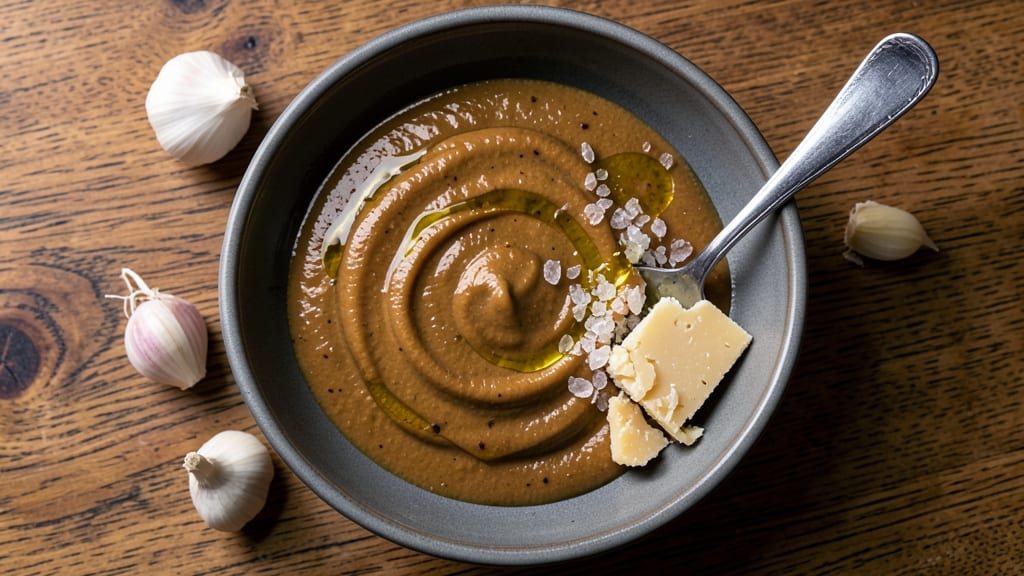
This Caesar Cardini salad dressing recipe delivers the iconic anchovy-infused creaminess that makes Caesar salads unforgettable—rich, tangy, and perfectly balanced with sharp Parmesan. The secret lies in emulsifying egg yolks with anchovy paste, lemon juice, and garlic, then gradually whisking in olive oil to create a velvety, restaurant-quality sauce.
Unlike store-bought versions, this recipe captures the authentic depth of flavor that Cardini himself perfected in the 1920s.
The dressing starts with a foolproof emulsion—egg yolks and anchovy paste form the base, while lemon juice brightens and garlic adds complexity. After tempering the emulsion with warm olive oil, we fold in grated Parmesan for that signature nutty finish.
The result is a dressing that clings beautifully to romaine, with just the right balance of tang, salt, and umami. For best results, let it rest for 30 minutes before serving—this allows flavors to meld completely.
What sets this recipe apart is its versatility and longevity. Store it in an airtight container in the refrigerator for up to 5 days, or freeze for longer storage. The dressing works equally well on Caesar salads, grilled chicken, or even as a dip for breadsticks.
For a lighter version, reduce the olive oil slightly and add a splash of buttermilk. The key to success? Patience in the emulsification process—rushing leads to separation.
Once you taste the difference between this homemade version and bottled dressings, you’ll never go back. The anchovies provide that unmistakable depth, while the Parmesan ensures a satisfying finish. Whether you're hosting a dinner party or simply craving a classic Caesar, this recipe delivers restaurant-quality results with minimal effort.
Let’s make dressing that tastes like it belongs in a Rome trattoria.
Ingredients for caesar cardini salad dressing
Nine essential ingredients transform into Caesar Cardini's legendary anchovy-infused dressing.
| Ingredient | Amount | Notes |
|---|---|---|
| Large Egg Yolks 🥚 | 3 whole | Fresh and room temperature |
| Anchovy Paste 🐟 | 1 tbsp | High-quality, not anchovy fillets |
| Fresh Lemon Juice 🍋 | 2 tbsp | From 1 medium lemon |
| Garlic Cloves 🧄 | 1 whole | Minced, not powdered |
| Extra-Virgin Olive Oil 🫒 | 1 cup | Light, fruity variety preferred |
| Parmesan Cheese 🧀 | ¾ cup | Freshly grated, not pre-shredded |
| Granulated Garlic 🧄 | ½ tsp | For extra flavor depth |
| Diamond Crystal Kosher Salt 🧂 | ½ tsp | Adjust to taste |
| Black Pepper 🌶️ | ¼ tsp | Freshly cracked |
| Warm Water 💧 | 1 tbsp | For thinning if needed |
The anchovy paste is non-negotiable—Colavita or Branca brands deliver authentic depth. Fresh egg yolks are key; room temperature emulsifies better, so take them out 10 minutes before mixing. Parmigiano-Reggiano is ideal for the cheese, but Parmesan from a block works too—just grate it yourself. Garlic should be fresh, not powdered, for that true umami punch. Olive oil matters here: California Early Harvest or Bertolli are reliable choices, but avoid heavy, peppery varieties that can overpower the delicate balance. For the lemon juice, Eureka lemons have the best acidity, but any fresh lemon will work.
No anchovy paste? Fish sauce at half the amount is a decent substitute, though it lacks the rich, salty depth. Short on Parmesan? Pecorino Romano works in a pinch but has a sharper bite. The granulated garlic is optional but adds an extra layer of flavor—skip it if you're sensitive to garlic. For a lighter dressing, reduce the olive oil to 3/4 cup and add 1 tbsp of buttermilk to balance the richness. If your emulsion breaks, 1 tsp of Dijon mustard can help re-stabilize it. The key to success lies in the slow, gradual incorporation of oil—rushing leads to separation.
This dressing keeps beautifully in an airtight container in the fridge for 5 days, though it's best used within 3 days for peak flavor. For longer storage, freeze in ice cube trays—thaw overnight in the fridge before using. The dressing thickens as it chills, so add a splash of warm water if it becomes too stiff. Store any leftover Parmesan in its original packaging with a slice of bread to absorb moisture. The anchovy paste can be refrigerated for up to 6 months once opened, but fresh is always better.
Why You'll Love This Recipe
- Five-Ingredient Magic: I swear by this recipe because it’s that simple—just yolks, anchovies, lemon, garlic, and olive oil. No straining, no fancy gadgets, just a whisk and 10 minutes of your time. That’s it.
- Umami Bomb: Between us, anchovy paste and egg yolks might sound weird, but they’re a match made in heaven. The salty depth of the anchovies cuts through the richness of the yolks, while the lemon keeps it bright—like a flavor party in your mouth.
- Weeknight Hero: This dressing is my go-to for lazy nights when I don’t feel like shopping for pre-made. Double the batch, store it in the fridge, and toss it on everything from grilled chicken to roasted veggies all week. Honestly, it’s my secret weapon.
- Budget-Friendly Luxury: Good olive oil and fresh garlic make this taste fancy, but the rest? Anchovies and eggs are cheap staples. I’ve made this for years, and it’s never broken the bank—yet it feels like a restaurant-worthy upgrade. (Yes, even on a Tuesday night.)
Step-by-step instructions for Caesar Cardini salad dressing
Master this classic technique for a perfectly balanced, velvety dressing every time.
Whisk Egg Yolks and Anchovy Paste
In a medium heatproof bowl, whisk together the 3 whole large egg yolks until smooth and pale. Add the 1 tablespoon anchovy paste and whisk vigorously for 30 seconds until fully combined. The anchovy paste will dissolve completely into the yolks, creating a rich umami foundation for the dressing.
Here's the thing—don't rush this step. The anchovy flavor needs time to meld with the eggs. You'll notice the mixture thicken slightly as you whisk, which is exactly what we want. Keep whisking until there are no visible streaks of anchovy remaining.
Incorporate Lemon Juice and Aromatics
Add the 2 tablespoons fresh lemon juice, 1 minced garlic clove, 0.5 teaspoon granulated garlic, 0.5 teaspoon Diamond Crystal kosher salt, and 0.25 teaspoon black pepper to the yolk mixture. Whisk continuously for 2-3 minutes until the mixture becomes thick and creamy. You're looking for a paste-like consistency that coats the back of a spoon.
This is where the magic happens. The acidity from the lemon brightens the anchovy flavor while the garlic adds depth. I always use freshly minced garlic here—it makes a noticeable difference compared to powdered. If you're using pre-minced garlic from a jar, drain it well to avoid watering down the dressing.
Gradually Emulsify the Olive Oil
With the mixture whisking continuously, very slowly drizzle in the 1 cup extra-virgin olive oil—about 1 tablespoon at a time. This gradual addition is crucial for creating a proper emulsion. The dressing should begin to thicken as you add the oil, eventually reaching a smooth, mayonnaise-like consistency.
Don't pour the oil too quickly or the dressing will break. If it starts to separate, simply stop adding oil and whisk vigorously for another 30 seconds before continuing. The key is patience—this step typically takes 3-5 minutes total. You'll know you're on the right track when the dressing becomes thick and glossy.
Add Parmesan and Adjust Consistency
Remove the bowl from heat (if it's warm) and stir in the 0.75 cup freshly grated Parmesan cheese using a wooden spoon. The cheese should melt into the dressing, creating a rich, nutty flavor. If the dressing is too thick, add 1 tablespoon warm water and whisk until smooth. For a thinner dressing, add 1 tablespoon warm water gradually until you reach your desired consistency.
This is the moment that matters: the Parmesan should be fully incorporated without any graininess. If you notice any lumps, strain the dressing through a fine-mesh sieve for a silky texture. Taste and adjust seasoning—you may need a touch more salt or pepper to balance the flavors. Real talk: the dressing should be tangy, salty, and umami-rich with a perfect balance of all components.
Rest and Serve
Cover the dressing and refrigerate for at least 1 hour before serving. This resting period allows the flavors to fully meld together. The dressing will thicken slightly as it chills, which is normal. If you're in a hurry, you can use it immediately, but the flavor will be more developed after resting.
When ready to serve, give the dressing a good stir before using. It should cling beautifully to romaine lettuce and coat each leaf with that signature creamy, anchovy-infused flavor. For best results, use within 3-4 days of making it. If it separates, simply whisk vigorously to re-emulsify before using.
Pro Tips For Making Caesar Cardini Salad Dressing
- Temper the yolks: Warm the egg yolks first—just a few seconds in a small bowl over barely simmering water (or microwave in 10-second bursts) until they’re lukewarm, not hot. Cold yolks will curdle when you add the anchovy paste and oil, and nobody wants scrambled dressing.
- Mince the garlic fine: Skip the press or grater—use a sharp knife to chop the garlic into a paste with a pinch of salt. This blends smoother and avoids that telltale garlic chunk you’ll regret later. (Yes, even if you’re impatient like me.)
- Whisk in the oil slowly: Start with a thin stream of olive oil while whisking like your life depends on it. Pouring it all at once risks breaking the emulsion, and you’ll end up with a sad, separated mess. Think "drip, don’t dump."
- Strain it right: After emulsifying, force the dressing through a fine-mesh sieve into a clean bowl—no matter how smooth it looks. This catches any stray bits of anchovy or garlic skin that’ll ruin the texture. (I learned this the hard way after serving a salad with a crunchy surprise.)
Essential equipment for this recipe
Emulsification Tools
A whisk is your best friend for this recipe—I recommend a balloon whisk with thin, flexible wires for maximum aeration. The OXO Good Grips model is my go-to because it handles the thick egg mixture without slipping.
For smaller batches, a handheld immersion blender (like the Magic Bullet) works wonders, especially if you're nervous about whisking by hand. The key is to keep the mixture moving constantly as you add oil. 💫
Heatproof Bowl
Use a medium heatproof bowl that can handle warm water baths if needed—glass or stainless steel are ideal. I love the Pyrex measuring cups for this because they're heat-resistant and won't warp.
If your bowl gets too warm during emulsification, place it in an ice bath for 30 seconds to cool. Never use plastic bowls—they can melt or leach chemicals when exposed to heat.
Measuring Tools
Precision matters here, especially with the egg yolks and anchovy paste. A digital kitchen scale (like the OXO Good Grips) ensures accurate measurements for the Parmesan—weighing it gives you more consistent results than volume measurements. For liquids, use a liquid measuring cup with clear markings.
I keep a small squeeze bottle (like the Rubbermaid) handy for the olive oil—it lets me control the slow drip better than pouring from a measuring cup.
Grating Essentials
Freshly grated Parmesan makes all the difference—never use pre-shredded cheese. A microplane or fine-hole box grater (like the Barberware) gives you the finest, most flavorful shavings.
If you're using a block of Parmesan, store it in the freezer for 15 minutes before grating—it's easier to work with when slightly firm. For anchovy paste, a small offset spatula helps scrape out every last bit from the jar.
Storage Containers
Transfer the finished dressing to an airtight container with a lid seal—glass jars or BPA-free plastic containers work best. I prefer mason jars because they're easy to clean and stack in the fridge. Label with the date to track freshness.
For freezing, use ice cube trays—just pop out a cube when you need a small amount. Avoid metal containers as they can react with the acidic dressing over time.
Nutrition facts
Frequently asked questions
Why does my Caesar dressing separate?
Separation happens when oil and liquid phases break apart, usually from adding oil too quickly or using cold ingredients. Always whisk continuously while slowly drizzling in olive oil (1 tbsp at a time). If it separates, whisk vigorously with 1 tsp Dijon mustard to re-emulsify. Keep egg yolks and anchovy paste at room temperature before mixing.
Can I make this dressing without anchovies?
Yes! For a vegan version, replace anchovy paste with 1 tbsp fish sauce or 1 tsp soy sauce plus 1/2 tsp smoked paprika for depth. The umami flavor will be different but still delicious. For a completely plant-based option, use 1 tbsp nutritional yeast and 1/2 tsp white miso paste instead.
How do I make this dressing lighter?
Reduce olive oil to 3/4 cup and add 1 tbsp buttermilk or plain yogurt to balance richness. For extra lightness, replace half the Parmesan with lemon zest (1 tsp) or white wine vinegar (1 tsp). The dressing will still coat well but with less heaviness.
What's the best way to store leftover dressing?
Transfer to an airtight glass container and refrigerate for up to 5 days. For longer storage, freeze in ice cube trays—thaw overnight in the fridge. If it thickens in the fridge, add 1 tsp warm water and whisk. Never store in metal containers as they can react with the acidic ingredients.
Can I use this dressing on things other than salads?
Try it as a dip for garlic bread or crudités, a marinade for grilled chicken, or even a sauce for pasta. The anchovy-Parmesan combo works beautifully with proteins. For pasta, reduce the olive oil to 1/2 cup and add 1/4 cup chicken broth for a thinner consistency.