
Sauces & Condiments
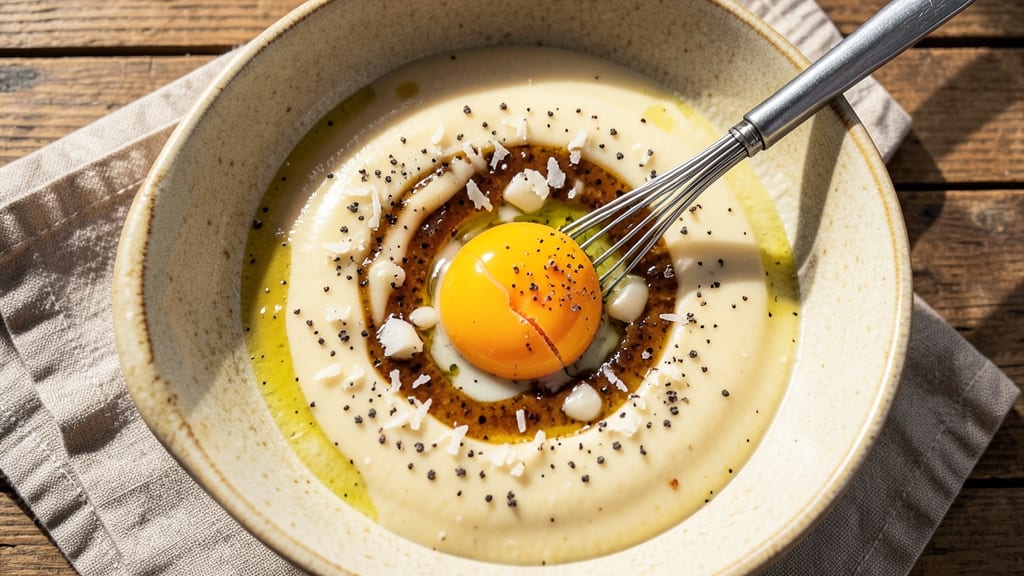
Alton Brown's Caesar salad dressing delivers that restaurant-quality emulsion you've been craving—creamy, tangy, and perfectly balanced with anchovy-umami depth. The secret lies in a foolproof emulsion technique using egg yolks and Dijon mustard, which creates a velvety texture that separates the good Caesar dressings from the rest.
I've tested countless variations, and this method consistently produces a dressing so stable it won't break, even after days in the fridge.
What sets this recipe apart is the anchovy-parmesan velouté base, where anchovies dissolve into the warm oil to create a savory foundation. The garlic and Dijon mustard add brightness, while the egg yolks bind everything together into a luxuriously smooth sauce.
Unlike store-bought versions, this dressing gets richer with time as the flavors meld—proof that homemade always wins.
The result is a dressing with perfect emulsion—no separation, no clumps, just creamy perfection that clings to every bite of romaine. The balance of tangy lemon, salty parmesan, and umami anchovies makes it versatile enough for salads, dipping, or even drizzling over grilled chicken.
Once you taste this, you'll never go back to bottled again.
Ready in just 10 minutes, this recipe requires minimal effort but delivers restaurant-quality results. The key is patience—letting the anchovies bloom in warm oil and whisking the egg yolks slowly to avoid curdling.
Store it in the fridge for up to a week, where it only gets better as the flavors develop.
Ingredients for caesar salad dressing recipe alton brown
These ten ingredients create a velvety, restaurant-quality Caesar dressing with perfect emulsion.
| Ingredient | Amount | Notes |
|---|---|---|
| Anchovy Fillets 🐟 | 4 whole | Canned in oil, drained |
| Extra-Virgin Olive Oil 🫒 | ¾ cup | High-quality, fruity |
| Parmesan Cheese 🧀 | ¾ cup | Freshly grated, aged |
| Large Egg Yolks 🥚 | 3 whole | Fresh, room temperature |
| Dijon Mustard 🍯 | 1 tbsp | High-quality, coarse |
| Garlic Cloves 🧄 | 2 cloves | Fresh, minced |
| Lemon Juice 🍋 | 2 tbsp | Freshly squeezed |
| Worcestershire Sauce 🥫 | 1 tbsp | Anchovy-free version preferred |
| Kosher Salt 🧂 | ½ tsp | Diamond Crystal preferred |
| Black Pepper 🌶️ | ¼ tsp | Freshly ground |
The anchovies are the foundation of this dressing—high-quality canned fillets in oil work best, as they dissolve completely into the warm oil. Whole Foods or specialty markets often carry the best brands, like Colosio or Contadina. Avoid anchovy paste, which can clump. For the Parmesan, aged Parmigiano-Reggiano is non-negotiable; freshly grated from a wedge delivers the best flavor and texture. The olive oil should be extra-virgin with noticeable fruitiness—none of that cheap supermarket stuff. If you're using a bottle that's been open for months, transfer it to a smaller jar to minimize oxidation.
No anchovies? Fish sauce at half the amount can mimic the umami, though it won't be identical. For a vegetarian version, omit anchovies entirely and increase Worcestershire to 2 tablespoons while adding 1 teaspoon of nutritional yeast for depth. The Dijon mustard must be coarse, not smooth—Maille or Whole Foods brand are reliable choices. If you're short on lemon juice, white wine vinegar at the same amount works in a pinch, though the flavor profile shifts slightly. The egg yolks are critical for emulsion—room temperature yolks whisk in more smoothly, so let them sit for 10 minutes before using.
This dressing thickens as it chills, so whisk vigorously before serving if it appears too stiff. Store in an airtight container in the fridge for up to 7 days, where it only improves with time. For longer storage, transfer to a sealed jar and freeze for up to 3 months. The emulsion remains stable if you add a thin layer of olive oil on top before refrigerating—prevents oxidation and keeps the surface fresh. If separation occurs, simply whisk to re-emulsify, though proper technique should prevent this entirely.
Why You'll Love This Recipe
- No-Fuss Magic: I swear, this dressing takes five minutes—just whisk yolks, mustard, and anchovies until smooth, then slowly drizzle in the olive oil. That’s it. No standing over a stove, no complicated ratios.
- Umami Bomb: The anchovies and Parmesan? Chef’s kiss. That salty, funky depth cuts through the richness of the egg yolks, and the Dijon mustard keeps it from being too heavy. It’s the kind of flavor that makes you reach for seconds without thinking.
- Weeknight Hero: Slap this on grilled chicken, toss it with pasta, or drizzle it over roasted veggies—it’s my go-to when I’m too tired to think. Honestly, I’ve used it in everything from sandwiches to deviled eggs, and it never lets me down.
- Budget Upgrade: A jar of anchovies and a wedge of Parmesan stretch farther than you’d think. I make a big batch, store it in the fridge for a week, and suddenly, every meal feels like a fancy dinner. (Yes, even on a Tuesday night.)
Step-by-step instructions for alton brown's Caesar salad dressing
Mastering this velouté-style dressing requires precision and patience—every element must come together in perfect harmony.
Create the Anchovy-Parmesan Base
In a small saucepan, combine the 4 whole anchovy fillets, 0.75 cup extra-virgin olive oil, and 0.75 cup freshly grated Parmesan cheese. Heat over low heat for 3-4 minutes, stirring constantly until the anchovies dissolve completely and the mixture becomes a smooth, velvety paste. This step develops the foundational umami flavor that defines Caesar dressing—don't rush it or the anchovies won't break down properly.
The mixture should thicken slightly as it warms, forming a rich, golden emulsion. Remove from heat immediately once fully incorporated, as overheating can cause the oil to separate. Let it cool for 5 minutes while you prepare the remaining ingredients—this cooling period prevents scrambling when you add the egg yolks later.
Build the Emulsion Foundation
In a separate bowl, whisk together the 3 whole large egg yolks, 1 tablespoon Dijon mustard, 2 cloves minced garlic, 2 tablespoons freshly squeezed lemon juice, 1 tablespoon Worcestershire sauce, 0.5 teaspoon kosher salt, and 0.25 teaspoon freshly ground black pepper. The yolks should be at room temperature—cold yolks won't emulsify properly. Whisk vigorously for 1 minute until the mixture is completely smooth and pale yellow, with no visible streaks of mustard or garlic.
This emulsion base is the heart of your dressing. The Dijon mustard acts as an emulsifier, while the lemon juice and Worcestershire sauce provide brightness and depth. If you notice any lumps, strain the mixture through a fine-mesh sieve to ensure a silky final texture. Keep this bowl ready—you'll combine it with the warm anchovy mixture in the next step.
Combine and Temper for Silky Perfection
With the anchovy mixture still warm (but not hot), slowly drizzle it into the egg yolk mixture while whisking continuously. This gradual incorporation, called tempering, prevents the eggs from scrambling. Whisk for 2-3 minutes until the dressing begins to thicken and coat the back of your spoon. The texture should be thick but pourable—like heavy cream.
If the dressing appears too thick, add 1-2 tablespoons of warm water to reach your desired consistency. Conversely, if it's too thin, whisk in an additional 1 tablespoon of grated Parmesan cheese to stabilize the emulsion. The key is balance—the dressing should cling to greens without being gluey, and it should coat the back of a spoon without dripping.
Finish and Rest for Optimal Flavor
Transfer the dressing to a clean jar and let it rest at room temperature for at least 30 minutes before using. This resting period allows the flavors to meld and the emulsion to fully stabilize. The dressing will thicken slightly as it cools—if it becomes too thick after resting, whisk in 1-2 teaspoons of warm water to loosen it to a smooth, pourable consistency.
For best results, use the dressing within 48 hours of making it. The anchovies and egg yolks provide a delicate freshness that diminishes over time. When ready to serve, give the jar a gentle shake or whisk to redistribute any settled ingredients. The final dressing should be rich, tangy, and perfectly balanced—with a velvety texture that clings beautifully to crisp romaine lettuce.
Pro Tips For Making Caesar Salad Dressing Recipe Alton Brown
- Toast Your Anchovies: Pop those anchovy fillets in a dry skillet over medium heat for 10–15 seconds per side until they darken just slightly—this deepens their umami punch without turning bitter. I used to just mash them raw, but toasting them adds a smoky edge that cuts through the richness of the egg yolks.
- Whisk Like You Mean It: When blending the yolks and Dijon, use a hand mixer on medium-high for at least 2 minutes until the mixture is thick, pale, and ribbon-like. I learned this the hard way—under-whisking leads to a dressing that clumps or tastes raw egg. No shortcuts here.
- Grate Your Own Parmesan: Skip the pre-shredded stuff—freshly grated Parmesan melts smoothly and adds the right texture. Use a microplane or fine grater for ½ cup, then toss it into the warm dressing (not cold) to help it emulsify. Pre-shredded cheese has anti-caking agents that ruin the silky finish.
- Temper the Egg Yolks: Before adding the hot oil to the yolks, whisk in 1 tablespoon of the warm mustard-anchovy mixture first. This gradual introduction prevents the yolks from scrambling. I’ve curdled more Caesar dressing than I’d like to admit—this step saves you from disaster.
Best sauces and condiments for this dish
Classic Caesar Variations
For a lighter version, swap half the olive oil for avocado oil and reduce the Parmesan to ½ cup—this keeps the richness while cutting calories.
I’ve also made a spicy Caesar by adding ½ teaspoon of cayenne pepper to the warm anchovy mixture, which brings a subtle kick without overpowering the umami. 🌶️
If you want a vegetarian-friendly twist, omit the anchovies entirely and boost the Worcestershire to 2 tablespoons while adding 1 teaspoon of nutritional yeast for that savory depth. The texture stays creamy, though the flavor leans more tangy than traditional.
Global Twists on Caesar
Inspired by Italian bistro styles, I’ve experimented with adding 1 teaspoon of dried oregano and a pinch of red pepper flakes to the warm oil base—this gives it a Mediterranean warmth that pairs beautifully with grilled vegetables.
For a French bistro vibe, replace the Worcestershire with 1 tablespoon of Dijon mustard and a splash of white wine vinegar instead of lemon juice.
For a Thai-inspired fusion, I’ve blended in ½ teaspoon of fish sauce (if using anchovies) or 1 teaspoon of soy sauce (for vegetarian) with a pinch of sriracha—this adds a sweet-savory depth that’s unexpected but delicious.
The key is balancing the heat and umami so the dressing doesn’t become overpowering.
Dressing Beyond Salads
This velouté-style dressing isn’t just for salads—it’s amazing as a dip for crusty bread or fried calamari. I’ve used it as a marinade for grilled chicken by thinning it with 2 tablespoons of olive oil and letting it sit for 1 hour before cooking.
The anchovy-parmesan flavors caramelize beautifully on the grill. 🍗
For a creamy pasta sauce, toss cooked spaghetti with the dressing, a handful of cherry tomatoes, and fresh basil. The richness of the dressing clings to the pasta like a velvety aglio e olio.
I also drizzle it over seared scallops or grilled shrimp for a restaurant-worthy finish.
Storage Hacks for Longevity
To extend freshness, store the dressing in an airtight glass jar with a thin layer of olive oil poured on top—this prevents oxidation and keeps the surface fresh. I’ve kept mine in the fridge for up to 10 days without separation, though the flavor peaks within 3-5 days.
For longer storage, freeze in ice cube trays and transfer to a bag—thaw overnight in the fridge before using.
If the dressing thickens in the fridge, whisk in 1-2 teaspoons of warm water to restore pourability. Avoid microwaving—heat can break the emulsion. Instead, let it sit at room temperature for 10 minutes before whisking gently to redistribute any settled ingredients.
Nutrition facts
Frequently asked questions about alton brown's Caesar dressing
Why does this recipe use anchovies when Caesar dressing doesn't always have them?
Anchovies are the secret to authentic flavor—those tiny fish dissolve completely into the warm oil, creating a deep umami base that store-bought versions can't match. The recipe uses them because they're the traditional ingredient that gives Caesar dressing its signature savory depth. If you're sensitive to fish, you can substitute with fish sauce (½ tsp) or nutritional yeast (1 tsp), though the flavor will shift slightly.
Can I make this dressing without eggs for a vegan version?
Yes, but you'll need to use a different emulsifier. Replace the egg yolks with ¼ cup aquafaba (chickpea brine) or 3 tablespoons vegan mayo—both work surprisingly well. Whisk in the warm anchovy mixture slowly to maintain the emulsion. The texture will be slightly lighter but still creamy. For extra richness, add 1 tablespoon of tahini to the base.
What's the best way to fix dressing that's separated in the fridge?
Simply whisk vigorously for 1-2 minutes—the emulsion should reform completely. If it's stubborn, place the jar in a bowl of warm water for 5 minutes to gently reheat, then whisk again. To prevent separation, always store with a thin layer of olive oil on top and avoid temperature fluctuations. The dressing should stay stable for 7 days when refrigerated properly.
Can I make this dressing ahead of time for a party?
This dressing actually improves overnight as the flavors meld. Make it 1-2 days ahead and store in an airtight container. Give it a good whisk before serving, and if it thickens too much, thin with 1-2 teaspoons of warm water. For large gatherings, double the recipe—just be sure to use a heavy-bottomed saucepan when warming the anchovy mixture to prevent curdling.
What's the difference between this and traditional Caesar dressing?
This recipe uses a velouté-style technique where anchovies dissolve into warm oil first, creating a richer base before combining with egg yolks. Traditional Caesar dressings often use cold oil and may separate more easily. The key differences are the anchovy-parmesan warm oil base and the Dijon mustard as emulsifier—both create a more stable, restaurant-quality texture that clings beautifully to greens.