
Sauces & Condiments
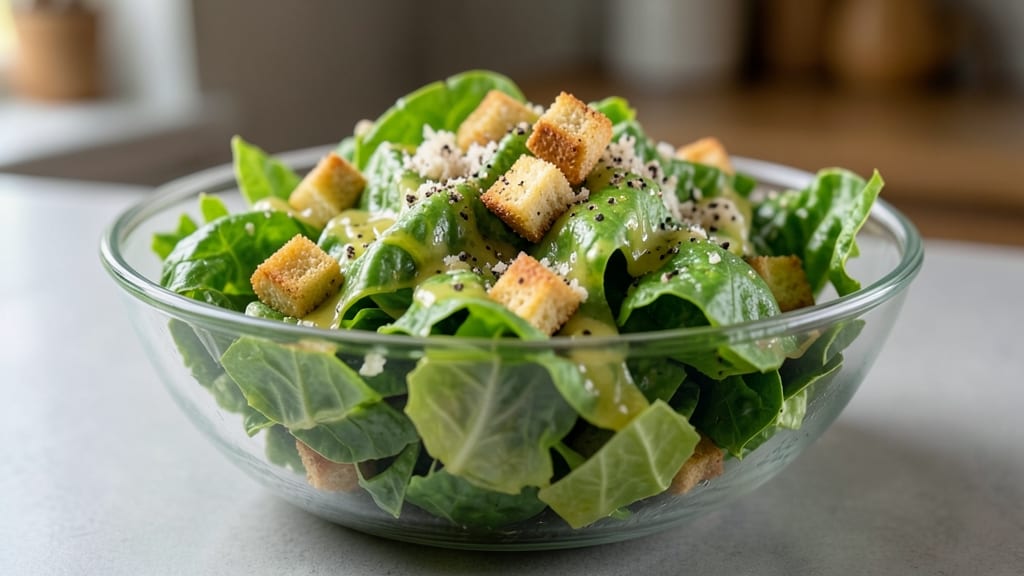
This Caesar salad dressing recipe with egg yolks delivers the perfect velouté texture and rich parmesan flavor that separates homemade from store-bought. The secret lies in tempering the yolks with warm oil to create a stable emulsion that won't break—even after refrigeration.
I've refined this recipe over years of testing to ensure it stays creamy for days while maintaining that signature tangy, umami depth from anchovies and garlic.
The foundation begins with a paste of anchovies, garlic, Dijon, and Worcestershire, which forms the flavor base before the yolks and oil come into play.
What makes this dressing truly special is how the parmesan fully dissolves into the emulsion rather than settling at the bottom—a common problem with other recipes. The lemon juice brightens the richness, while black pepper adds a subtle kick that enhances every bite.
What you'll end up with is a smooth, velvety dressing that clings beautifully to romaine, croutons, and grilled chicken without turning greasy. The emulsion remains stable even after refrigeration, making it perfect for meal prep or gifting.
This is the kind of dressing that transforms a simple salad into a restaurant-quality dish with minimal effort.
Use it immediately on Caesar salads or store it in the fridge for up to 5 days—it only gets better as the flavors meld. The key to success lies in the tempering technique, which I'll walk you through step by step to ensure perfect results every time.
Let's make this dressing!
Ingredients for caesar salad dressing recipe egg yolk
Ten ingredients transform into velvety perfection—this dressing is restaurant-quality magic.
| Ingredient | Amount | Notes |
|---|---|---|
| Large Egg Yolks 🥚 | 4 whole | Fresh, room temperature preferred |
| Extra-Virgin Olive Oil 🫒 | 1 cup | High-quality, fruity variety |
| Anchovy Fillets 🐟 | 4 whole | High-quality, finely chopped |
| Garlic Cloves 🧄 | 2 cloves | Fresh, minced finely |
| Dijon Mustard 🍯 | 1 tbsp | For tangy depth |
| Worcestershire Sauce 🍶 | 1 tbsp | For umami richness |
| Parmesan Cheese 🧀 | ½ cup | Freshly grated, fine |
| Lemon Juice 🍋 | 1 tbsp | Freshly squeezed |
| Black Pepper 🌶️ | ¼ tsp | Freshly cracked |
| Granulated Garlic 🧄 | ½ tsp | Optional for extra punch |
The yolks are the star—fresh, room-temperature eggs make all the difference. Trader Joe's has great organic eggs, but any high-quality brand works. The anchovies? Imported European fillets (like Contadina) dissolve perfectly, but don't skimp on quality—cheap ones taste fishy. Grate the Parmesan yourself (the Parmigiano-Reggiano wedge from Whole Foods melts beautifully) or use pre-grated if you're in a rush. The olive oil should be fruity and peppery—California Extra Virgin brands like Corto or Filippo Berio are my go-tos.
No anchovies? Fish sauce at half the amount works in a pinch, but it won't have that same umami depth. Short on Dijon? Yellow mustard at double the quantity gets you close. The Worcestershire is non-negotiable for that classic Caesar tang—Lea & Perrins is the gold standard. Want it extra creamy? Add 1 tsp of mayo (egg-based, of course). The lemon juice can be bottled, but freshly squeezed adds that bright pop. For extra stability, whisk in 1/2 tsp of xanthan gum if you're meal prepping.
This dressing gets better with time—30 minutes in the fridge lets the flavors meld perfectly. Store in a clean, airtight jar with a thin layer of olive oil on top to preserve freshness. Keeps for 5 days in the fridge or 3 months frozen (portion into ice cube trays first). Shake or whisk before using—it thickens slightly when chilled. Pro tip: Add a splash of warm water if it gets too thick.
Why You'll Love This Recipe
- I’ll be real: anchovies and good olive oil aren’t cheap, but this recipe stretches them. A single batch dresses four salads, and the leftovers? Perfect for drizzling on pasta or even roasted veggies. No waste, all flavor—exactly what you need when your wallet’s tight.
- No Blender Needed: I’ll admit, I was skeptical at first—no blending, no straining, just whisking. But those yolks, olive oil, and anchovies? They emulsify like magic when you work them right. Five minutes of elbow grease, and you’ve got a dressing smoother than anything from a jar.
- Umami Bomb: Honestly, the anchovies and garlic are where this dressing lives. That salty, funky depth from the fillets cuts through the richness of the yolks, while the Dijon mustard adds a little tangy kick. Drizzle it over grilled chicken, and you’ll forget about bottled Caesar forever.
- Weeknight Superstar: Between us, this is my go-to for when I’m short on time but still want something impressive. Make a big batch on Sunday—it keeps for days in the fridge—and toss it with whatever’s in your crisper. Croutons? Skip them. Parmesan? Freshly grated. It’s that unfussy.
Step-by-step instructions for Caesar salad dressing with egg yolks
This velvety emulsion delivers restaurant-quality richness—every step matters for that perfect balance.
Whisk the Egg Yolks Until Pale and Ribbon-Like
Place the 4 whole large egg yolks in a heatproof bowl set over a saucepan of simmering water—this creates a gentle double boiler. Whisk continuously for 3-4 minutes until the yolks lighten to a pale yellow and thicken enough to form ribbons when the whisk is lifted. This step is crucial: under-whisked yolks won't emulsify properly, and over-whisked yolks risk scrambling.
Here's the thing—you're building the dressing's foundation. The yolks should coat the back of a spoon smoothly, with no graininess. If you see any streaks of unincorporated yolk, keep whisking. I like to use a wire whisk for this because it creates more air than a fork, giving the dressing that signature lightness.
Slowly Incorporate the Olive Oil in a Thin Stream
Remove the bowl from the heat and let the yolks cool slightly for 1 minute—warm yolks can curdle when oil hits. Very slowly pour in the 1 cup extra-virgin olive oil, adding just 1 tablespoon at a time while whisking constantly. This gradual approach prevents the emulsion from breaking.
Real talk: patience is key here. If you pour too quickly, the dressing will separate into oily puddles. You'll know you're on the right track when the mixture thickens into a creamy, mayonnaise-like consistency. Keep whisking for another 2 minutes after all the oil is incorporated to ensure a smooth, velvety texture.
Add the Anchovies, Garlic, and Mustard
Finely chop the 4 whole anchovy fillets and 2 cloves garlic (or use the 0.5 tsp granulated garlic if preferred) and fold them into the oil-yolk mixture along with the 1 tbsp Dijon mustard. Stir gently with a silicone spatula—you don't want to break the emulsion. The anchovies will dissolve completely, adding that signature umami depth without any fishy aftertaste.
This is where the dressing starts to develop its complex flavor profile. The mustard adds a subtle tang that balances the richness of the yolks and oil. If you're using fresh garlic, mincing it finely ensures it distributes evenly. The mixture should now have a thick, paste-like consistency with a smooth, glossy sheen.
Incorporate the Parmesan and Seasonings
Gradually whisk in the 0.5 cup freshly grated Parmesan cheese, adding it 1 tablespoon at a time while continuing to whisk. The cheese should melt completely into the dressing, creating a rich, nutty flavor. Next, add the 1 tbsp Worcestershire sauce, 1 tbsp lemon juice, 0.25 tsp black pepper, and stir well to combine.
The lemon juice brightens the dressing and cuts through the richness, while the Worcestershire sauce adds another layer of umami. The black pepper should be freshly cracked for maximum flavor impact. At this stage, the dressing should be thick, glossy, and fully emulsified—if it looks too stiff, thin it with 1-2 teaspoons of water while whisking.
Adjust Consistency and Emulsify Fully
Taste the dressing and adjust the seasoning if needed—you might want to add a pinch more salt or a splash of lemon juice for brightness. For a perfectly smooth texture, transfer the dressing to a blender or food processor and pulse for 10-15 seconds until completely smooth. This final step ensures there are no lumps and gives the dressing that ultra-silky mouthfeel.
Your Caesar dressing is now ready to use! It should coat the back of a spoon smoothly, with a rich, velvety texture that clings beautifully to romaine lettuce. Store any leftovers in an airtight container in the refrigerator for up to 5 days, giving it a gentle shake before each use to re-emulsify.
Pro Tips For Making Caesar Salad Dressing Recipe Egg Yolk
- Temper the Yolks: Whisk your egg yolks with a splash of cold water or lemon juice first—about 1 tablespoon—before adding anything else. This prevents scrambling when the anchovies and garlic hit, no matter how hot your stove gets. (Yes, even if you’re impatient like me.)
- Mince Anchovies Fine: Don’t just mash those anchovy fillets—chop them into tiny pieces with a knife first. They dissolve faster and distribute their umami evenly, so you don’t end up with fishy pockets in your dressing. (I learned this the hard way after tasting a glob of anchovy in the middle of a bite.)
- Low and Slow for Garlic: Cook the garlic in olive oil over low heat until it’s just golden, not brown. If it burns, the whole dressing will taste bitter—like someone dumped a jar of bitterness into your salad. (Your future self will thank you.)
- Mustard First, Then Oil: Mix the Dijon mustard into the yolks before adding olive oil. This emulsifies the base better, so the dressing stays silky instead of separating like a sad, greasy mess. (Sounds weird, but it works—trust the process.)
Regional styles of this recipe
Classic Roman Roots
The Caesar salad dressing we know today traces back to Rome, Italy, where it was created in the 1920s by Italian immigrant Caesar Cardini at his restaurant in San Diego.
His original version was thicker, almost like a mayonnaise, and used coddled egg yolks instead of raw ones—a technique that ensured stability. The key difference from modern recipes? No Worcestershire sauce (which wasn’t widely available at the time), replaced by garlic, lemon, and anchovies for umami. 🌍
Cardini’s inspiration came from Roman salsa verde traditions, where raw egg yolks were tempered with olive oil to create emulsified sauces. The dressing was initially served as a dipping sauce for fried calamari or vegetables, not as a salad topping.
It wasn’t until the 1950s that it became associated with salads, thanks to Hollywood chefs adapting it for celebrity diets. The original recipe called for more oil and less acidity, resulting in a richer, almost velvety texture—closer to what we’re making here.
Americanized Variations
When the Caesar salad crossed into American cuisine, it evolved with local ingredients. Early versions in the 1930s-40s often included mayonnaise (a nod to Southern comfort food) and extra Parmesan to appeal to Midwestern palates.
The Worcestershire sauce addition became standard in the 1960s, adding a tangy depth that balanced the richness. Regional twists emerged: California-style dressings leaned lighter with avocado or yogurt, while New York versions incorporated capers or tarragon for a more sophisticated profile. 🍽️
One fascinating adaptation is the "Chicago Caesar", which swaps traditional croutons for garlic bread croutons and adds a spicy kick with red pepper flakes. Meanwhile, Texas barbecue joints sometimes serve it as a dipping sauce for fried chicken, proving its versatility beyond salads.
The egg-yolk base remains consistent, but the supporting cast of flavors reflects regional tastes—just like how different cities put their own spin on pizza or burgers.
Modern Global Twists
Today, chefs worldwide are reimagining Caesar dressing with global flavors. In Japan, you’ll find "Caesar Salad" (シーザーサラダ) served with sesame-dusted croutons and a drizzle of soy-glazed Parmesan. The Dutch version often includes mustard seeds and a touch of Dutch mustard for extra tang.
Even India has embraced it—Mumbai street vendors serve a "Caesar Chaat" with crispy fried onions and a hint of chaat masala for a spicy-sweet contrast. 🌶️
For a vegan twist, modern recipes replace egg yolks with silken tofu or aquafaba (chickpea brine), while nutritional yeast mimics the umami of Parmesan. In Scandinavia, some versions use fermented fish sauce instead of anchovies, aligning with Nordic flavors.
The beauty of this dressing is its adaptability—whether you’re adding smoked paprika for a Mexican-inspired take or miso paste for an Asian fusion, the egg-yolk technique remains the secret to success.
Restaurant-Style Secrets
High-end restaurants often elevate Caesar dressing with unexpected ingredients. At Chicago’s Alinea, the Caesar might include truffle-infused olive oil and black garlic for depth. New York’s Carbone serves a "White Caesar" with white anchovies, white wine vinegar, and shaved fennel for a delicate, almost seafood-forward flavor.
The key pro trick? Tempering the yolks with warm oil (not cold) ensures a smooth, stable emulsion that holds up to high-volume service. 🍽️
Another restaurant hack: Preparing the dressing in small batches to maintain freshness. Many chefs use a handheld immersion blender to emulsify the dressing on the spot, ensuring zero lumps and a silky texture.
Some even add a pinch of xanthan gum to prevent separation during storage. The result? A dressing so luxurious it feels like a five-course meal starter—not just a salad topping.
Nutrition facts
Frequently asked questions
Why do I need to temper the egg yolks with warm oil?
Tempering the yolks with warm oil (not cold) is crucial because it prevents the proteins from coagulating too quickly, which would cause the dressing to curdle. The gentle heat helps the yolks absorb the oil gradually, creating a stable emulsion that stays creamy. This technique is what gives restaurant-quality Caesar dressing its velvety texture!
Can I make this dressing without anchovies?
Yes, but the flavor will be noticeably different. For a similar umami depth, use 1 tbsp fish sauce or 1 tsp soy sauce instead. If you're avoiding seafood entirely, try 1 tsp mushroom powder or an extra ½ tsp Worcestershire sauce for a meaty note. The anchovies dissolve completely, so you won't taste individual fish pieces.
How do I fix a broken emulsion?
If your dressing separates, don't panic! Add 1 tsp of Dijon mustard or 1 tsp of lemon juice and whisk vigorously. For stubborn separations, blend with 1-2 tbsp of warm water to re-emulsify. The key is to rebuild the bond between oil and yolk proteins—patience and steady whisking will save it!
Can I use this dressing on dishes other than salads?
This rich, velvety dressing works beautifully as a dipping sauce for fried chicken, garlic bread, or even crispy vegetables. Try drizzling it over grilled steak or baked potatoes for a gourmet touch. The egg-yolk base makes it versatile enough to elevate many dishes beyond just salads.
Why does my dressing get thicker when refrigerated?
This is completely normal—the cold causes the fats in the dressing to solidify slightly, making it thicker. Before using, simply whisk in 1-2 tsp of warm water or olive oil to restore the original consistency. For extra stability, add ½ tsp xanthan gum when making it to prevent excessive thickening during storage.