
Sauces & Condiments
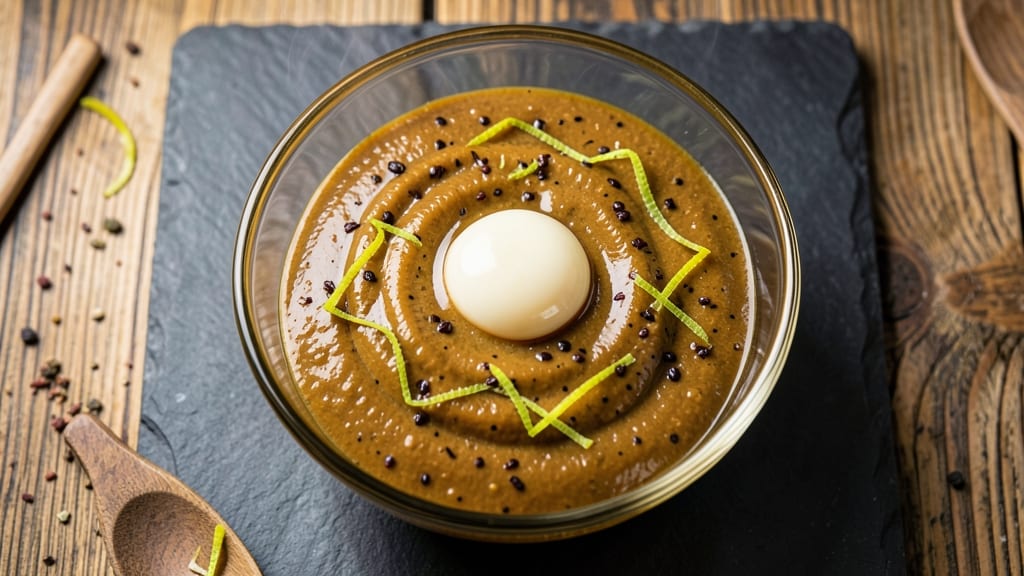
Gordon Ramsay's Caesar salad dressing delivers that signature bold umami punch with a velvety texture that clings to every leaf. The secret lies in balancing anchovies, garlic, and Parmesan while achieving a perfect emulsion—no lumps, just silky richness.
This isn't your basic bottled version; it's restaurant-quality with a depth of flavor that transforms salads into showstoppers.
The recipe starts with a smooth anchovy paste (trust me, it dissolves completely) combined with Dijon mustard and Worcestershire sauce for that signature tang. Egg yolks bind the dressing while olive oil and lemon zest add brightness, creating a sauce that's both creamy and vibrant.
Ramsay's touch? A touch of cayenne for heat and freshly grated Parmesan for that unmistakable salty finish.
What you'll end up with is a dressing that's rich, tangy, and perfectly balanced—no overpowering anchovy aftertaste, just layers of savory complexity. The emulsion stays stable for days, making it ideal for meal prep.
This is the dressing that'll have your guests asking for the recipe, not just the salad.
Once you taste this version, store-bought Caesar dressing will never measure up. The key is patience during emulsification and using high-quality ingredients—every element matters. Let's make dressing that rivals Ramsay's own.
Ingredients for caesar salad dressing recipe gordon ramsay
Restaurant-quality Caesar dressing starts with bold umami and velvety texture—just 10 ingredients transform salads into showstoppers.
| Ingredient | Amount | Notes |
|---|---|---|
| Anchovy Fillets 🐟 | 4 whole | High-quality, packed in oil |
| Dijon Mustard 🍯 | 1 tbsp | Grainy texture preferred |
| Worcestershire Sauce 🍶 | 1 tbsp | Classic Lea & Perrins brand |
| Extra-Virgin Olive Oil 🫒 | 1 cup | Light, fruity variety |
| Fresh Lemon Zest 🍋 | 1 tsp | Finely grated lemon peel |
| Large Egg Yolks 🍳 | 2 whole | Room temperature preferred |
| Garlic Cloves 🧄 | 1 whole | Freshly minced, not pre-minced |
| Freshly Grated Parmesan Cheese 🧀 | ½ cup | Parmigiano-Reggiano preferred |
| Cayenne Pepper 🔥 | ¼ tsp | Adjust for heat preference |
| Kosher Salt 🧂 | ½ tsp | Diamond Crystal preferred |
Anchovies make or break this dressing. High-quality, packed-in-oil fillets dissolve completely for that signature depth—none of that fishy aftertaste. I grab mine from Whole Foods or Trader Joe's; avoid the canned kind. The Parmesan? Freshly grated Parmigiano-Reggiano from a wedge is non-negotiable—pre-grated tastes like sawdust. For the olive oil, California extra-virgin (like Corto or Gaea) adds brightness without overpowering. The Dijon mustard should be grainy—Maille is the gold standard, but any good-quality brand works.
No anchovies? High-quality fish sauce at half the amount gets you close, but you'll lose that authentic umami. Short on Parmesan? Pecorino Romano works in a pinch, but it's more pungent. The Worcestershire sauce is crucial—Lea & Perrins is the only one that works. For the garlic, freshly minced is essential; pre-minced has a metallic aftertaste. The egg yolks need to be room temperature—cold yolks won't emulsify properly. If you're worried about salmonella, pasteurized yolks are a safe bet. The lemon zest should be finely grated—a microplane works best.
This dressing keeps beautifully—5-7 days in the fridge if stored properly. The key is pouring a thin layer of olive oil on top before sealing to prevent a skin from forming. For meal prep, divide into small containers so you only thaw what you need. It freezes for 3 months, though the texture may separate slightly upon thawing—just whisk vigorously to re-emulsify. The emulsion stays stable for days, making it perfect for batch cooking. Trust me, once you make this, you'll never go back to bottled Caesar.
Why You'll Love This Recipe
- Here’s the best part: this dressing keeps for days in the fridge. A quick shake and it’s ready to elevate whatever’s in your fridge—wilted greens? No problem. Stale bread? Suddenly it’s croutons. I’ll be real, it’s my go-to for turning "what’s for dinner?" into "wow, this looks good."
- Five-Ingredient Magic: I swear by this—just anchovies, mustard, Worcestershire, olive oil, and lemon zest. No overcomplicated steps, no measuring cups of chaos. The anchovies dissolve right into the mix, so you’re left with smooth, umami-rich sauce that tastes like a chef’s secret.
- Umami Bomb: That first bite? The anchovies and Worcestershire team up for a savory punch that’s ridiculously addictive. The Dijon mustard cuts through the richness, while the lemon zest brightens it up—like a perfect balance of bold and fresh. Honestly, my Caesar salad went from "meh" to "I’ll have it every week" after this.
- Dresses Up Anything: Want it on grilled chicken? Check. Drizzled over roasted potatoes? Done. Even a simple piece of toast gets a gourmet upgrade. I’ve used this for weeknight dinners, potlucks, and even as a marinade—because why not? It’s that versatile.
Step-by-step instructions for anchovy-Parmesan velout dressing
This isn't your average Caesar dressing—it's a refined, restaurant-quality velouté with layers of umami and bright acidity.
Create the Anchovy-Parmesan Base
In a small saucepan, combine the 4 whole anchovy fillets, 1 tbsp Dijon mustard, and 1 tbsp Worcestershire sauce over low heat. Let them simmer gently for 3-4 minutes until the anchovies dissolve completely and the mixture becomes smooth and glossy. This is your flavor foundation—don't rush it, or you'll end up with grainy bits that ruin the texture.
While that simmers, use a microplane to finely grate the 1 whole garlic clove (no need to mince—this ensures even distribution). Add it to the saucepan and cook for another 30 seconds until fragrant. Remove from heat immediately—garlic burns faster than you think. The aroma should be intense but not bitter. Let the mixture cool completely before proceeding; room-temperature ingredients emulsify better.
Whisk in Egg Yolks and Parmesan
In a separate bowl, whisk together the 2 whole large egg yolks, 0.5 cup freshly grated Parmesan cheese, 0.5 tsp kosher salt, and 0.25 tsp cayenne pepper until fully combined and smooth. The mixture should be pale yellow with no streaks of egg white. This is your emulsifier—the yolks will create that signature velvety texture while the Parmesan adds depth.
Slowly pour the cooled anchovy mixture into the egg-Parmesan bowl while whisking constantly. This gradual incorporation prevents curdling. The dressing should thicken slightly as you whisk, forming a smooth paste. If it looks too stiff, add 1 teaspoon of water to loosen it. Cover the bowl and set aside at room temperature for 10 minutes—this resting period relaxes the proteins and ensures a perfect emulsion later.
Temper and Emulsify with Olive Oil
Place the bowl over a pot of simmering water (double boiler) and whisk continuously for 3-4 minutes until the mixture reaches 160°F. This gentle heating cooks the eggs just enough to create a stable emulsion without scrambling them. You'll see the mixture transform from opaque to translucent—this is your signal that it's ready.
With the bowl still in the double boiler, very slowly drizzle in the 1 cup extra-virgin olive oil while whisking vigorously. Start with a thin stream, then gradually increase to a steady pour. The dressing will thicken dramatically as the oil incorporates. If it breaks (separates), immediately add 1 teaspoon of hot water from the double boiler and whisk until smooth again. This technique requires patience—rushing leads to a greasy, broken dressing.
Finish with Lemon Zest and Adjust Seasoning
Remove the bowl from the double boiler and stir in the 1 tsp fresh lemon zest. The citrus brightens the rich, umami flavors and prevents the dressing from tasting flat. Taste immediately—this is the only chance you'll have to adjust the seasoning properly. The dressing should be tangy, salty, with a subtle heat from the cayenne and a deep anchovy umami.
If it needs more acidity, add a pinch more lemon zest. For saltiness, add another pinch of kosher salt. For heat, add another pinch of cayenne. The dressing should coat the back of a spoon but still flow smoothly. If it's too thick, thin with 1 teaspoon of water at a time until it reaches the perfect consistency—it should cling to greens without pooling.
Rest and Use Immediately
Transfer the dressing to a clean jar and let it rest at room temperature for at least 30 minutes before using. This resting period allows all the flavors to meld and the emulsion to stabilize. The dressing will thicken slightly as it cools—this is normal and actually improves its texture when tossed with crisp romaine.
Use within 24 hours for best results, stored in the refrigerator. Before using, give it a quick whisk to re-emulsify if needed. This dressing isn't just for Caesar salads—it elevates grilled chicken, seafood, or even as a dip for crusty bread. The key to perfection lies in the slow, careful emulsion and the balance of umami, acidity, and heat.
Pro Tips For Making Caesar Salad Dressing Recipe Gordon Ramsay
- SOAK ANCHOVIES FIRST: Toss the anchovy fillets in a splash of warm water for 30 seconds before crushing—this softens their texture and prevents that bitter, chalky bite that ruins the whole dressing. I learned this the hard way after making a batch that tasted like fish glue.
- EMULSIFY IN STAGES: Start with just 1 tablespoon of olive oil when blending, then slowly drizzle in the rest while the blender’s running. Rushing it with all the oil at once? You’ll end up with a broken dressing. Think of it like a slow dance, not a sprint.
- USE COLD MUSTARD: Chill the Dijon mustard in the fridge for 10 minutes before mixing—it thickens slightly and blends smoother, giving the dressing that velvety consistency Ramsay’s version nails. Cold mustard also cuts through the anchovies’ saltiness better.
- ZEST LEMON LAST: Add the lemon zest after the dressing is fully emulsified, then give it a quick pulse to distribute. Doing it earlier means the zest’s oils can turn bitter, and you’ll end up with a dressing that smells amazing but tastes off. Trust me, timing matters here.
Essential equipment for great caesar salad dressing recipe gordon ramsay
Emulsification Essentials
Your double boiler is non-negotiable for this recipe—I use a Nordic Ware 8-quart stainless steel because it heats evenly and won't react with acidic ingredients. The bowl must be heatproof; I recommend Vitamix's 64-ounce stainless steel bowl for its durability.
For whisking, a Balloon whisk (like OXO Good Grips) creates more air than a flat whisk, helping stabilize the emulsion. 🌡️
Precision Tools
A digital kitchen scale (I swear by OXO Good Grips) ensures accurate measurements for the egg yolks and Parmesan—eyeballing leads to inconsistent emulsions. For the anchovies, a small saucepan with sloped sides (like All-Clad Stainless) prevents spills while dissolving them.
A microplane (not a grater) is crucial for the garlic and lemon zest—it creates ultra-fine particles that dissolve seamlessly. 🧄
Storage Containers
Transfer finished dressing to amber glass jars with airtight lids (I use Le Parfait 16-ounce jars) to preserve freshness and block light. These jars stack neatly in the fridge and prevent oxidation that dulls flavors.
For meal prep, divide into 4-ounce portions—smaller batches prevent over-dilution when re-emulsifying. Label with the date to track freshness. ❄️
Backup Equipment
If your double boiler fails, a heatproof mixing bowl over a pot of simmering water works in a pinch. For emulsification troubleshooting, keep hot water ready in a small pitcher—it's your secret weapon for fixing broken dressings.
A fine-mesh strainer (like Hudson Fine Mesh) catches any accidental Parmesan grit before serving. I also keep a small hand mixer (like KitchenAid KSM150PSER) on standby for quick re-emulsification. 💡
Budget-Friendly Swaps
Skip the fancy scale? Use a standard measuring spoon for the cayenne and salt, but weigh the yolks—even a $10 digital scale from Amazon improves consistency. No double boiler? A heatproof ramekin in a pot of water works.
For the whisk, a fork works in emergencies, though it requires more elbow grease. The only non-negotiable is the freshly grated Parmesan—pre-grated won't cut it. 💰
Nutrition facts
Frequently asked questions
Why does Gordon Ramsay's Caesar dressing use anchovies?
Anchovies provide that signature bold umami depth that makes this dressing stand out. The salt-cured fish dissolves completely into the sauce, creating a savory backbone that balances the richness of the egg yolks and Parmesan. Unlike bottled dressings that use artificial flavors, fresh anchovies deliver authentic complexity—just one bite and you'll understand why they're essential.
Can I make this dressing without eggs?
Yes, but with limitations. Replace the 2 egg yolks with 2 tablespoons of Dijon mustard and 1 tablespoon of Greek yogurt for a vegan version. However, the texture will be slightly less velvety and may separate faster. For stability, add 1 teaspoon of xanthan gum to thicken. The flavor won't be identical, but it's a workable alternative.
How do I fix a broken Caesar dressing?
If your dressing separates, don't panic! Place the bowl over simmering water and whisk vigorously while adding 1 teaspoon of hot water at a time. The heat helps re-emulsify the oil and egg mixture. For stubborn separations, add 1/2 teaspoon of Dijon mustard—its emulsifying properties work like magic. Stir constantly until smooth again.
What's the secret to getting that perfect creamy texture?
The key lies in slow emulsification and room-temperature ingredients. Always use room-temperature egg yolks and gradually drizzle in the olive oil while whisking continuously. A double boiler ensures gentle, even heating that prevents curdling. Patience is everything—rushing leads to lumps. The dressing should coat the back of a spoon but still flow smoothly when tossed.
Can I use this dressing on anything besides Caesar salads?
This versatile dressing elevates grilled chicken, seared scallops, or even as a dip for garlic bread. Try it with romaine wraps or drizzled over steamed asparagus for a restaurant-worthy touch. The umami richness pairs beautifully with seafood dishes too—just adjust the lemon zest to taste. The possibilities are endless beyond just salads!